

The Theory of a Cosmic Storm
For decades, scientists have believed the early solar system was a chaotic shooting gallery. The prevailing theory, known as the Late Heavy Bombardment or 'lunar cataclysm', proposed that around 4.1 to 3.8 billion years ago, the inner planets, including
Earth and the Moon, were pummeled by a sudden and intense storm of asteroids and comets. This idea was born from the analysis of moon rocks brought back by the Apollo missions in the 1960s and '70s. Many of those samples seemed to cluster around the same age, 3.9 billion years old, leading scientists to conclude there was a massive spike in impacts at that time. This dramatic event was thought to have created many of the Moon's most prominent basins and craters in a relatively short, violent burst.
A Flaw in the Evidence
However, there was always a potential weakness in the cataclysm theory. All the Apollo and Soviet Luna samples came from the Moon's near side, the face that always points toward Earth. A huge portion of these samples were collected from areas potentially contaminated by debris from one single, colossal impact: the one that formed the Imbrium basin around 3.92 billion years ago. Scientists began to question whether the 3.9-billion-year 'spike' was actually just the echo of one giant collision, not a solar-system-wide bombardment. To truly test the theory, they needed samples from a place free of Imbrium's influence—they needed rocks from the far side.
New Clues from the Far Side
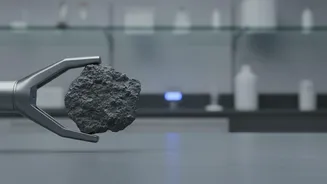
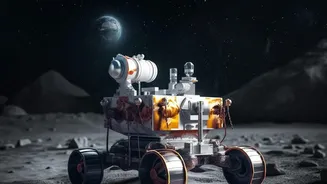
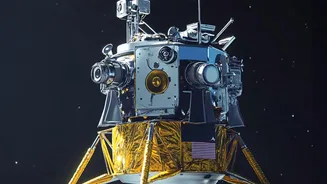
In a historic achievement, China's Chang'e-6 mission successfully returned the first-ever samples from the Moon's far side in June 2024. The probe landed in the Apollo basin, which sits inside the enormous and ancient South Pole-Aitken (SPA) basin—the largest and oldest impact scar on the Moon. This location was deliberately chosen because it preserves a cleaner, more ancient record of the Moon's history, untouched by the debris that muddied the near-side samples. Scientists immediately began analyzing tiny fragments of impact melt—rock that was liquefied by the intense heat of an asteroid strike before solidifying again. By dating these fragments, they could build a new, more reliable timeline of lunar impacts.
What the Rocks Reveal
The results from the Chang'e-6 samples tell a very different story. Instead of a tight cluster of ages around 3.9 billion years, the far-side rocks show a huge span of impact dates, stretching from 4.33 billion years ago all the way down to 1.13 billion years ago. Crucially, there was no significant pile-up of impacts at the 3.9-billion-year mark as the Late Heavy Bombardment theory would predict. In fact, very few samples fell into that time period at all. The evidence points not to a sudden storm, but to a long, slow decline in impacts over billions of years. As one researcher noted, the findings suggest the early solar system experienced a gradual decrease in asteroid impacts, not a single catastrophic bombardment.
Rewriting Solar System History
This new evidence fundamentally changes our understanding of the early solar system. The idea of a gradual decline in impacts, rather than a sudden cataclysm, has major implications. The Late Heavy Bombardment was often used as a key time marker for when Earth may have become calm enough for life to emerge. If that sudden event never happened, the timeline for the development of habitable conditions on our own planet might need to be redrawn. The far-side samples have confirmed what many scientists had begun to suspect: the history of our cosmic neighborhood was less a short, sharp storm and more of a prolonged cosmic drizzle that slowly tapered off. The Moon, by preserving a history that Earth's active geology has long since erased, is once again teaching us about our own origins.