


A New Window on the Universe
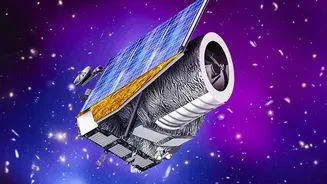
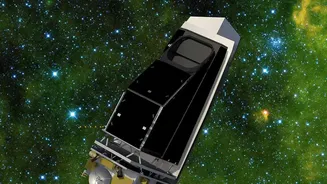
PRIMA, short for the PRobe far-Infrared Mission for Astrophysics, is a next-generation space telescope designed to explore the universe in far-infrared light. This will allow scientists to see cosmic phenomena that are invisible to other observatories
like the James Webb Space Telescope (JWST). Its primary goals are to shed light on how planets, stars, and galaxies form and evolve. Scientists hope PRIMA can even help answer fundamental questions about the origin of water on Earth. It is the first mission in a new 'Probe Explorers' class, designed to be more ambitious than smaller projects but less costly than massive flagships like JWST. The recommendation for this new class of missions came from the influential 2020 Decadal Survey.
Decoding NASA's Project Lifecycle
The announcement that PRIMA has entered 'Phase B' is significant, but it requires some translation. NASA manages its complex and expensive projects through a series of lifecycle phases, lettered from A to F. Phase A is the 'Concept and Technology Development' stage, where the mission's initial concept is fleshed out. PRIMA has now graduated to Phase B, which is focused on 'Preliminary Design and Technology Completion'. During this stage, engineers will refine the telescope's design and ensure the necessary technology is ready for flight. It's a crucial period where the theoretical mission blueprint is turned into a detailed engineering plan, establishing what's known as the 'design-to' baseline. This is a major step forward, but it's far from the finish line.
The All-Important Confirmation Review
The headline's mention of a 'Confirmation Review' is the key to putting PRIMA's progress in perspective. Before the mission can proceed to Phase C (Final Design and Fabrication), it must pass this critical gate. The Confirmation Review is a rigorous assessment where an independent panel scrutinizes the project's technical readiness, its schedule, and its cost performance. NASA management will then decide if the mission is truly ready for implementation—the phase where hardware is actually built. This review is the ultimate test of whether the designs and plans developed in Phase B are realistic and achievable within the project's capped cost of $1.2 billion. Passing this review is the true green light; failing it could mean a trip back to the drawing board or even cancellation.
A Marathon, Not a Sprint
If it passes its Confirmation Review, PRIMA is targeted for a launch no earlier than 2033 for a planned five-year mission. This long timeline highlights the immense complexity and deliberate pace of modern space exploration. Missions like PRIMA require decades of development, involving international partners and cutting-edge technology. For example, PRIMA will feature contributions from the space agencies of Canada, France, Germany, Japan, South Korea, and the United Kingdom. This meticulous, phase-gated approach is designed to manage immense technical and financial risk. Each phase and its corresponding review ensure that a project is on solid footing before NASA commits the massive resources needed for construction and launch. While the recent news is a victory for the PRIMA team, it's one milestone in a much longer journey to uncover the universe's secrets.