





A Glimpse Into Earth's Deep Future
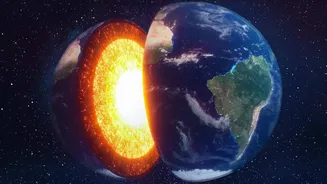
The continents are in constant, slow-motion transit, drifting on tectonic plates at about the same speed your fingernails grow. Hundreds of millions of years ago, they were joined in a single landmass called Pangea. Geological history suggests this is a cyclical
process, and scientists predict the continents will merge again in roughly 250 million years. One leading hypothesis for this future world is a supercontinent dubbed Pangea Ultima. This massive landmass would see the Americas collide with a merged Afro-Eurasia, with the Atlantic Ocean shrinking and closing, creating a vast new world geography.
A Triple Whammy of Extreme Heat
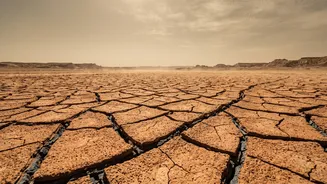
Recent research, led by Dr. Alexander Farnsworth at the University of Bristol, used supercomputer climate models to simulate what life would be like on Pangea Ultima. The forecast is bleak, describing a “triple whammy” of environmental pressures that would make the supercontinent largely uninhabitable for mammals, including any potential human descendants. The first factor is intense “continentality.” The sheer size of the landmass means vast inland areas would be arid deserts, far from the moderating, cooling influence of oceans. The second is a brighter Sun; in 250 million years, our star is expected to emit about 2.5% more radiation, further heating the Earth. The third is a surge in atmospheric carbon dioxide. The tectonic processes that forge a supercontinent also lead to more frequent and widespread volcanic activity, which would pump enormous quantities of CO2 into the air, potentially doubling today's levels.
An Uninhabitable World
The combination of these factors would create a hothouse Earth. The simulations predict that widespread land temperatures would hover between 40 and 50 degrees Celsius, with daily extremes soaring even higher. In some tropical regions, temperatures could reach a deadly 70°C. These conditions would be far beyond the physiological limits of most mammals, which have evolved to survive cold but have a much narrower tolerance for extreme, prolonged heat. Under these conditions, the ability to regulate internal body temperature through sweating would become ineffective. The models suggest that only 8% to 16% of Pangea Ultima, likely small pockets at the extreme northern and southern fringes, would remain habitable for mammals.
A Lesson For The Here and Now
While a supercontinent is a problem for a future so distant it's hard to comprehend, the research provides valuable lessons for today. These models help scientists understand the intricate connections between geography, atmospheric chemistry, and planetary habitability. They offer a case study in climate tipping points, showing how a combination of natural factors can push a planet's environment into an extreme state. The study serves as a stark reminder of the delicate climatic balance that makes Earth so hospitable to complex life. Researchers involved in the study stress that while Pangea Ultima is a natural phenomenon, we are currently experiencing human-induced climate change at a much faster rate. It reinforces the urgency of addressing our own impact on the atmosphere and stabilising the climate we depend on today.