


A Shocking New Reality
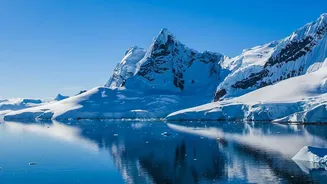
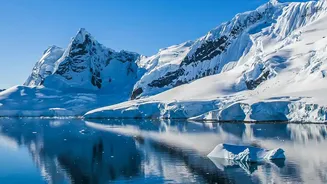
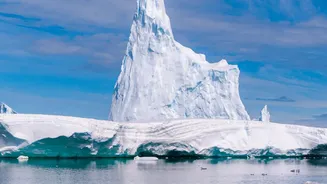
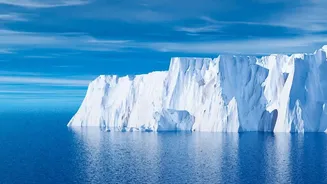
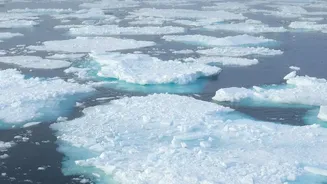
On September 14, 2026, at the peak of its winter when ice should be at its most expansive, Antarctica’s sea ice covered just 17.59 million square kilometres. While that number sounds immense, it is alarmingly low, marking the third-lowest winter maximum
since satellite records began in 1979. What troubles scientists most is the trend: the four lowest winter ice peaks on record have all occurred in the last four years. This is not a random fluctuation; it is a clear signal that the system has changed. For decades, Antarctica was the exception to the global warming story. While Arctic ice was in a well-documented freefall, the southern pole’s ice was either stable or, in some years, even expanding. That stability has now been shattered.
What Flipped the Switch?
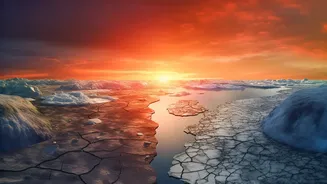
For years, a layer of cold, fresh meltwater on the surface of the Southern Ocean acted like a protective lid, insulating the sea ice from the warmer, saltier ocean depths. But scientists believe a 'triple whammy' of climate processes has upended this balance. Stronger winds, intensified by greenhouse gas emissions and the ozone hole, have begun to churn the ocean more violently. This enhanced mixing has dragged the warmer deep water to the surface, where it is now melting the ice from below. Once this heat is unleashed, it creates a feedback loop that makes it difficult for the ice to recover. On top of this underlying shift, climate patterns like El Niño can exacerbate the loss by altering storm tracks and further breaking up the ice. The result is that even in the profound cold of the polar winter, the ocean is now too warm to sustain the amount of ice it once did.
Why It Matters Thousands of Kilometres Away
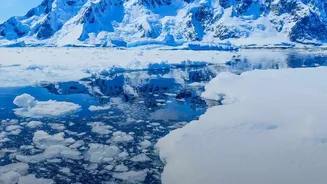
What happens in Antarctica does not stay in Antarctica. The vast, white sheet of sea ice acts as the planet’s reflective shield, bouncing a huge amount of the sun's energy back into space. When it is replaced by dark, open ocean, that energy is absorbed instead, leading to warmer oceans and accelerating a cycle of further melting. This is known as the ice-albedo feedback. Furthermore, the formation of sea ice drives a critical part of the global ocean 'conveyor belt'. As saltwater freezes, it pushes out salt, making the water below denser and causing it to sink. This process helps power massive ocean currents that transport heat, carbon, and nutrients around the globe, influencing weather patterns everywhere, including those that affect India. Disrupting this circulation can have far-reaching and unpredictable consequences for global climate stability.
The Ripple Effects on Sea Level and Wildlife
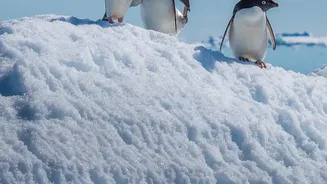
While melting sea ice does not directly raise ocean levels because it is already floating, its absence has a dangerous indirect effect. The sea ice acts as a protective buffer for the colossal ice shelves that fringe the continent. Without it, these shelves are exposed to the full force of ocean waves and warming waters, which can weaken them. These ice shelves are critically important because they act like a cork in a bottle, holding back Antarctica’s massive land-based glaciers. If the shelves collapse, those glaciers can flow much faster into the sea, which would lead to a catastrophic rise in global sea levels. The loss of ice also poses an existential threat to the region's unique wildlife. Emperor penguins, for example, rely entirely on stable sea ice to breed and raise their chicks. The entire marine food web, from the microscopic algae that grows on the underside of the ice to the krill that feed on it, is being fundamentally disrupted.