





A Plan B for an Entire Nation
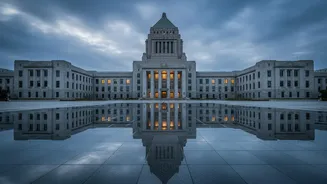
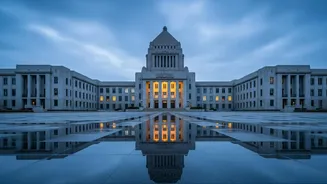
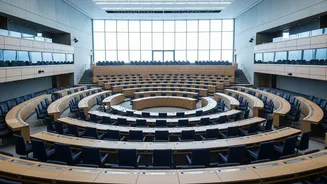
In late July 2026, Japan's parliament, the National Diet, enacted legislation to create a legal framework for a “secondary capital.” This new law empowers the Prime Minister to designate one or more regions to take over essential government functions
if Tokyo is crippled by a catastrophe. The idea is simple: while Tokyo remains the symbolic and primary capital, a “vice-capital” would serve as an emergency administrative hub, ensuring the continuity of legislative and executive operations during a national crisis. The law is intentionally a framework, with the government expected to establish the specific criteria for selecting a location and outline the precise division of duties within the next year.
The Constant Threat Below
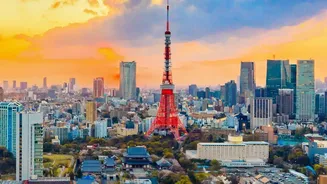
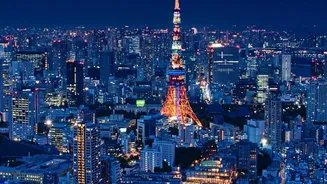
This decision wasn't made in a vacuum. It is a direct response to a long-acknowledged and terrifying risk. Government scientists estimate there is a roughly 70% chance of a magnitude-7 earthquake striking the Tokyo metropolitan area within the next 30 years. Such an event could paralyse the nation, as Tokyo is not just the political capital but the undisputed centre of its economy, finance, and population. It generates about a fifth of the country's economic output and is home to around 30% of its people. The concentration of the Prime Minister's Office, central ministries, the Bank of Japan, and corporate headquarters in one seismic hotspot is a vulnerability the government is no longer willing to ignore.
More Than Just Disaster-Proofing
Beyond the immediate concern of disaster preparedness, the law has a secondary, long-term objective: decentralisation. For decades, policymakers have grappled with the “overconcentration” of everything in Tokyo, which has led to a population drain and economic stagnation in other regions. By designating a secondary capital, the government hopes to create a new engine for economic growth. The plan includes provisions for developing transport links, offering tax incentives, and promoting private investment in the chosen area or areas, transforming them into more prominent national hubs. This aims to create a more balanced, multipolar nation, reducing the risks associated with having all its critical assets in one basket.
The Race to Become Japan's Backup
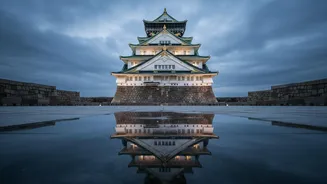
The law's passage immediately set off a competition among several major cities. Osaka, the country's third-largest city and the political base of the Japan Innovation Party (a key coalition partner that pushed for the bill), is widely seen as a front-runner. However, other prefectures were quick to announce their ambitions, including Aichi (home to Nagoya's manufacturing might), Fukuoka in the west, and Hokkaido in the north. To qualify, a region must not only have sufficient infrastructure and economic scale but also, crucially, a lower probability of being affected by the same disaster that strikes Tokyo. This has made Fukuoka, which faces the Sea of Japan rather than the Pacific, an attractive candidate.
A Political Battle and an Uncertain Future
The legislation's journey was not smooth, passing the upper house by a razor-thin margin of 123-121. This highlighted deep political divisions, with many opposition parties arguing the bill was designed from the start to benefit Osaka due to its role in the ruling coalition. While the law is now on the books, the hard work of implementation is just beginning. Key details remain undecided, such as how roles will be divided between Tokyo and the backup capital in both normal times and emergencies, and how many secondary capitals might be designated. The government must now navigate these complex questions to turn this ambitious crisis-management plan into a functioning reality.