




A Hard-Won Victory
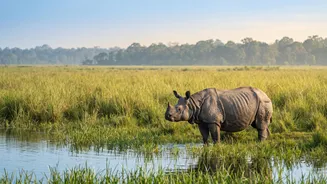
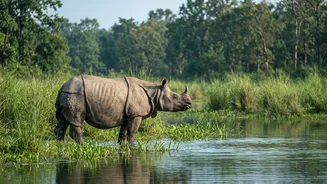
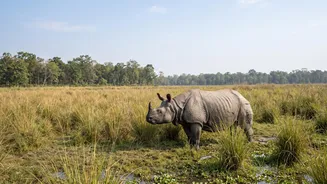
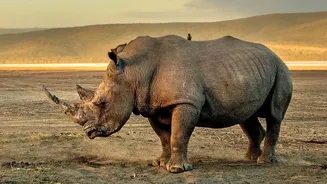
In July 2026, officials announced that the greater one-horned rhino population in Uttar Pradesh's Dudhwa Tiger Reserve had reached 53 individuals, a net increase of five since the last count. The census, conducted in late June, identified 17 adult males,
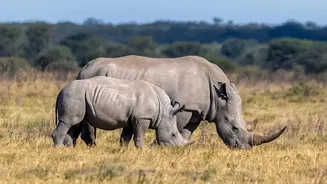
25 adult females, and 11 calves and sub-adults. This slow but steady growth is a testament to one of India’s most ambitious rewilding projects. It's a significant moment for a park where rhinos were completely wiped out by the early 20th century due to hunting and habitat loss. Today, Dudhwa is the only place in Uttar Pradesh where these majestic animals roam, a direct result of a rehabilitation program that started from scratch.
Rewinding the Clock to 1984
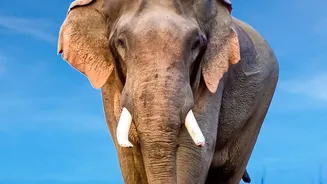
The story of Dudhwa's rhinos begins in 1984, when the species was locally extinct. Conservationists identified the Terai grasslands as a suitable former habitat for reintroduction. The ambitious Rhino Rehabilitation Project was launched, starting with the translocation of five rhinos from Assam's Pobitora Wildlife Sanctuary. This initial phase was fraught with difficulty; two of the first five animals died shortly after arrival. The following year, in 1985, four more female rhinos were brought from Chitwan National Park in Nepal in exchange for Indian elephants, establishing the crucial founding population of seven rhinos. From this small, carefully selected group, the long and arduous process of rebuilding a legacy began.
From Fences to Freedom
For decades, Dudhwa's rhinos lived and bred within large, fenced enclosures designed to protect them from poaching and help them acclimatise. While this strategy helped the population grow, it created risks of inbreeding and limited the rhinos' natural ecological role as 'engineers' of the grassland ecosystem. A major breakthrough came in recent years. Starting in November 2024 and continuing through March 2026, the Uttar Pradesh Forest Department and WWF-India began releasing rhinos from these enclosures into the core, unfenced areas of the reserve. A total of 11 rhinos now roam freely, fitted with radio collars for monitoring. This move is vital for establishing a genetically diverse, self-sustaining population and restoring natural behaviours.
A Path Paved with Challenges
The journey to 53 has not been a straight line. The recent census itself accounted for the recent deaths of three rhinos, including a female killed by tigers and two calves that died in territorial disputes with a dominant male. These incidents, while tragic, are part of the complex reality of a wild ecosystem. Tigers and rhinos are apex species, and while they generally coexist, conflict can occur, especially when an animal is vulnerable or trapped in marshy terrain. Beyond natural predation, the program faces ongoing threats from human-wildlife conflict, habitat fragmentation, and the ever-present danger of poaching. These challenges underscore the headline's truth: recovery is a long, continuous process that requires constant vigilance and adaptation.
More Than Just a Number
The success in Dudhwa is a key part of a larger national strategy, building on the foundations of Indian Rhino Vision (IRV) 2020. Launched in 2005, IRV 2020 aimed to increase Assam's rhino population to 3,000 and expand their range to multiple protected areas, a goal that was largely met. Dudhwa's progress contributes to the new goal of securing a thriving meta-population across the Terai Arc Landscape, which stretches across India and Nepal. The presence of free-ranging rhinos benefits the entire ecosystem, as their grazing habits maintain the health of the grasslands. Each new calf and every successful release into the wild is not just a number, but a step towards restoring an entire landscape.