


Two New Eyes on the Sun
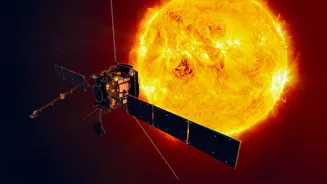
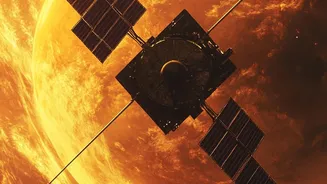
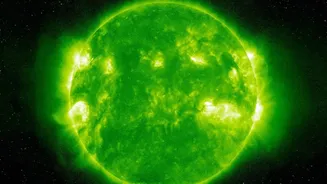
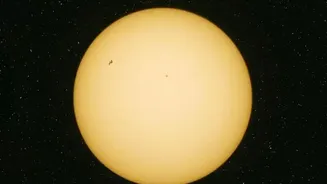
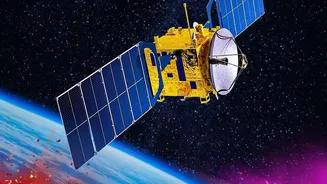
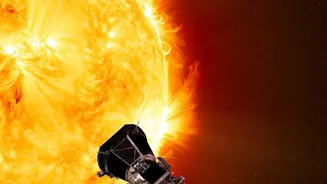
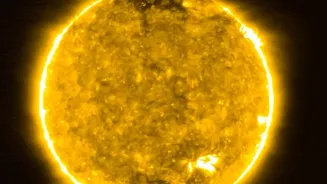
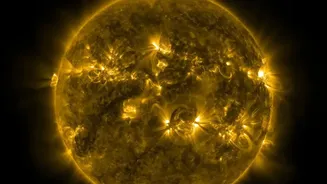
Imagine two state-of-the-art observatories working together to watch the sun. That’s what’s happening with ISRO's Aditya-L1 and the European Space Agency's (ESA) Proba-3. Launched in September 2023, Aditya-L1 is India’s first dedicated solar mission,
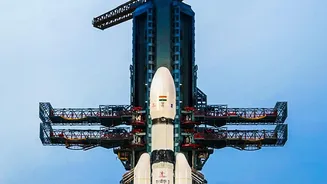
stationed at a unique vantage point 1.5 million kilometres from Earth, which allows it to watch the sun without interruption. Proba-3, launched by an ISRO rocket in December 2024, is a feat of engineering itself. It consists of two satellites flying in perfect formation, about 150 metres apart, to create a precise, artificial solar eclipse. This groundbreaking technique allows it to see parts of the sun’s atmosphere that were previously hidden by overwhelming glare.
Understanding Coronal Mass Ejections
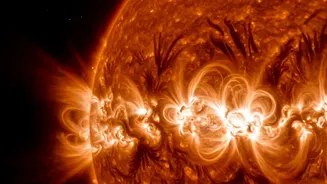
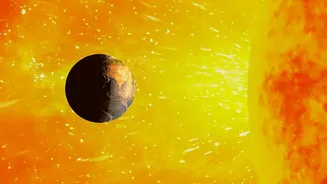
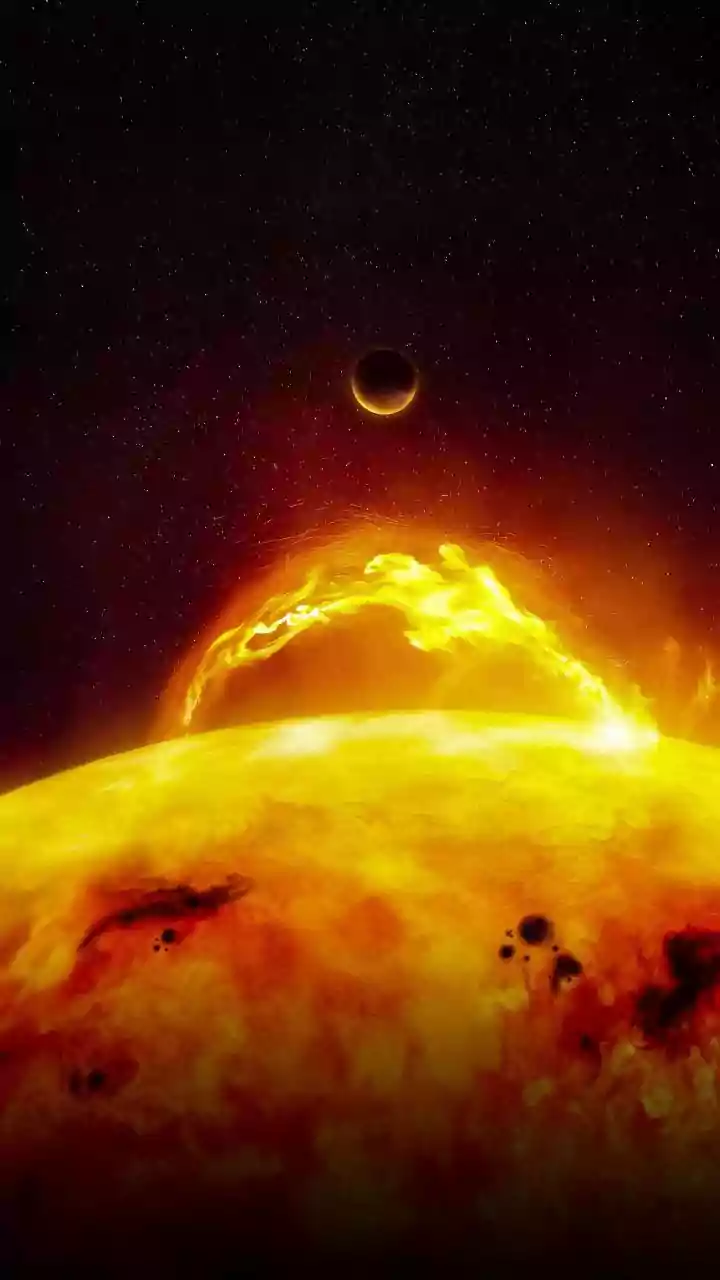
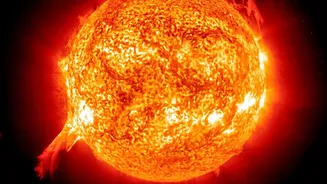
The primary target for this stellar partnership is Coronal Mass Ejections, or CMEs. These are colossal eruptions of plasma and magnetic fields from the sun's outer atmosphere, the corona. Billions of tons of material can be thrown into space at millions of kilometres per hour. When a CME is aimed at Earth, it can have serious consequences. These solar storms can disrupt our satellites, scramble GPS and communication signals, and even damage power grids on the ground. For our technology-dependent world, being able to predict their arrival is crucial.
A Breakthrough Partnership
The real magic happens when data from both missions are combined. Observing CMEs very close to the solar surface has always been a major challenge for scientists. Aditya-L1's main coronagraph, the Visible Emission Line Coronagraph (VELC), is designed to perform spectroscopy, analysing the properties of the coronal gas, like its density and temperature. Proba-3’s instrument, ASPIICS, takes incredibly sharp images of the inner corona, a region that was nearly impossible to study before. Together, they provide a more complete picture. Aditya-L1 provides the 'what' (the physical properties of the plasma), while Proba-3 provides the 'where' (the precise shape and motion of the eruption).
Spotting Trouble Sooner Than Ever
In a first-of-its-kind study, scientists from the Indian Institute of Astrophysics and their international partners jointly analysed two CMEs captured in September 2025. The coordinated observations revealed the 'early changes' mentioned in the headline: subtle signs of the eruption's development much closer to the sun's surface. The team found that in both cases, Aditya-L1’s VELC caught the CMEs at a very early stage. They were able to measure the mass, density, and energy of the eruptions right as they were born, a critical step in understanding how they will behave as they travel through space.
The View from the Inner Corona
The joint observations revealed striking differences between the two CMEs. One event, on September 14, 2025, was fast, travelling at about 645 km/s. The other, just two days later, was much slower, at 145 km/s. The data also showed the slower CME expanded more strongly in its initial phase. By analysing the balance of kinetic, thermal, and magnetic energy, scientists gained new clues about the fundamental physics driving these eruptions. These are the kinds of details that were previously unobtainable but are essential for building better forecast models.
What This Means for Earth
This collaboration is more than just a scientific curiosity; it has profound practical implications. Better understanding of how CMEs accelerate and evolve near the sun directly translates to better space weather forecasting. By detecting the earliest signs of an eruption, scientists can improve the lead time for warnings about potentially hazardous solar storms. This gives satellite operators, airlines, and power grid managers more time to take protective measures, safeguarding the critical infrastructure we all rely on. This joint effort between ISRO and ESA is a powerful demonstration of how international cooperation is pushing the boundaries of science and enhancing our safety here on Earth.