


The Challenge of a Martian Pantry
A round trip to Mars could take nearly three years. That's a lot of meals. Currently, astronauts on the International Space Station rely on pre-packaged, shelf-stable foods sent from Earth. While effective for shorter stays in low-Earth orbit, this approach
becomes almost impossible for deep space missions. The sheer mass and volume of food required would be immense, taking up valuable space and fuel on a spacecraft. Beyond logistics, there's the problem of nutritional decay; vitamins and other essential nutrients degrade over long periods, potentially harming astronaut health. Furthermore, menu fatigue is a real psychological issue; eating the same packaged meals for years on end can negatively impact crew morale and even appetite. To make humanity a multi-planetary species, we can't just pack a bigger lunchbox—we need to build a whole new kitchen in space.
Enter the Micro-Kitchen
This is where concepts like "microbites" come into play. The term refers to a category of futuristic food systems being explored to create fresh, nutritious food from minimal starting ingredients. One of the most promising avenues involves using microorganisms, such as specially engineered yeast or bacteria, to generate edible biomass. This field was a major focus of NASA's Deep Space Food Challenge, a multi-year competition encouraging innovation in sustainable food production for space. The core idea is to create a closed-loop system where waste is recycled into valuable resources. For example, some systems propose using the carbon dioxide astronauts exhale, combined with water and minimal dry ingredients, to grow protein-rich microbes. These microbes can then be harvested and processed into a nutritional paste or even used as an ingredient in more complex foods.
From Waste to Wafer
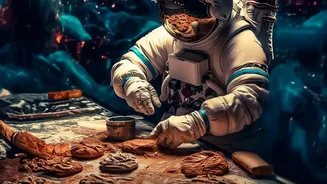
One fascinating project, presented by researchers at Southern Illinois University, demonstrated how this could work in practice. Their concept, named µBites (pronounced microbites), uses engineered baker's yeast to convert broken-down waste materials into edible ingredients. In their experimental process, they even used PET plastic—the kind found in water bottles—and agricultural waste as a carbon source. The waste is broken down into molecules that the microbes can consume. These engineered yeasts then convert those molecules into proteins and fats. Some yeast strains were even modified to produce flavorings like vanillin or nutrients like beta-carotene, a precursor to Vitamin A. Once harvested, this microbial biomass is mixed with other ingredients and can be extruded through a 3D printer to create food items, such as protein-rich cookies.
More Than Just a Meal
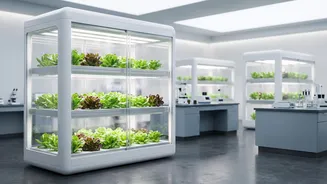
The benefits of such a system go far beyond just saving launch mass. It creates a regenerative food source, significantly reducing reliance on Earth. This is a critical step toward the self-sufficiency required for any long-term settlement on the Moon or Mars. It also offers a solution to nutritional degradation, as nutrients would be freshly produced on demand. Teams involved in NASA's challenge, like grand prize winner Interstellar Lab and international winner Solar Foods, are exploring various approaches, from growing microgreens and insects in contained environments to producing protein powder directly from gas fermentation. These systems provide not only calories but also the psychological boost of having fresh, varied food, which is vital for crew morale on a long and isolating journey.
The Hurdles Before a Martian Feast
While the science is promising, a 3D-printed, microbe-based cookie won't be on an astronaut's menu tomorrow. The technology remains in the experimental phase. Researchers must perfect the process, ensuring it is stable, reliable, and energy-efficient enough for a spacecraft environment. Safety is paramount; any food production system must be rigorously tested to ensure the final product is free of contaminants and consistently nutritious. Then there's the 'gross factor' and the challenge of palatability. While the µBites cookies have reportedly received positive aroma assessments, taste tests are still pending approval. Ultimately, the goal is not just to create edible matter, but to produce food that is enjoyable and helps astronauts feel connected to home, even millions of miles away.