








An Express Train to Tame Prices
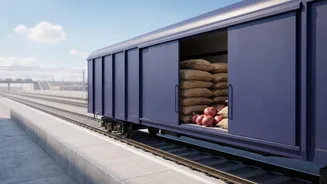
The 'Kanda Express' is a government initiative that uses dedicated railway trains to transport large quantities of onions from the country's primary growing and storage regions, particularly Nashik in Maharashtra, to major consumption centres across India.
The goal is to rapidly increase the supply of onions in cities facing sharp price hikes. The onions are drawn from the government's strategic buffer stock, which is maintained under the Price Stabilisation Fund (PSF) to be used precisely for such market interventions. The first dispatches in late August 2026 were sent to cities including Delhi, Chennai, Guwahati, Kochi, and Madurai, with plans to expand based on market needs.
Why is This Happening Now?
Onion prices in India are notoriously volatile, often spiking between August and October. This is a lean period when the stored winter (Rabi) crop dwindles and before the new monsoon (Kharif) crop arrives in markets. This year, the price surge has been particularly sharp, with the all-India average retail price jumping by nearly 60% compared to the previous year, reaching over ₹45 per kilogram. In major metropolitan areas like Delhi and Chennai, prices have shot past ₹55-60 per kg. The spike is attributed to a combination of factors, including potential damage to stored crops from unseasonal weather, a delayed monsoon affecting new planting, and suspected market speculation.
A Two-Pronged Strategy
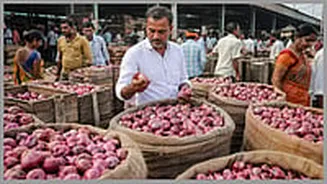
The Kanda Express operates on two levels. First, it injects a large volume of onions directly into wholesale markets (mandis). By boosting supply, the government aims to curb hoarding and speculation, which officials believe have contributed to artificially high prices in producing regions like Nashik. A drop in wholesale rates is the first step toward lowering retail prices. The second part of the strategy offers direct relief to consumers. The onions transported by these trains are being sold at a subsidized rate of ₹35 per kilogram through government-affiliated agencies like NAFED and NCCF, which use mobile vans and dedicated retail outlets in cities like Delhi.
Railways Over Roads
Using trains for transport is a strategic logistical choice. While trucks are flexible, railways are more efficient for moving massive quantities over long distances. A single special train, or 'rake', can carry hundreds of tonnes of onions in one go, far more than a fleet of trucks. This bulk movement is not only cost-effective but also faster, reducing the transit time between western India and markets in the north, south, and east. Less time on the road means less spoilage for a semi-perishable commodity like onions, ensuring a better quality product reaches the market and helps stabilize supply more effectively. This initiative represents a significant scaling-up of previous efforts, with the government deploying far more railway rakes than in prior years to manage the price crisis.
Will It Make Your Onions Cheaper?
The immediate impact of the Kanda Express will be felt most in the wholesale markets, where the sudden increase in supply is designed to break the upward price spiral. For retail consumers, the effect might not be instantaneous across all markets. The subsidized ₹35/kg onions offer direct relief but are available only at specific outlets. The broader impact depends on how quickly lower wholesale prices are passed down through the supply chain to local vendors. The government has stated that overall onion production this year is stable and that the buffer stock is sufficient to manage the seasonal pressure. The Kanda Express is a powerful tool for market intervention, but it is one part of a larger, ongoing effort to manage the complex dynamics of India's food supply chains.