


A Violent Cosmic Beginning
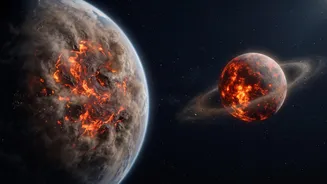
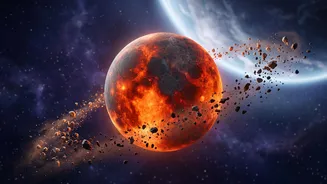
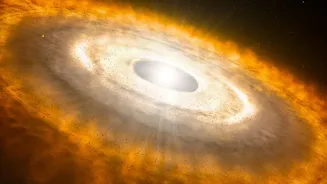
To understand how a star could swallow a planet, we have to go back about 4.5 billion years. The early solar system was not the orderly place we know today; it was a chaotic and violent shooting gallery. Dozens, perhaps hundreds, of small, planet-sized
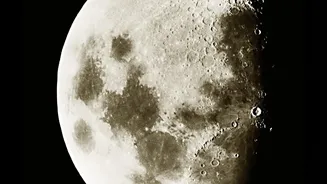
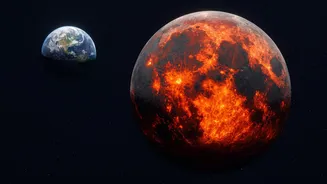
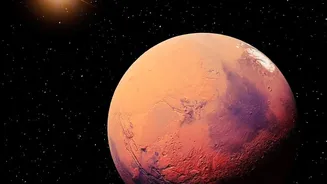
bodies called protoplanets were careening around, smashing into each other. The most famous of these events is the Giant-Impact Hypothesis, the leading theory for our Moon's creation. It suggests a Mars-sized planet, nicknamed Theia, collided with a young Earth. The impact was so immense it vaporised much of Theia and Earth's crust, sending a cloud of debris into orbit that eventually coalesced to form the Moon. Theia is just one example of the many 'lost' worlds that likely existed in our cosmic neighbourhood before the planets settled into their stable orbits.
The Lost Planet Hypothesis
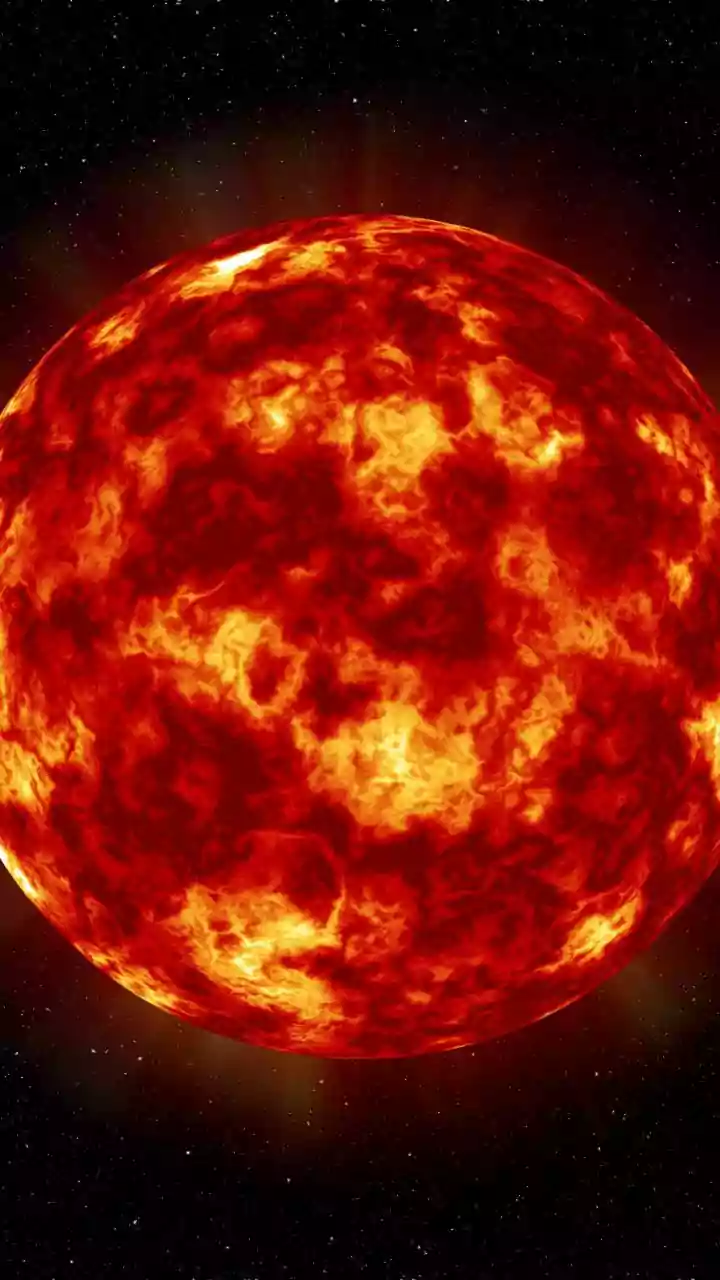
The existence of rogue bodies like Theia raises a fascinating question: what if some of these protoplanets didn't collide with each other, but were instead flung inward? In the gravitational chaos of the early solar system, it is entirely possible that one or more of these ancient worlds were knocked off their path and sent on a one-way trip into the young Sun. If a planet fell into the sun, it wouldn't just vanish without a trace. It would be instantly vaporised by the extreme temperatures, but its constituent elements would be absorbed into the star's mass. Planets are rich in heavier elements like iron, silicon, and carbon—what astronomers collectively call 'metals'. Swallowing a rocky world would therefore increase the Sun's overall 'metallicity', essentially polluting its primordial composition of hydrogen and helium. Even a tiny change could offer a clue to this dramatic, long-lost event.
The Search for a Planetary Ghost
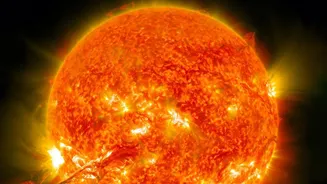
So, how would scientists even begin to look for the ghost of a planet inside a star? Direct observation is impossible. The Sun's core is an incredibly dense region with a temperature of around 15 million degrees Celsius. Instead, scientists use two main indirect methods. The first is spectroscopy, which involves analysing the light from the Sun's surface to determine its chemical makeup. If the surface showed an unusually high abundance of heavy elements, it might point to ancient planetary ingestion. However, the more powerful tool is helioseismology. Just as geologists use seismic waves from earthquakes to map Earth’s interior, helioseismologists study the sound waves that constantly ripple across the Sun's surface. By measuring these vibrations, they can build a detailed model of the Sun's internal structure, including its density and composition, from the core to the surface.
What the Evidence Says (For Now)
The theory is compelling, but the evidence remains elusive. If the Sun had consumed a planet, its heavy core would have settled deep inside, creating a distinct compositional layer. This would change the way sound waves travel through the interior, producing a signal that helioseismology could detect. However, current data suggests the opposite. Most helioseismic studies indicate that the Sun's interior is relatively uniform and well-mixed, which doesn't align with the hypothesis of a significantly metal-enriched core. This doesn't entirely rule out the theory—the traces might be too subtle for our current instruments to detect, or our models of how the Sun's interior mixes over billions of years might need refining. For now, the verdict is that there is no smoking gun, turning this from a discovery into an active and exciting scientific investigation.
What It Means In Practice
Confirming that the Sun consumed one of its own 'children' would be more than just a cosmic curiosity; it would fundamentally alter our models of how solar systems form. It would mean the Sun itself is a historical artefact, recording the violent process of planetary creation in its very core. This knowledge would help us understand why our solar system looks the way it does and provide a new lens through which to study distant star systems. While the evidence within our Sun is hidden, astronomers are now seeing these dramatic events happen elsewhere in the galaxy. Recent observations of a distant, Sun-like star showed it flickering erratically—a phenomenon astronomers concluded was caused by the debris cloud from two planets colliding in real-time. Seeing these collisions unfold confirms that the chaotic, planet-smashing era that shaped our own solar system is a normal part of how planets are born across the universe.