


A New Window on the Cosmos
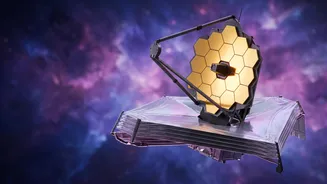
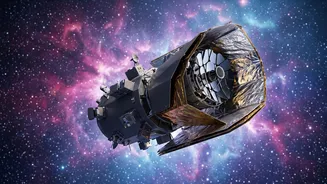
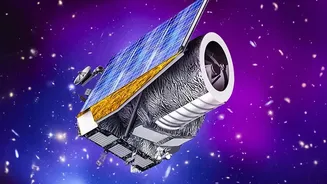
PRIMA is a specialized observatory designed to fill a crucial gap in our view of the universe. While telescopes like Hubble see in visible light and the James Webb Space Telescope (JWST) specializes in near- and mid-infrared, PRIMA will be humanity's
most powerful eye on the far-infrared spectrum. This will allow it to see what other telescopes cannot: the cool, dusty regions of space where stars, planets, and galaxies are born. Managed by NASA's Jet Propulsion Laboratory, PRIMA is the first of a new, ambitious, and cost-capped class of missions called Probe Explorers. These missions aim to tackle high-priority science without the multi-billion-dollar price tag of flagship observatories like JWST.
From Concept to Reality
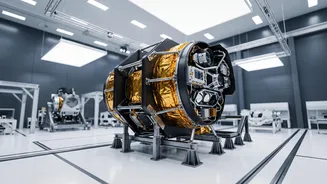
NASA's decision to move PRIMA into Phase B is a significant vote of confidence. The life cycle of a NASA mission is a long and rigorous process, broken into distinct phases from initial concept (Pre-Phase A) to operations (Phase E). Phase B, known as the 'Preliminary Design & Technology Completion' phase, is where the mission moves from a theoretical concept to a concrete engineering plan. During this stage, the team will finalize the telescope's design, mature the necessary technology, and establish hardware contracts. It’s the critical step where blueprints are refined and the plan for building the spacecraft becomes real. While it's a major milestone, it's not the final green light.
The Science of Seeing the Unseen
So, why is far-infrared light so important? Imagine trying to see a newborn star inside its dusty stellar nursery. Visible light gets scattered and absorbed by the dense clouds of cosmic dust, hiding the action from view. But far-infrared light, with its longer wavelengths, can penetrate this dust, giving astronomers a direct look at the processes of creation. It allows scientists to study the cold universe—the gas and dust that serve as the raw material for stars and planets. PRIMA's 1.8-meter telescope will be cryogenically cooled to just a few degrees above absolute zero, making it incredibly sensitive to the faint heat signatures emitted by these distant, hidden objects.
PRIMA's Cosmic To-Do List
PRIMA has an ambitious five-year mission planned. Its primary goals are to untangle some of the deepest mysteries of our cosmos. Scientists will use it to study the formation of stars and trace how water is distributed in nascent planetary systems, providing clues about how habitable worlds like Earth came to be. The telescope will also peer back across cosmic time to map the evolution of galaxies and the growth of the supermassive black holes at their centers. It aims to answer fundamental questions that JWST cannot, simply because the necessary chemical signatures only appear in the far-infrared wavelengths PRIMA is designed to see.
The Final Hurdle: Confirmation
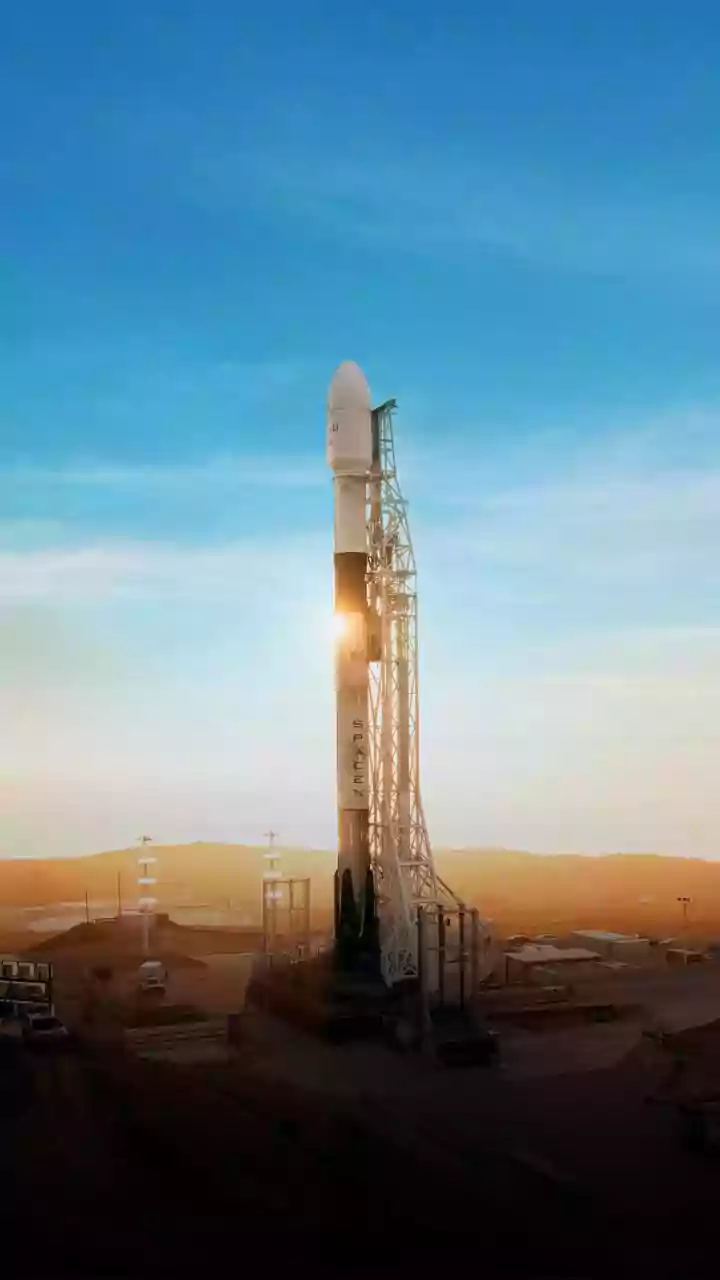
Despite the excitement, PRIMA's journey to the launchpad isn't guaranteed. Before the mission can move to Phase C—final design and fabrication—it must pass a crucial confirmation review. During this review, NASA will rigorously assess the mission's technical feasibility, budget, and schedule. It's a high-stakes examination to ensure the project is on solid ground before committing to its full construction, which has a cost cap of approximately $1.2 billion. If it passes this final test, PRIMA will be on track for a targeted launch in 2033, ready to complete the picture of our cosmic origins.