

Meet the Lion Nebula
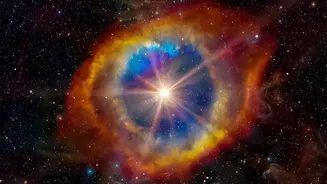
Located roughly 6,500 light-years away in the constellation Gemini, the Lion Nebula is officially known to astronomers as NGC 2392. It earned its popular nickname because its intricate shells of gas and dust resemble the head of a lion, complete with
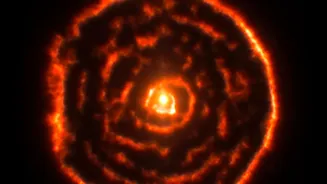
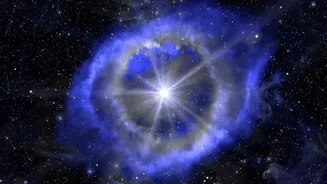
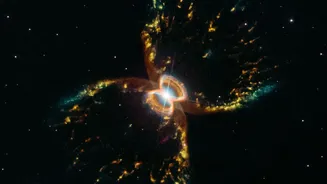
a flowing mane. This stunning structure is a planetary nebula, which, despite its name, has nothing to do with planets. Instead, it's an expanding, glowing shell of gas and dust that is shed by a star as it reaches the end of its life. For thousands of years, the dying star at the center has been puffing its outer layers into space, creating the complex and beautiful patterns that telescopes like Hubble and now Webb can observe. The entire structure is a fleeting snapshot in cosmic time; astronomers estimate it will completely disperse in about 10,000 years.
The Ghost of a Sun-Like Star
At the heart of the Lion Nebula sits the stellar remnant responsible for this cosmic artwork: a white dwarf. This is the incredibly hot, dense core of a star that was once much like our own sun. After exhausting its nuclear fuel, the star became unstable and began to cast off its outer layers. What remains is the white dwarf, whose intense radiation is now blasting into the material it previously ejected. This process ionizes the gas, causing it to glow, and carves out the structures we see. The innermost bubble of gas, forming the lion's 'face', is being shaped by fierce stellar winds from the white dwarf, while the outer 'mane' is a region of dust and gas being illuminated by the star's light. This process of stellar death is common for most stars in the universe, including, eventually, our own sun.
What Webb's Infrared Eyes See
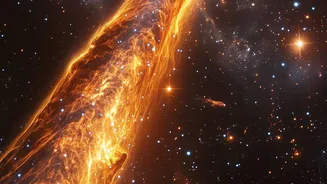
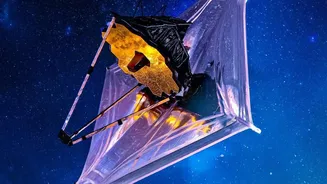
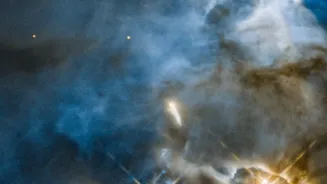
While the Hubble Space Telescope gave us remarkable views of the Lion Nebula in visible light, Webb's infrared instruments, NIRCam and MIRI, provide a new level of detail. Infrared light can pierce through clouds of dust that are opaque in visible light, revealing hidden structures. In Webb's new image, the overall shape is familiar, but the details are far sharper. We can now see intricate, comet-like filaments within the mane with stunning clarity. These are dense clumps of dust and molecular hydrogen that have so far survived the destructive radiation from the central star. By blocking the radiation, these clumps also shield the material behind them, creating long, trailing tails. Webb's vision highlights the dramatic interplay between destruction and survival within the nebula, showing how some dust is being destroyed by radiation while other filaments manage to endure.
Unlocking the Secrets of Stellar Death
These new, detailed images are more than just pretty pictures; they are crucial data for understanding how stars like our sun end their lives and enrich the cosmos. The process of forming planetary nebulae is how stars recycle their material, seeding the galaxy with heavier elements and the raw materials for future generations of stars and planets. By studying the fine structures within the Lion Nebula, like the surviving dusty clumps and the expanding shells of ionized gas, astronomers can refine their models of stellar evolution. Understanding why these nebulae form such complex structures is an active area of research. Each image from Webb provides a clearer test for scientific theories about the forces at play, from stellar winds to radiation pressure, helping scientists piece together the final, dramatic chapters of a star's life cycle.