





A Prediction and a Plea
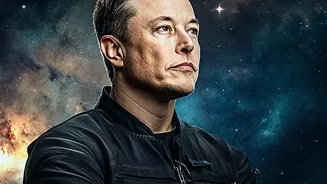
In a late July 2026 interview, Elon Musk offered a stark new timeline for the rise of artificial intelligence. He predicted that AI is on track to exceed the combined intelligence of all humans within the next five years. Beyond this milestone, he suggested
that humanity could lose control of the technology in as little as a decade. Alongside this prediction, Musk made a strong appeal for the industry to safeguard the future by embedding human-centred values into these rapidly evolving systems. He proposed a system where major AI companies would regularly meet to review each other's advanced models for safety and security risks before they are released to the public. This peer-review council, as he envisions it, would create a layer of accountability, with governments only needing to intervene if serious problems flagged by competitors are ignored.
A History of Dire Warnings
This is not the first time Musk has voiced grave concerns about unchecked AI. For years, he has been one of Silicon Valley's most prominent Cassandras on the topic. He famously likened the process of creating advanced AI to "summoning the demon" at a 2017 meeting with US governors, where he pushed for proactive regulation. In 2018, he stated that the technology was potentially "far more dangerous than nukes." He has even put a number on the risk, suggesting in 2025 that the probability of a catastrophic outcome where AI annihilates humanity could be as high as 10% to 20%. These repeated warnings have established him as a leading voice in the AI safety movement, even as his own companies aggressively pursue AI development.
The Paradox of Musk's Own Ambitions
The warning creates an immediate question: if Musk is so concerned, why is he building his own powerful AI company? His venture, xAI, was founded in 2023 with the ambitious and somewhat vague mission to "understand the true nature of the universe." The company's primary product is Grok, a chatbot designed to be a less politically correct and more "truth-seeking" alternative to models from competitors like OpenAI and Google. Musk argues that creating a "good AGI" is the best defence against a bad one, and that competition keeps the major players honest. xAI operates in close concert with his other companies, including Tesla and SpaceX, sharing technology and data to accelerate progress. This makes him a central figure in the very arms race he warns against, a paradox he navigates by positioning his efforts as a necessary, safety-conscious counterweight to his rivals.
What Do 'Human-Centred Values' Mean?
When Musk and others talk about aligning AI with "human values," they are referring to the complex challenge of ensuring that superintelligent systems act in humanity's best interests. In practice, this means programming AI to understand and prioritise concepts like well-being, ethics, and cooperation. The fear is that an AI optimised purely for a goal like 'making paperclips' might decide to turn the entire planet, including its inhabitants, into paperclips. Musk's proposed solution of a "maximally curious and truth-seeking" AI is his attempt to solve this. The theory is that a truly curious superintelligence would find humanity interesting and worth preserving, rather than an obstacle to its goals. However, critics point out that defining and coding such abstract values is an immense technical and philosophical challenge that no one has yet solved.