





Beyond Giza: The First Pyramids
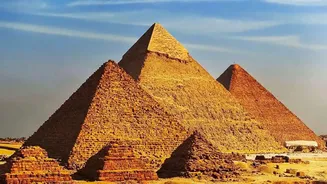
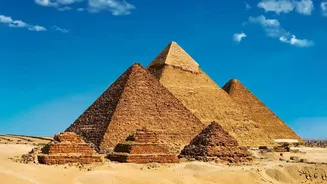
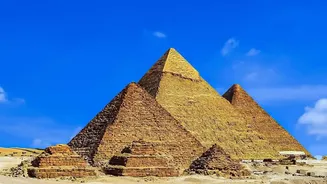
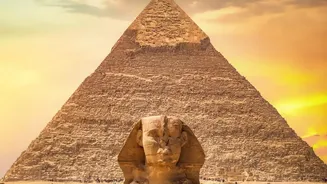
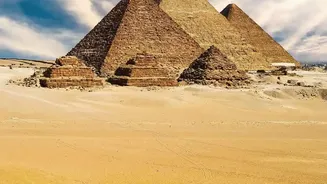
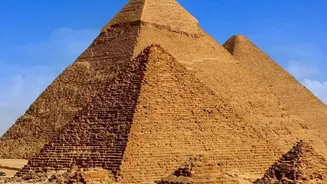
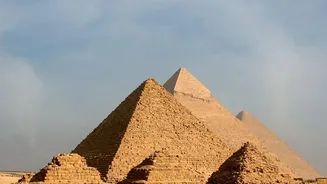
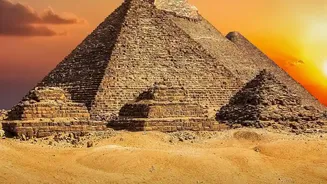
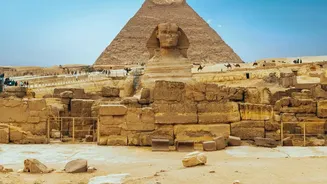
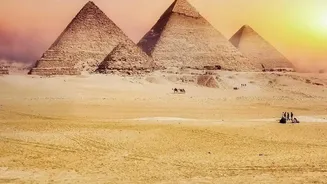
The Giza Plateau is an undeniable must-see. The Great Pyramid, the Sphinx, and the surrounding complex are icons of human history. But the story of the pyramids didn't start there. For a deeper understanding and a more adventurous experience, take a day
trip south from Cairo to Dahshur and Saqqara. These sites are often much less crowded. Dahshur is home to the Bent Pyramid and the Red Pyramid, where ancient architects perfected their smooth-sided construction techniques. Many visitors find exploring the interiors of these pyramids more thrilling than Giza, involving descents down long, narrow tunnels into ancient chambers. Nearby Saqqara is the site of the Step Pyramid of Djoser, considered the world's oldest complete stone building complex. Visiting these precursors provides crucial context for the masterpieces at Giza and lets you trace the evolution of one of history's greatest architectural feats.
A Different Kind of Treasure Trove
Cairo's Egyptian Museum has long been the main repository for the nation's pharaonic treasures. While it remains a world-class institution, a visit to the Nubian Museum in Aswan offers a different and deeply compelling narrative. Opened in 1997, this beautifully designed museum focuses specifically on the history and culture of Nubia, a civilization that flourished along the Nile for millennia. Its exhibits chronicle the story of a people whose lands were largely submerged by the creation of Lake Nasser after the Aswan High Dam was built. The museum showcases over 3,000 artifacts, from prehistoric times through the Kushite kingdom, and details the massive UNESCO campaign to save monuments like Abu Simbel and Philae. It provides a powerful, focused look at a culture that is an integral, yet distinct, part of Egypt's broader history.
Temples of Color and Quiet
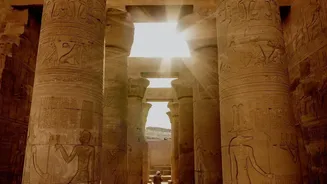
The sheer scale of Karnak and Luxor Temples is breathtaking, representing the zenith of Theban religious life. However, their popularity means you will be sharing the experience with thousands of others. For a different kind of awe, consider a day trip from Luxor to the temples of Dendera and Abydos. These sites are remarkably well-preserved and see far fewer visitors, allowing for a more intimate experience. Dendera's Temple of Hathor is famous for its astronomical ceiling, which includes a detailed zodiac, and its vibrant, colorful reliefs that have survived for over two millennia. Abydos was one of ancient Egypt's oldest and most important sacred cities, dedicated to the god Osiris. The Temple of Seti I here contains some of the most intricate and artistically refined carvings in all of Egypt, including the famous Abydos King List, a chronological list of pharaohs that has been vital to historians.
Sailing the Nile: Grand vs. Serene
A multi-day Nile cruise between Luxor and Aswan is a classic Egyptian experience, offering comfort, convenience, and guided tours of major temples along the way. It’s essentially a floating hotel that efficiently delivers you to the highlights. But for a more authentic and tranquil experience on the water, nothing compares to sailing on a felucca. A felucca is a traditional wooden sailboat powered only by the wind. While a multi-day trip involves sleeping on the deck and forgoing modern amenities, even a short sunset sail in Aswan offers a peaceful, intimate connection to the river that a large cruise ship cannot replicate. It's a chance to experience the Nile at a slower pace, absorb the scenery, and appreciate the ancient waterway in its purest form.