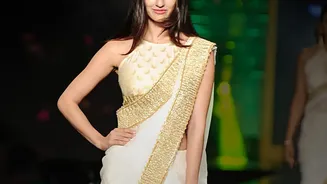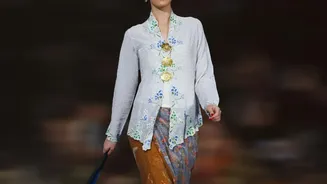






A Global Debut in Auckland
In a significant collaboration, New Zealand Fashion Week (NZFW) is hosting a dedicated showcase titled 'Khadi Beyond Borders' on August 18, 2026. This event is the first major initiative born from a partnership between the Fashion Design Council of India
(FDCI) and NZFW, aimed at creating a reciprocal platform for designers from both nations. The showcase will feature some of India's most respected designers, with Rajesh Pratap Singh headlining a solo show, followed by a collaborative presentation from Samant Chauhan, Shruti Sancheti, and Pawan Sachdeva. The goal, as stated by organisers, is to present Khadi's rich heritage and contemporary versatility to a new international audience, positioning it not just as a fabric of the past, but as a textile for the future.
More Than Just a Fabric
To understand the gravity of this moment, one must understand Khadi itself. It is not just cloth; it is a philosophy woven into thread. Championed by Mahatma Gandhi during India's struggle for independence, Khadi became a powerful symbol of self-reliance, resistance, and national pride. Made without electricity, the hand-spinning and hand-weaving process has a zero-carbon footprint and uses minimal water, making it inherently sustainable long before the term became a fashion buzzword. This deep-rooted history and its eco-friendly credentials give Khadi a narrative that few other textiles in the world can claim, transforming it from a simple garment into a story of culture and conscience.
From Rustic Symbol to Sustainable Luxury
For decades, Khadi was often perceived as a rustic, humble fabric, its image tied to political attire and rural economies. However, contemporary Indian designers have been instrumental in rewriting this narrative. Figures like Sabyasachi Mukherjee, Ritu Kumar, and many others have reinterpreted Khadi, moving it beyond the kurta and into the realm of high fashion with modern silhouettes like gowns, blazers, and fusion wear. This evolution is crucial. As the global fashion industry grapples with the environmental fallout of fast fashion, there is a growing appetite for what trend forecasters call 'slow luxury'—a movement that values craftsmanship, authenticity, and sustainability over mass-produced logos. Khadi, with its handmade nature and small-batch production, fits this definition perfectly.
The Challenges of Going Global
Despite its immense potential, Khadi's path to global dominance is not without obstacles. Key challenges include maintaining quality consistency across a decentralised, handmade production system and ensuring its scalability for larger markets. There is also the critical issue of fair trade—making sure that the artisans, the keepers of this ancient craft, are compensated fairly and that their skills are preserved, not exploited. Furthermore, as the fabric gains international acclaim, the line between cultural appreciation and appropriation becomes finer. The key, according to industry leaders, is to ensure that collaborations are respectful and that the fabric's story is told authentically, crediting its Indian origins and the communities that produce it.
A New Chapter for Indian Craft
The 'Khadi Beyond Borders' showcase at NZFW is more than just a fashion show; it is a strategic act of fashion diplomacy. It represents a concerted effort by Indian institutions like the FDCI and the Khadi and Village Industries Commission (KVIC) to position this heritage textile on the world stage. Following similar showcases at fashion weeks in Moscow and other global platforms, this event signals a growing confidence in Indian craft as a powerful contender in the international luxury market. It demonstrates a shift where Indian design is not just a supplier of embroidery for Western houses but a celebrated source of innovation and luxury in its own right.