







The Science of a Smooth Swirl
Biscoff spread, or cookie butter, is fundamentally an emulsion of fat, sugar, and finely crushed spiced biscuits. At room temperature, the fats are solid, giving the spread its thick, scoopable consistency. When you introduce gentle heat by warming it with
milk, these fats begin to melt. This lowers the viscosity of the spread, making it more fluid and allowing it to disperse evenly. Milk, which itself contains fat, acts as an ideal medium. Stirring or whisking helps the melted fats from the Biscoff and the fats in the milk to emulsify, creating a stable, smooth, and velvety mixture rather than a separated or clumpy one. This is why simply adding cold milk doesn't work; the cold temperature causes the fats in the Biscoff to harden and resist dissolving.
The Perfect Technique for a Biscoff Drink
Achieving a perfectly dissolved Biscoff beverage is easy when you follow a few key steps. The goal is to melt, not cook, the spread. 1. Combine your liquids: In a small saucepan, add your desired amount of milk (dairy or a plant-based alternative like oat milk works well) and a generous spoonful of Biscoff spread. A good starting ratio is about one tablespoon of spread for every 200-250 ml of milk. 2. Apply gentle heat: Place the saucepan over low to medium heat. It is crucial not to let the mixture boil, as high heat can cause the milk to scald and may alter the flavour and texture. 3. Stir continuously: As the milk warms, whisk or stir constantly. You’ll see the Biscoff spread begin to melt and incorporate into the milk. A whisk is your best tool here, as it helps break up any small pieces and encourages a smooth emulsion. 4. Serve immediately: Once the spread is fully dissolved and the mixture is smooth, remove it from the heat. You can now pour it into a mug for a simple hot Biscoff milk, or combine it with espresso for a homemade Biscoff latte.
Beyond the Latte: Drizzles and Sauces
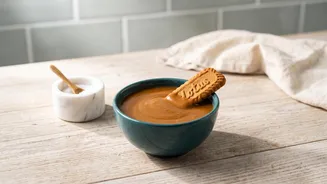
This technique isn't just for drinks. Creating a smooth Biscoff sauce opens up a world of dessert possibilities. By warming the spread with a small amount of milk, cream, or even golden syrup, you can create a pourable sauce with an irresistible caramelised flavour. This liquid gold is perfect for drizzling over ice cream, pancakes, waffles, and brownies. You can also use it as a dip for fresh fruit or as a decorative swirl on top of a cheesecake. For a simple sauce, heat the spread in a microwave-safe bowl in 10-second bursts, stirring in between, until you reach a smooth consistency. Adding a splash of milk will create a thinner, more drizzly texture.
Common Mistakes to Avoid
While the process is straightforward, a few pitfalls can lead to a less-than-perfect result. Firstly, avoid high heat. Boiling the mixture can cause the fats to separate, leaving you with a greasy layer instead of a creamy blend. Secondly, don't just dump the spread into hot milk without stirring. To get that perfectly smooth texture, continuous whisking while it melts is essential to fully incorporate it. Finally, be mindful of your liquid choice. While most milks work, some very low-fat options may not emulsify as well. For the richest result, whole milk or barista-style oat milk are excellent choices that complement the Biscoff flavour.