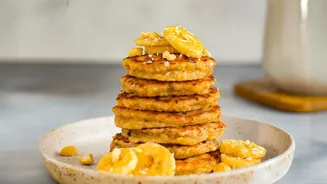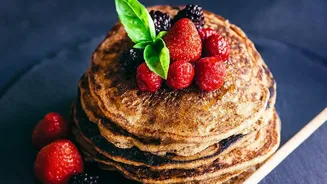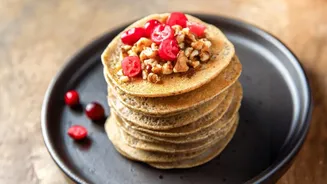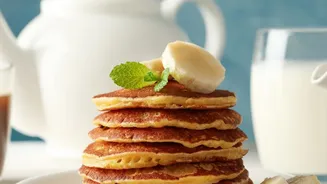



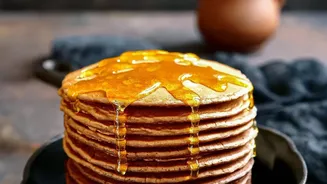
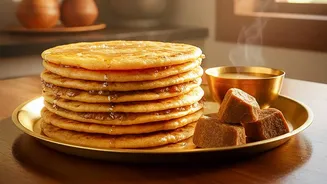
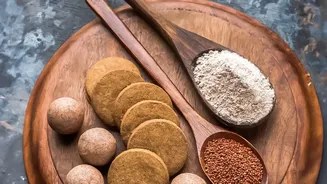
Meet Ragi: The Ancient Superfood
Ragi, also known as finger millet, is an ancient grain that has been a staple in Indian households for centuries. Its recent resurgence as a 'superfood' is well-deserved. Ragi is naturally gluten-free and packed with an impressive array of nutrients.
It is one of the best plant-based sources of calcium, crucial for strong bones and teeth, boasting nearly twelve times the amount found in wheat. Beyond calcium, it is also a great source of iron, which helps prevent anaemia, and is rich in dietary fibre. This high fibre content aids digestion, promotes a feeling of fullness that can help with weight management, and helps in regulating blood sugar levels, making it an excellent choice for diabetics.
The Challenge of a 100% Ragi Pancake
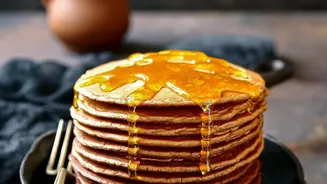
While the health benefits are clear, anyone who has tried making pancakes using only ragi flour might have faced a common problem: the result is often dense, dry, or slightly crumbly. This happens because ragi flour is gluten-free. Gluten is the protein found in wheat that creates an elastic network in batters and doughs. It is responsible for trapping air bubbles, which gives conventional pancakes their signature light, fluffy, and soft structure. Without gluten, ragi pancakes struggle to achieve that same airy texture, often leading to a heartier, but heavier, final product.
Why Wheat Flour is the Perfect Partner
This is where mixing flours comes in. By combining ragi flour with whole wheat flour (atta), you get the best of both worlds. The gluten in the wheat flour provides the much-needed structure and elasticity that ragi lacks. This allows the batter to trap air during cooking, resulting in a pancake that is significantly softer and fluffier. You gain the nutritional advantages of ragi—its high calcium and fibre—while the wheat flour ensures the texture remains delightfully soft and familiar. Many recipes suggest starting with a 1:1 ratio of ragi to whole wheat flour and adjusting from there based on your preference.
Oats: Another Great Option for Softness
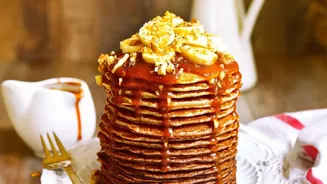
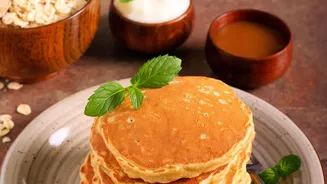
If you're looking for a gluten-free alternative to wheat or simply want a different texture, oats are an excellent choice to pair with ragi. When ground into a flour or even used as rolled oats, they add moisture and a tender, slightly chewy quality to the pancakes. While oats don't provide the same gluten-based structure as wheat, they contribute to a soft texture in a different way, preventing the pancakes from becoming too dry. A combination of ragi and oat flour can create a wonderfully soft and satisfying pancake, especially when an egg or mashed banana is added to the batter for extra binding and moisture.
Tips for the Perfect Mixed-Flour Pancake
To ensure your pancakes turn out perfectly every time, a few simple tips can make a huge difference. First, let your batter rest for at least 10-15 minutes after mixing. This allows the flours to fully hydrate, which improves the final texture and makes the pancakes more tender. Secondly, don't overmix the batter. Mix only until the wet and dry ingredients are just combined; a few lumps are perfectly fine. Finally, cook the pancakes on a medium-low heat. This ensures they cook through evenly without the outside burning before the inside is set. You'll know it's time to flip when bubbles start to form and pop on the surface.