


Following Directions from the Ground
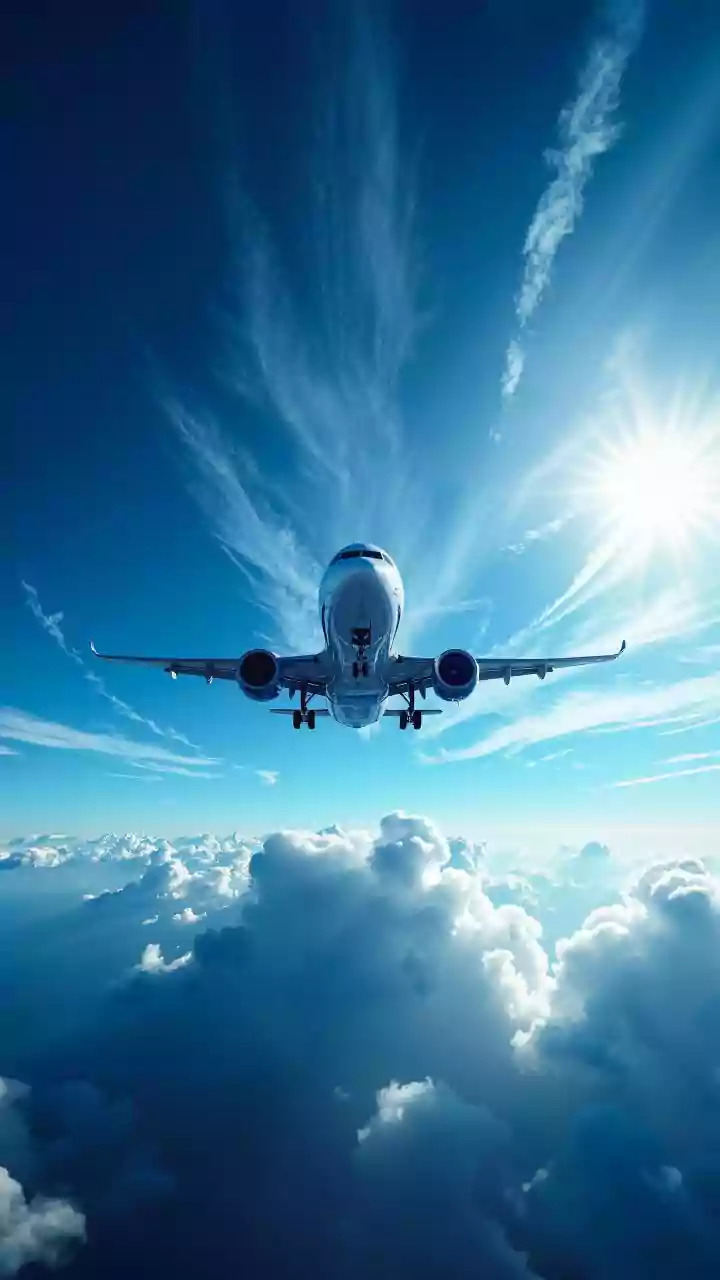
One of the most common reasons for a change in altitude has nothing to do with weather or the aircraft itself, but with simple instructions. Pilots are in constant communication with Air Traffic Control (ATC), the ground-based system that manages the skyways.
For safety and traffic management, an ATC controller might instruct a pilot to descend to a new altitude to ensure safe separation from other aircraft. Pilots are required to comply with these instructions promptly. Think of it as being told to change lanes on a highway to let another car pass or to prepare for an upcoming exit. This is a routine, controlled maneuver that is essential for keeping the skies orderly and safe.
The Stair-Step Arrival
As your flight nears its destination, you might feel a series of descents and level-offs. This is often part of a 'step-down' arrival procedure. To manage the flow of planes into a busy airport, ATC will guide aircraft down in stages, assigning them to hold at certain altitudes before clearing them for the next, lower step. While it might feel like a sequence of small drops, it is a highly structured and planned process to ensure your plane arrives at the final approach at the correct altitude and speed. Some modern airports are transitioning to 'Continuous Descent Operations', which feel smoother, but the stair-step method remains a common and perfectly safe practice around the world.
Chasing Efficiency and Comfort
Commercial aircraft are designed to be most fuel-efficient at very high altitudes where the air is thinner, creating less drag. The optimal altitude, however, isn't constant. As the plane burns fuel throughout the flight, it becomes lighter, and its most efficient cruising altitude actually increases. This can lead pilots to request a 'step climb' to a higher altitude mid-flight. Conversely, pilots might intentionally descend to take advantage of a powerful tailwind, like a jet stream, which provides a free boost in ground speed and saves fuel. They may also descend to escape an unfavorable headwind or to find a smoother layer of air, prioritising passenger comfort over a minor change in altitude.
The Physics of a Turn
Have you ever noticed a slight sinking feeling as the plane banks into a turn? There's a simple physics explanation for that. For an aircraft to fly straight and level, the lift generated by its wings must point straight up to counteract gravity. When a plane banks to turn, that lift force is tilted. This tilt splits the lift into two components: one that pulls the plane horizontally into the turn, and a slightly reduced vertical component. Unless the pilot precisely compensates by increasing the angle of attack (pulling back on the controls slightly), the aircraft may experience a minor and brief loss of altitude during the turn. This is a normal aerodynamic effect that pilots manage constantly.
Sensation Versus Reality
For passengers, the most unsettling part of an altitude change is the physical sensation. That 'stomach in your throat' feeling is caused by downward acceleration, similar to being on a rollercoaster. Your body briefly feels lighter because the seat is no longer pushing up against you with the same force. However, what feels like a dramatic plunge of hundreds of feet is often an altitude change so small it would barely register on the altimeter. It's crucial to distinguish between 'descending' and 'falling'. A plane losing altitude is almost always descending—a controlled, deliberate maneuver where the wings are still generating lift and the pilots are fully in command. It is not falling out of the sky.
In Case of an Emergency
While exceedingly rare, a rapid descent can be initiated for an emergency, such as a loss of cabin pressure. In this scenario, pilots are trained to bring the aircraft down quickly and safely to an altitude below 10,000 feet, where the air is dense enough to breathe without supplemental oxygen. While this descent is faster than normal, it is still a controlled and practiced procedure. The aircraft is not falling; it is flying under full pilot control to a safe altitude. The redundant systems and extensive training that pilots undergo make these events highly survivable.