






The Green Banana: A Gut Health Hero
A green, or unripe, banana has a firm texture and a less sweet, almost starchy taste. This is because it is packed with resistant starch. As the name suggests, this type of starch 'resists' digestion in your small intestine and travels to your large intestine,
where it acts as a prebiotic, feeding the beneficial bacteria in your gut. This process can support overall gut health, improve digestion, and even promote a feeling of fullness, which can aid in weight management. Due to its low sugar content and high resistant starch, a green banana has a low glycemic index (GI), meaning it releases sugar into the bloodstream slowly. This makes it an excellent choice for individuals managing their blood sugar levels. Some may find green bananas cause slight bloating initially, which is a sign of the gut bacteria at work.
The Yellow Banana: The All-Round Performer
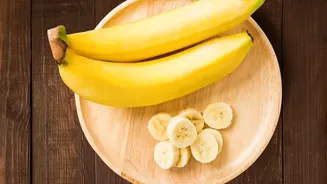
This is the banana most of us know and love: bright yellow, soft, and sweet. As a banana ripens, its resistant starch converts into simple sugars, making it a fantastic source of quick, easily digestible energy. This makes a yellow banana an ideal snack 30 to 60 minutes before a workout, providing the fuel your muscles need to perform. While lower in resistant starch than its green counterpart, the yellow banana is richer in antioxidants. These compounds help protect your body's cells from damage. It still contains a good amount of fibre and essential nutrients like potassium and vitamin B6, which are crucial for heart health and muscle function. For most people, the perfectly yellow banana strikes a great balance between natural sweetness, energy, and nutritional value.
The Spotted Banana: Sweet, Gentle, and Rich in Antioxidants
As a banana continues to ripen, it develops brown spots, and its sugar content reaches its peak. At this stage, nearly all the starch has turned into sugar, making it the sweetest and easiest to digest version of the fruit. This makes spotted bananas a great option for people with sensitive digestive systems or for anyone needing a very rapid energy boost. The ripening process also increases the concentration of certain antioxidants. While a fully brown banana might look past its prime, it's an antioxidant powerhouse and is perfect for baking, as its high sugar content and soft texture blend beautifully into breads, muffins, and smoothies. However, due to its higher sugar concentration and medium-range glycemic index, those monitoring their blood sugar should consume spotted bananas in moderation.
The Simple Verdict: Your Banana, Your Choice
So, which banana should you eat? The answer is refreshingly flexible. There's no single 'best' banana, only the best banana for your specific needs at a given moment. If you're focused on gut health and stable blood sugar, reach for a greener banana. If you need a quick burst of energy for a run or a gym session, a classic yellow banana is your best bet. And if you want a sweet treat that's easy on the stomach or a perfect ingredient for baking, a spotted banana is ideal. Forget complicated rules and listen to what your body needs. The beauty of the banana lies in its versatility throughout its lifecycle, offering different benefits at every stage. The best advice is to enjoy them however you prefer, whenever it suits your lifestyle.