







From Restorers to Creators
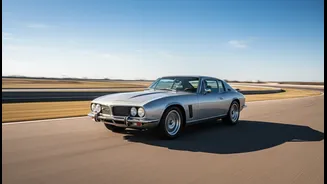
Jensen International Automotive, or JIA, has carved out a prestigious niche in the automotive world. Based in the UK, they are globally recognized as the go-to experts for restoring and modernizing classic Jensen cars, particularly the iconic Interceptor.
Their projects are far more than simple restorations; they are meticulous recreations that often blend modern reliability with timeless design. For years, if you wanted a classic Interceptor that could be driven daily without the usual classic car headaches, JIA was your first and only call. This reputation was built on perfecting what already existed. But the company has now signalled a monumental shift in its strategy. It is moving from being the master of restoration to becoming a full-fledged manufacturer of its own vehicle: the Jensen Interceptor GTX.
Introducing the Interceptor GTX
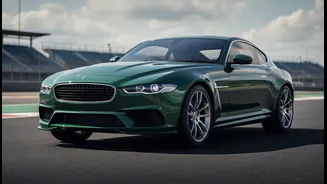
The Interceptor GTX is not a restomod or a continuation car. JIA is emphatic about this point. While it pays homage to the legendary Interceptor of the 1960s and 70s, it is a clean-sheet design, built from the ground up. The new car's silhouette, with its long bonnet and distinctive bubble-backed rear window, clearly takes inspiration from its famous predecessor. However, every other component is entirely new. JIA’s ambition is to compete with the giants of the luxury grand tourer (GT) market, like Bentley and Aston Martin. The GTX is designed to be an ultra-high-performance luxury British GT, blending handcrafted luxury with raw power and a pure, analogue driving experience.
The Bespoke Chassis Difference
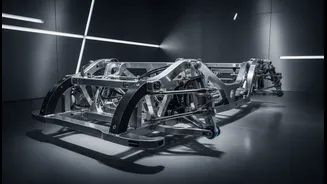
This is where the GTX truly breaks away from JIA's past projects. Their restoration work, by definition, uses the original chassis of the donor car. The GTX, however, is built around a completely new, hand-built aluminium chassis. This bespoke platform is a massive engineering undertaking. Designing a new chassis from scratch allows engineers to optimize for modern performance, safety, and dynamics in ways that are impossible with a 60-year-old frame. It means the car's entire structure is lighter, stronger, and more rigid than any restored classic could ever be. This clean-sheet approach is the difference between renovating a historic house and building a new one with modern materials and techniques while honouring a classic architectural style. It allows for a no-compromise vision.
Power and Performance
Paired with the bespoke chassis is a hand-built aluminium body and what JIA calls a “bespoke” supercharged V8 engine. While details on the engine's origin are still under wraps, the promise of a powerful V8 is historically appropriate for the Interceptor name, which originally used American big-block engines. The initial version of the GTX will be a track-only special, allowing the team to develop the car in the most extreme environment before releasing road-going versions. This strategy suggests JIA is serious about performance, honing the car’s dynamics before adapting it for public roads. A focus on a “fully analogue driving experience” hints at a manual gearbox and a cabin focused on driver engagement rather than digital distractions.
A Legacy Reclaimed
The project is more than just a business venture; it's a personal mission. A key partner in the project is Jeff Qvale, the son of Kjell Qvale, who owned Jensen Motors from 1970 to 1976. Having spent time in the Jensen factory as a teenager, his involvement brings a direct family connection to the brand's heritage. This isn't just a company using a famous name; it's a team with deep roots in the brand's history trying to steer it into the future. The move from restorer to manufacturer is a bold and risky one, but it shows immense confidence in their engineering and design capabilities. The GTX is JIA's statement that they are not just caretakers of Jensen's past, but creators of its future.