



A Longer Journey for Raindrops
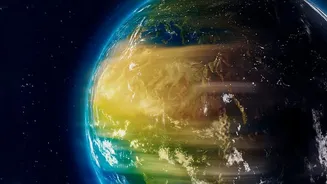
Recent scientific research confirms that atmospheric moisture is traveling greater distances before it falls back to Earth as rain or snow. A study focusing on the United States, for example, found that water vapor now travels 50 to 80 kilometers farther
than it did just a few decades ago. This means that the water evaporating from an ocean or a lake stays airborne for longer, carried by winds across continents and seas. These 'rivers in the sky,' formally known as atmospheric rivers, are responsible for transporting the majority of water vapor outside of the tropics. While these atmospheric rivers are a natural and vital part of the global water cycle, their changing behaviour is a clear signal that the underlying mechanics of our climate are being altered.
Why Is This Happening?
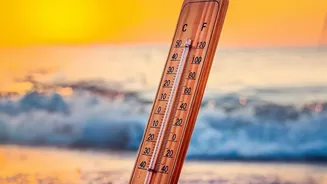
The primary driver behind this change is global warming. A warmer atmosphere can hold more moisture—about 7% more for every one-degree Celsius rise in temperature. This increased capacity allows water vapor to remain in the air for longer periods and travel farther before conditions are right for it to condense and precipitate. At the same time, global warming increases the rate of evaporation, feeding more water into the atmosphere to begin with. This effectively supercharges the water cycle, leading not just to moisture traveling farther but also contributing to more intense weather events when that moisture is finally released. Human activities, such as large-scale agriculture and groundwater pumping, also have a significant impact on local and regional water cycles, further complicating these global patterns.
Implications for the Indian Monsoon
For India, any change to the water cycle is a matter of critical importance, particularly concerning the monsoon. The Indian summer monsoon is a lifeline for agriculture and the economy, and its predictability is paramount. The phenomenon of atmospheric rivers already plays a role in India's weather, with moisture from the Arabian Sea feeding into the Indo-Gangetic plains during winter. Studies have linked atmospheric rivers to extreme rainfall events, such as the devastating floods in Kerala in 2018. As the transport of atmospheric moisture becomes more extensive and erratic, it could lead to greater variability in monsoon patterns. Climate models already predict an increase in Indian Summer Monsoon Rainfall due to higher water vapor content in the atmosphere, but the timing and distribution of this rain may become less reliable. This raises the risk of prolonged dry spells punctuated by sudden, extreme downpours, a pattern that challenges traditional water management and agricultural practices.
A Shift Toward Weather Extremes
The lengthening journey of atmospheric water is not just an academic curiosity; it is reshaping weather patterns globally. As moisture is transported over greater distances, some regions may become drier while others become wetter. This redistribution of rainfall can exacerbate both droughts and floods. An area that once relied on a certain amount of local evaporation and precipitation might find its moisture being carried away, contributing to drier conditions. Conversely, the region where that moisture eventually falls could be inundated with extreme rainfall far beyond what its infrastructure can handle. This dynamic creates a 'boom or bust' cycle of precipitation, swinging between severe drought and catastrophic flooding. Reports from the World Meteorological Organization already highlight an increasingly erratic and extreme global water cycle, a trend this new understanding helps to explain.
Adapting to a New Reality
Understanding that the water cycle itself is changing is a crucial step toward preparing for the future. The simple idea that water evaporates and falls in roughly the same region is no longer a reliable assumption. This has massive implications for how we plan everything from agriculture to urban infrastructure. As the water security of one region becomes increasingly dependent on weather patterns thousands of kilometers away, the need for international cooperation on climate action and water management becomes more urgent. Scientists emphasize that our climate models must evolve to accurately account for these complex interactions between aerosols, water vapor, and human activity to improve predictions for rainfall and extreme weather. For nations like India, this means investing in more resilient infrastructure, smarter water conservation strategies, and advanced early warning systems to cope with a future where the rain is no longer as predictable as it once was.