



An Invisible Object Makes a Scene
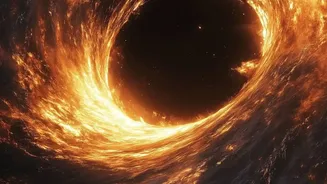
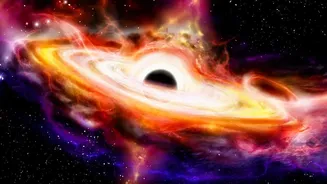
Astronomers have found an 'orphan' supermassive black hole wandering the outskirts of a distant galaxy, a place they are not typically expected to be. These cosmic monsters, with masses millions of times that of our sun, are normally stationary anchors
at the heart of their galaxies. Finding one so far from the core is a profound discovery. So how did scientists spot an object that is, by its nature, invisible? It gave itself away by eating. An unlucky star drifted too close and the black hole’s immense gravity tore it apart in a violent phenomenon known as a tidal disruption event. The resulting flare of energy was so bright it briefly outshone its entire host galaxy, radiating with the brilliance of 10 billion suns.
A Cosmic Detective Story
The initial flash was detected in November 2025 by the Zwicky Transient Facility in California, whose AI algorithms flagged the event as unusual due to its off-centre location. This triggered further investigation, and astronomers turned to NASA’s Neil Gehrels Swift Observatory. Swift’s ability to observe in ultraviolet and X-ray wavelengths, which are blocked by Earth's atmosphere, was crucial. It confirmed the extreme temperature of the flare—around 54,000 degrees Fahrenheit—and provided the data needed to confirm this was indeed a star being shredded by a black hole, ruling out other possibilities. The discovery, published in The Astrophysical Journal Letters, validated a new method for finding these otherwise dormant, wandering black holes.
A History of Violence
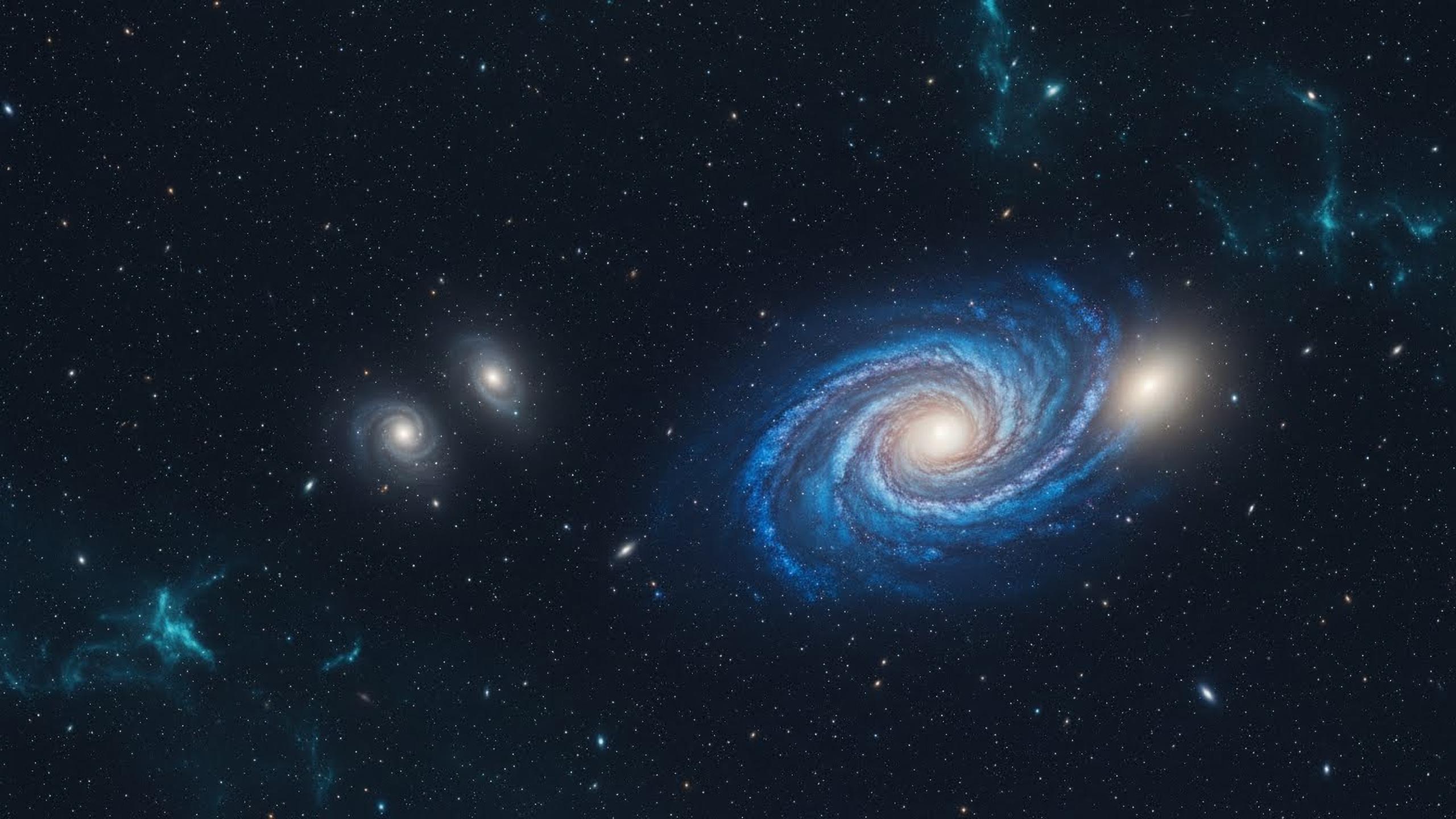
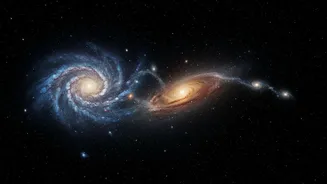
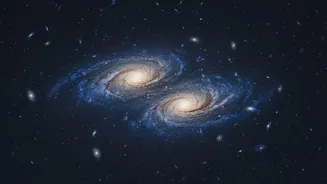
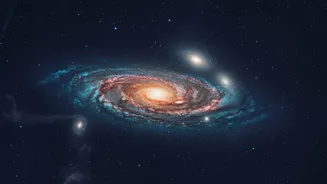
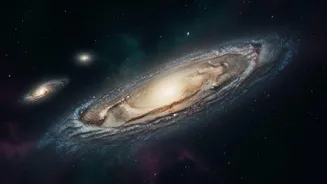
A supermassive black hole doesn’t just decide to go for a walk. Its strange position is a clue to a chaotic and violent past. Scientists have proposed two main scenarios to explain its journey. The first involves the merger of three or more galaxies. As these galaxies collided, their central black holes would have engaged in a complex gravitational dance, and the lightest of the group could have been ejected, flung out into the galactic suburbs like a stone from a slingshot. The second possibility is that a smaller, dwarf galaxy is in the process of being consumed by the larger one. The wandering black hole could be the remnant core of that dwarf galaxy, still carrying some of its original stars with it as it merges.
Rewriting the Rules of the Universe
This discovery fundamentally challenges the assumption that supermassive black holes are always found at the very centre of galaxies. It proves that 'wandering' or 'rogue' black holes, long predicted by theorists, do exist. Finding one that was previously dormant—only revealing itself when it began to feed—suggests there could be many more lurking undetected in the quiet outskirts of galaxies. Until this event, every confirmed tidal disruption had been found near a galactic core. By proving these events can happen far from the centre, it gives astronomers a new tool to hunt for a hidden population of roaming black holes. Each one they find will serve as a fossil record, helping to piece together the history of how galaxies collide, merge, and grow over billions of years.