





The Core Mission: A New Economic Order
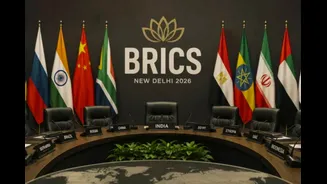
At its heart, the BRICS initiative is a response to a global financial system that member nations feel is dominated by Western powers and institutions. The goal is to create a counterweight and increase the influence of emerging economies. Following its recent
expansion to include countries like Egypt, Iran, and the UAE, the bloc now accounts for about 40% of global GDP and over a quarter of global trade. This increased economic heft is the foundation of its push for greater influence. The strategy isn't to tear down the existing system overnight, but to build parallel structures that offer alternatives, thereby reducing dependency on the US dollar and Western-controlled financial networks like SWIFT.
The De-Dollarization Drive in Practice
A central pillar of the BRICS strategy is moving away from the US dollar for international trade. This “de-dollarization” is not about creating a single BRICS currency, a move India has stated it does not support. Instead, the focus is on practical steps. Members are increasingly settling bilateral trade in their own local currencies, a move that reduces transaction costs and exposure to the dollar's fluctuations. For instance, Russia has reported that around 90% of its transactions with BRICS nations now occur in national currencies. Another key initiative involves linking the members' domestic payment systems. Ahead of the summit in New Delhi, there is significant discussion about connecting systems like India's Unified Payments Interface (UPI), Brazil's Pix, and China's Cross-Border Interbank Payment System (CIPS). This would create alternative corridors for cross-border payments, making them faster and cheaper.
India’s Balancing Act and Growing Trade
For India, which holds the BRICS chairship in 2026, the strategy is one of practical cooperation rather than outright confrontation with the West. New Delhi is leveraging the platform to boost its own economic agenda, particularly in providing greater market access for its small and medium-sized enterprises (SMEs). However, India's trade relationship with the bloc highlights some of the inherent challenges. While India's total trade with BRICS nations more than doubled between 2021 and 2026 to $417.5 billion, its trade deficit also tripled to over $226 billion. This is largely due to a massive increase in imports, especially from China and Russia. Exporters and trade bodies in India are urging the government to use the BRICS platform to correct this imbalance by seeking better market access and reducing non-tariff barriers.
Internal Divisions and External Hurdles
Despite its ambitious goals, the BRICS bloc is not a monolithic entity and faces significant internal and external challenges. Geopolitical rivalries, most notably the long-standing border disputes and regional competition between India and China, create underlying tensions. The economic dominance of China within the group is another point of concern for members like India, who are cautious about initiatives that could further entrench Beijing's influence. Furthermore, intra-BRICS trade remains relatively low, accounting for only about 5% of global trade, despite the bloc's large share of the world economy. The lack of a formal free trade agreement and existing trade barriers between members hinder deeper economic integration. Externally, the push for alternative financial systems is being closely watched by the United States and could face pushback, including potential sanctions.