







A Sentinel for Cosmic Explosions
For over 21 years, the Swift Observatory has acted as NASA's premier 'first responder' in space. Its primary mission is to detect and study gamma-ray bursts (GRBs), the most powerful explosions in the universe, which can release more energy in seconds
than our sun will in its entire lifetime. Swift’s trio of instruments allows it to not only spot these fleeting events but also to rapidly pivot and analyze their afterglow in X-ray, ultraviolet, and visible light. This unique, rapid-response capability has made it indispensable, contributing to the understanding that heavy elements like gold and platinum are forged in these violent cosmic collisions. Designed for a two-year mission, its longevity and scientific output have far exceeded all expectations, making it a uniquely valuable asset that astronomers were not ready to lose.
What Does 'Sinking' Mean?
The term 'sinking' isn't about a component failure, but something far more fundamental: Swift is literally falling out of the sky. Its orbit has been decaying due to atmospheric drag—friction from the outermost traces of Earth's atmosphere. This effect was dramatically accelerated by intense solar activity in recent years, which caused the atmosphere to expand and increase drag on satellites in low-Earth orbit. Swift was never equipped with its own thrusters to counteract this pull. Without intervention, NASA scientists projected the observatory would fall back to Earth and burn up in the atmosphere by the end of 2026, putting a definitive end to its historic mission.
A Robotic Lifesaver is Born
Faced with the 100 percent certainty of losing the observatory, NASA opted for an unprecedented solution. In September 2025, the agency awarded a $30 million contract to Katalyst Space, an Arizona-based startup, to do something never before attempted by an American company: launch a robotic servicing mission to save a satellite not designed for it. In a remarkable feat of engineering and speed, Katalyst designed, built, and tested the LINK robotic spacecraft in just nine months. This rapid timeline was crucial, as the clock was ticking on Swift's descent. On July 3, 2026, the LINK spacecraft was successfully launched aboard a Pegasus XL rocket, beginning its journey to find and rescue the falling telescope.
The High-Stakes Space Grab
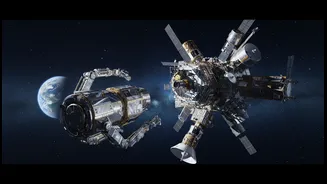
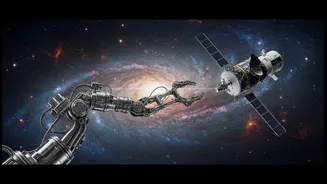
The rescue itself is a high-risk, high-reward maneuver. The LINK spacecraft, equipped with three robotic arms, must autonomously rendezvous with Swift, inspect it, and find secure points to grab onto—all without damaging the delicate, 21-year-old observatory that has no built-in docking ports. Once captured, LINK will use its own thrusters to gently and gradually boost Swift from its current decaying altitude of around 360 kilometers back up to a stable orbit of approximately 600 kilometers. The process will take several weeks of in-orbit checkouts followed by a careful, months-long boost to ensure the structural integrity of the aging telescope is maintained. If successful, the mission could extend Swift's operational life by another decade or more.
Pioneering a Sustainable Future in Space
This mission is about more than just saving one telescope; it's a landmark moment for the future of space operations. It represents the first-ever commercial robotic servicing mission, demonstrating a new, more sustainable model for managing space assets. Instead of launching costly replacements, companies like Katalyst Space are proving that it’s possible to repair, refuel, and reposition valuable satellites already in orbit. The success of the Swift rescue could pave the way for similar missions to other critical observatories, like the Hubble Space Telescope, which is also slowly losing altitude. This opens up a new playbook where space becomes less of a disposable frontier and more of a sustainable ecosystem.