





Rani ki Vav, Gujarat
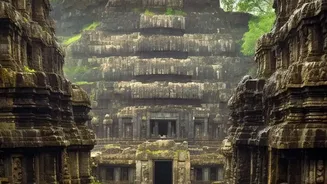
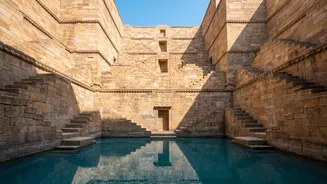
This UNESCO World Heritage site in Patan is the undisputed queen of stepwells. Commissioned by Queen Udayamati in the 11th century as a memorial for her husband, it's designed as an inverted temple to honour the sanctity of water. Its seven levels are
adorned with over 500 principal sculptures and a thousand minor ones, depicting deities, mythical beings, and secular scenes. The sheer scale and artistic detail represent the pinnacle of the Maru-Gurjara architectural style. Lost for centuries under silt from the Saraswati River, it was rediscovered in the 1940s and restored, revealing an engineering feat designed to last millennia.
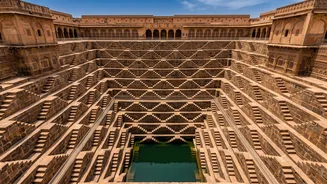
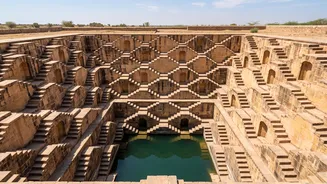
Chand Baori, Rajasthan
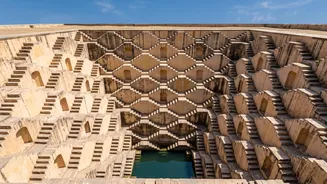
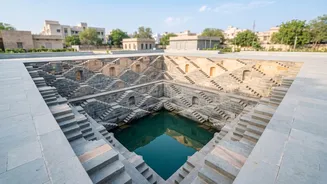
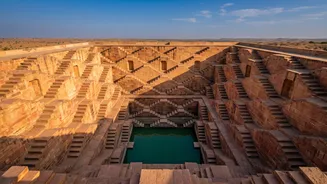
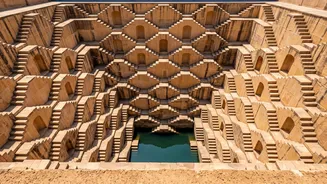
Located in the village of Abhaneri, Chand Baori is one of India's deepest and most visually stunning stepwells. Plunging 13 stories and over 100 feet into the ground, it features 3,500 narrow steps arranged in a perfect, mesmerizing geometric pattern. Built between the 8th and 9th centuries by King Chanda, its primary purpose was water harvesting in an arid region. The incredible symmetry is a marvel of ancient engineering, creating a dizzying optical illusion. The design also had a practical environmental benefit: the air at the bottom of the well remains significantly cooler than the surface, providing a cool sanctuary for locals during the intense summer heat.
Adalaj ni Vav, Gujarat
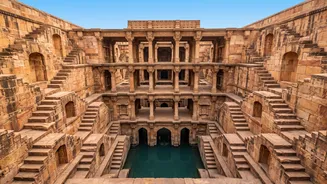
This five-story stepwell near Ahmedabad is a beautiful example of Indo-Islamic architecture. Its history is a tragic tale of love and sacrifice. Started by a Hindu ruler, Rana Veer Singh, in 1498, it was completed by Muslim Sultan Mahmud Begada after he conquered the kingdom. The result is a seamless blend of intricate floral and geometric patterns typical of Islamic design with Hindu and Jain symbolism. The structure was engineered to provide not only water but also a spiritual and social gathering space, with platforms and galleries that would have been cool retreats for travelers and locals.
Agrasen ki Baoli, Delhi
Tucked away amidst the modern high-rises of central Delhi, this protected monument offers a dramatic glimpse into the past. While its origins are popularly attributed to the legendary King Agrasen, the current structure's architectural style dates it to the 14th century. Comprising 108 steps, this 60-meter-long and 15-meter-wide stepwell features a series of arched niches along its walls. These alcoves were not just decorative; they provided shaded spots for people to gather, turning a utilitarian water source into a vital community hub in the heart of the city.
Rani ji ki Baori, Rajasthan
Known as the 'Queen's Stepwell', this is the largest and most famous of the 50-plus stepwells in the town of Bundi. Built in 1699 by Rani Nathavati Ji, it is a 46-meter-deep structure renowned for its exquisite carvings, slender pillars, and high-arched gates. The engineering is impressive, with multi-storied pavilions and places of worship on each floor, confirming its role as a centre for social and religious life. The narrow entrance is marked by four pillars and distinctive stone elephant statues, making it a masterpiece of Rajput architecture.
Panna Meena ka Kund, Rajasthan
Situated near Amer Fort in Jaipur, this 16th-century stepwell is celebrated for its unique and picturesque design. The key feature is the symmetrical, crisscrossing staircases that form a stunning geometric pattern. This eight-story structure was an intelligent water conservation system designed to collect monsoon rainwater for use during dry months. Beyond its environmental function, it was a vibrant community space where people gathered for social interactions, ceremonies, and to escape the oppressive summer heat of Rajasthan.
Toorji Ka Jhalra, Rajasthan
Constructed in Jodhpur in the 1740s by the consort of Maharaja Abhay Singh, this stepwell is a fantastic story of urban regeneration. For decades, it lay neglected and filled with debris, but a recent restoration project has revived it. The project unearthed a beautiful structure of red sandstone, with carvings of elephants and niches for deities. This stepwell was not just a water source but an intricate system that once used a Persian wheel powered by oxen to draw water. Today, it has been transformed into a bustling cultural hub, surrounded by cafes and shops, blending heritage with modern life.
Dada Harir ni Vav, Gujarat
Often overshadowed by Adalaj ni Vav, this five-story stepwell in Ahmedabad is a hidden gem. Built around 1485, it showcases the Solanki architectural style. Its engineering is unique, featuring an octagonal plan at the top and three separate staircases leading down to the water. Artistically, it's a fascinating hybrid, with Sanskrit and Persian inscriptions, and a blend of Islamic floral motifs with Hindu and Jain symbols. Each spacious floor was designed to allow people to congregate, making it a cool, peaceful sanctuary away from the city's heat.