




Fresh off the successful launch of its NVS-03 navigation satellite, the Indian Space Research Organisation (ISRO) is setting the stage for a packed schedule of future missions, signalling a new phase of accelerated growth and ambition.
Strengthening India's Own GPS
The recent success
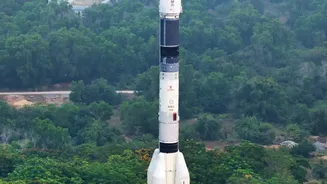
story for ISRO was the launch of NVS-03 on October 30, 2026, aboard a GSLV-F18 rocket. This satellite is a crucial addition to the Navigation with Indian Constellation (NavIC) system, India's indigenous alternative to the American GPS. NVS-03 is part of the second generation of NavIC satellites, designed to ensure the continuity and enhancement of navigation services across India and extending up to 1,500 kilometres beyond its borders. One of the key upgrades in this new series is the inclusion of a domestically developed Rubidium atomic clock, which is vital for providing precise location and timing data. ISRO Chairman V. Narayanan confirmed on November 5 that the NVS-03 satellite is 'fully healthy' and has been successfully moved into its intended circular orbit after its perfect placement by the launch vehicle. The mission also highlighted ISRO's growing operational efficiency, with the launch achieved in just 56 days after the previous GSLV mission.
A Glimpse of the Near Future
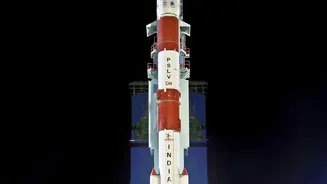
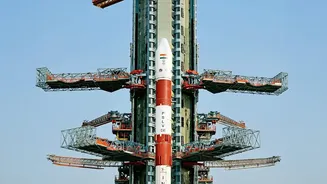
With the NVS-03 mission accomplished, ISRO is not resting on its laurels. The agency is targeting at least five more launches before the end of the financial year on March 31, 2027. This ambitious manifest is expected to include two missions using the workhorse Polar Satellite Launch Vehicle (PSLV), two flights of the Small Satellite Launch Vehicle (SSLV) designed for smaller payloads, and one launch from a private-sector company. While specific payloads and exact dates remain subject to final readiness, this packed schedule demonstrates ISRO's commitment to increasing its launch frequency. Among the missions anticipated is the TDS-01, a technology demonstration satellite. This flurry of activity underscores the agency's dual role in serving national needs and fostering the burgeoning commercial space ecosystem in India.
Gaganyaan: India's Human Spaceflight Dream
The crown jewel of ISRO's upcoming agenda is undoubtedly the Gaganyaan programme—India's ambitious quest to send astronauts into space. A major priority is the first uncrewed test flight, Gaganyaan-1 (G1), which is a critical step toward validating the human-rated launch vehicle (HLVM3) and the crew module's life support and re_entry systems. This mission, which could happen as early as late 2026, will carry the humanoid robot 'Vyommitra' to simulate human functions and test life_support systems. Following the G1 mission, at least one more uncrewed flight will be conducted to ensure every system is perfectly reliable. The culmination of these efforts is the planned crewed mission, which aims to send three Indian astronauts, or 'Gaganyatris', into a 400 km orbit for three days before returning them safely to Earth, with a target launch year of 2027.
Eyes on Earth and Worlds Beyond
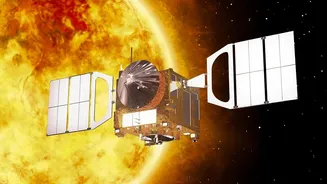
Beyond human spaceflight, ISRO's roadmap includes significant scientific and interplanetary missions. The major NASA_ISRO Synthetic Aperture Radar (NISAR) mission, launched in July 2025, is now in its science operations phase, providing invaluable data on Earth's changing ecosystems, ice sheets, and natural hazards. Looking further ahead, the interplanetary exploration that captured the nation's imagination with Chandrayaan and Mangalyaan is set to continue. A Venus Orbiter Mission, named Shukrayaan, is planned for a 2028 launch to study the atmosphere of our planetary neighbour. Following that, Mangalyaan_2 is slated for 2030 and will be a more advanced mission to Mars, potentially including a lander and rover to build upon the success of the first orbiter. These missions represent India’s growing capabilities in deep_space exploration and planetary science, solidifying its position as a major global player in space.