






The Illusion of a Food Fight
In the narrative of modern urban life, ordering in is often painted as the villain to the virtuous home-cooked meal. One is seen as a splurge—a lazy, potentially unhealthy choice driven by instant gratification. The other is the champion of health, budget,
and tradition, requiring time and effort. We pit the convenience of a 30-minute delivery against the labour of love that is a meal made from scratch. This binary is simple, familiar, and, for many, a source of daily guilt. But this view misses a much more interesting and accurate picture of our relationship with food today. The choice is rarely just about laziness versus diligence; it's about navigating the complex realities of modern life, where time, energy, money, and desire are constantly being juggled.
The Real Unifying Goal: Control
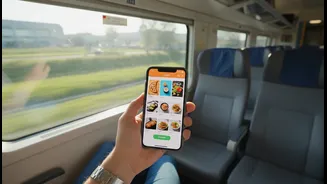
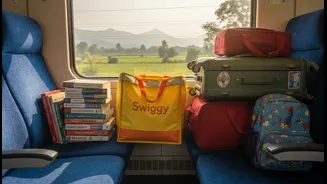
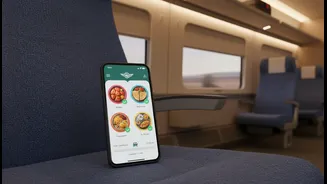
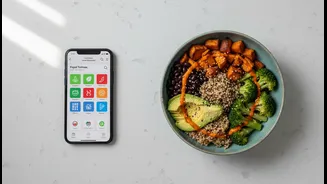
Look closer, and you'll find that both choices are fundamentally about the same thing: control. When you open a food delivery app, you are taking control of your time. For busy professionals, students, or parents in dual-income households, the hour saved from cooking and cleaning is an invaluable resource that can be reallocated to work, family, or rest. You also gain control over choice, with a vast digital food court at your fingertips, a far cry from the limitations of your own pantry. Conversely, packing a meal from home is also an act of control. It’s about controlling the ingredients, the hygiene, the portion size, and, crucially, the budget. While a single order on an app might seem affordable, the daily accumulation of delivery fees, platform charges, and taxes makes it significantly more expensive than cooking. The person meticulously packing a tiffin and the person tapping 'place order' are both making strategic decisions to manage their personal resources and meet their immediate needs.
The Blurring Lines of 'Ghar ka Khana'
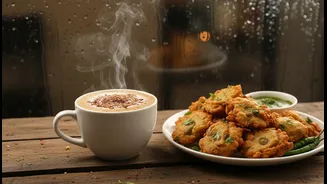
The very definition of a 'home-cooked meal' is becoming wonderfully fluid. The concept, often shorthanded as 'ghar ka khana', has always been more about a feeling—of comfort, simplicity, and trusted quality—than a physical location of cooking. Food-tech platforms have recognised this powerful emotional pull. Today, apps feature entire sections dedicated to 'home-style' meals and 'healthy' options. More significantly, the rise of cloud kitchens and home chefs operating via social media and delivery platforms has blurred the lines completely. You can now order a simple dal, sabzi, and roti from a home chef working a few blocks away, and it arrives with the same convenience as a pizza. These small-scale entrepreneurs, many of whom started during the pandemic, offer the perfect hybrid: the taste and trust of home cooking combined with the convenience of an app. This isn't replacing the traditional home kitchen; it's expanding its reach.
A Toolkit for Modern Living
Rather than seeing them as warring factions, it's more accurate to view app orders and home-packed meals as different tools in a single, modern culinary toolkit. Some days call for the cost-effective, health-conscious precision of a home-cooked meal. Other days, a tight deadline, a late night at the office, or simply a lack of energy makes the convenience of a delivered meal the smarter, more practical choice. This is not a sign of declining tradition but of adaptation. Structural shifts in India, such as increasing urbanization, longer working hours, and the rise of nuclear families, mean that the support systems that once made daily home cooking feasible are changing. In this context, food delivery isn't a failure to cook; it's a successful strategy for getting fed well in a time-poor, high-stress environment.