


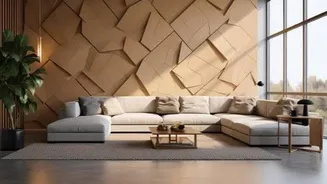
Adding character to a small room can feel like a challenge, but a vintage-patterned accent wall is a perfect solution. It delivers a powerful dose of style without overwhelming the space. Here’s how to get started with confidence.
Why an Accent Wall Works
In a compact space, the
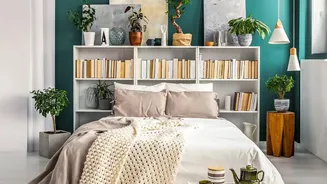
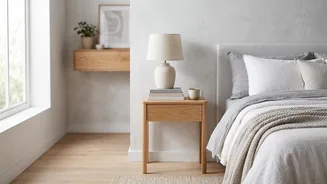
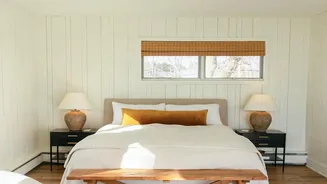
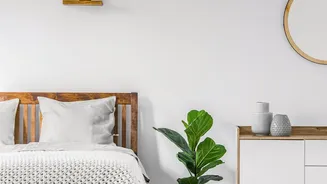
goal is to add personality without making the room feel cluttered or smaller. An accent wall is a strategic design choice that achieves exactly this. By confining a bold pattern or colour to a single surface, you create a strong focal point that draws the eye. This gives the room a sense of purpose and design intention. Typically, the best wall to accent is the one your eye is naturally drawn to when you enter, such as the wall behind a headboard in a bedroom or behind the sofa in a living room. This approach adds drama and depth while the remaining walls, often in lighter, complementary colours, keep the space feeling open and balanced.
Choosing Your Vintage Vibe
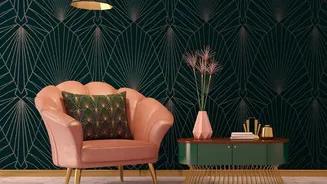
The term 'vintage' covers a wide array of styles, so the first step is to find a pattern era that speaks to you. Do you love the geometric, glamorous lines of Art Deco? Or perhaps the organic shapes and earthy tones of Mid-Century Modern prints? Maybe the lush, romantic florals of 1940s chintz or the groovy, psychedelic swirls of the 70s are more your speed. Don't feel pressured to create a historically perfect room. The goal is to choose a pattern you love that complements your existing furniture and decor. Visiting thrift stores or browsing online collections can provide a wealth of inspiration for different decades.
The Golden Rules of Scale and Colour
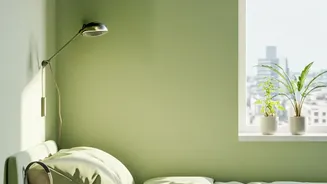
The scale of the pattern is crucial in a small room. Counterintuitively, a large-scale pattern can often make a small room feel bigger. The brain interprets the fewer, larger shapes as a sign of a more generous space. Conversely, a very small, busy pattern can sometimes feel cluttered. Colour also plays a significant role. Lighter backgrounds reflect more light, creating an airy feel. However, don't be afraid of dark, moody colours. A deep navy or emerald green on an accent wall can create a sophisticated, cocooning effect, making the wall seem to recede and adding a sense of depth.
Application: More Than Just Wallpaper
While traditional wallpaper is a classic choice, it's not the only option for creating your vintage accent wall. Peel-and-stick wallpaper is a fantastic, renter-friendly alternative that offers commitment-free style. For a more hands-on approach, consider using stencils to paint a repeating pattern directly onto the wall. This allows for complete customization of colours and can be a budget-friendly project. Another creative idea is to use framed panels of vintage fabric or even high-quality wallpaper sheets, which can be arranged in a grid to create a unique piece of large-scale art.
Getting the Details Right
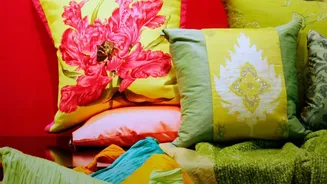
Before you begin, make sure your chosen wall is a solid, simple shape without too many interruptions like doors or off-centre windows. A clean canvas will give your pattern the impact it deserves. Once you've chosen a pattern, pull colours from it to use in other accents around the room, such as throw pillows, curtains, or art. This creates a cohesive and intentional look, tying the entire space together. Finally, pair your patterned wall with simpler furniture to let the design shine as the true focal point. Above all, choose a pattern that brings you joy and makes your small space feel uniquely yours.