






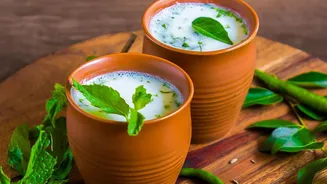
The Nutritional Showdown
At a glance, coconut water and buttermilk (chaas) seem worlds apart. One is a plant-based water, the other a dairy product. Coconut water is lighter, with significantly fewer calories—about 18-45 calories per 100 grams compared to buttermilk's 60-98.
It is naturally low in fat and protein. Buttermilk, on the other hand, offers a more rounded profile. It contains substantially more protein, which contributes to a feeling of fullness, and is an excellent source of calcium, crucial for bone health. Buttermilk also provides a host of B vitamins, including B12, and Vitamin D, which are often lacking in plant-based drinks. While their sugar content is comparable, coconut water's sweetness is all-natural, whereas some packaged buttermilk can have added sugars.
Hydration and Electrolyte Power
When you're sweating, you lose more than just water; you lose essential electrolytes like potassium and sodium. This is where the comparison gets interesting. Coconut water is often called 'nature's sports drink' for a reason. It is exceptionally rich in potassium, containing more than a banana, and also provides magnesium and some sodium. This makes it excellent for quick rehydration after light exercise or exposure to heat. Buttermilk also contains electrolytes, including potassium, but its main advantage after heavy sweating is its higher sodium content, which is crucial for replacing what's lost through excessive perspiration. Therefore, for a quick, light hydration boost, coconut water often has the edge. For recovery after a more intense, sweaty activity, buttermilk might be more effective at restoring balance.
The Gut Health Factor
Beyond simple hydration, both drinks offer unique benefits for your digestive system. Buttermilk is a celebrated probiotic powerhouse. As a fermented drink, traditional chaas is teeming with live bacteria that support a healthy gut microbiome, aid digestion, and can soothe the stomach after a heavy or spicy meal. This makes it an exceptional digestive aid, often consumed with meals in India to prevent bloating and acidity. Coconut water doesn't contain probiotics, but it is known to be gentle on the stomach and easy to digest. Some sources suggest it contains digestive enzymes that can help, but its primary benefit here is its soothing, hydrating nature without causing digestive stress. For actively promoting gut flora and aiding digestion, buttermilk is the clear winner.
When to Choose Which
The best choice really depends on the moment and your specific need. Think of it this way: Reach for coconut water for instant energy and rehydration. It's the perfect low-calorie drink for a hot afternoon, a post-yoga refresher, or when you need to replenish fluids quickly without feeling full. It’s best consumed on an empty stomach or after light activity to maximise its electrolyte benefits. On the other hand, choose buttermilk for digestive support and sustained nourishment. It’s the ideal accompaniment to lunch or dinner, helping to digest your meal and providing a cooling effect. Because it's more filling and contains protein, it can also serve as a satisfying, nutritious snack between meals.