

A World of Extremes
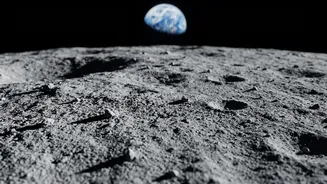
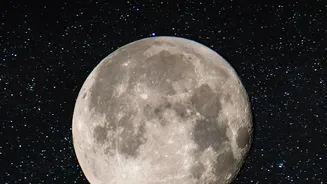
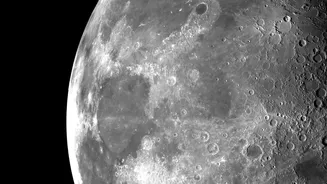
First, let's be clear: the lunar surface is incredibly hostile to life as we know it. With virtually no atmosphere, it is battered by unfiltered solar ultraviolet (UV) radiation and cosmic rays. Temperatures swing wildly, from scorching highs in the sun
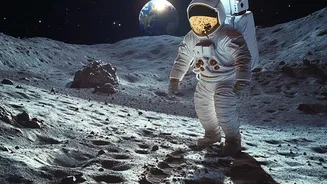
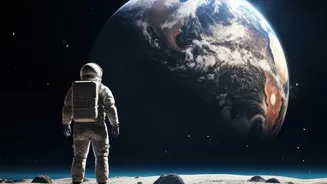
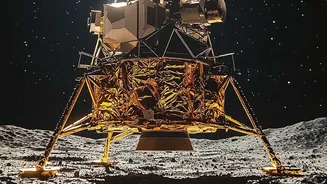
to bone-chilling lows in the dark. Previous crewed missions, like the Apollo landings, explored equatorial regions where these conditions are at their most intense, reinforcing the view of the Moon as a completely sterilised world. This general hostility is why, for decades, the Moon has been considered a low-risk body for planetary protection, meaning spacecraft sent there haven't required the same level of rigorous sterilization as those sent to potentially habitable worlds like Mars.
Shadows of Survival
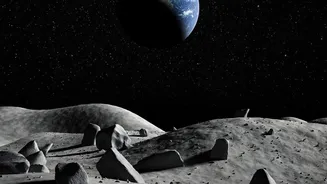
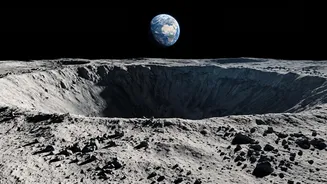
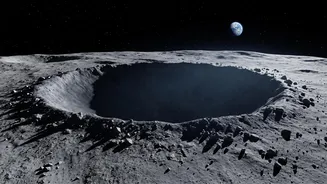
The game changes at the lunar south pole. Due to the Moon's slight axial tilt, the sun hangs permanently low on the horizon, skimming the surface. This unique lighting creates long shadows from crater rims, ridges, and other rugged terrain. Some areas, known as permanently shadowed regions (PSRs), have not seen direct sunlight in billions of years. A recent study published in Science Advances reveals these shaded nooks and crannies act as protective pockets. While not offering warmth, the shadows provide a critical shield against the most lethal factor for microbes: UV radiation. Researchers found that topography, even as small as a boot print, can create micro-environments where the sterilising effects of direct sunlight are significantly reduced.
Earth's Toughest Travellers
A NASA-led team used computer models to see how certain human-associated microbes would fare in these polar niches. They simulated the conditions for five types of bacteria and fungi known for their toughness in space environments, including species found on the International Space Station. The results were surprising. In some shaded spots, these microbes could potentially survive for at least one Earth day, with the hardiest lasting a week or more. The undisputed champion was a fungus called Aspergillus niger, a common black mould found in damp places like bathrooms. Its resilience to UV radiation allowed it to outperform even famously radiation-resistant bacteria. The models showed that while survival is possible, growth and reproduction are not; the microbes would enter a dormant state rather than spreading.
The Planetary Protection Problem
These findings have significant implications for the future of lunar exploration, particularly for NASA's upcoming Artemis missions which are targeting the south pole. Humans are natural explorers, and wherever we go, our microbes follow. They vent from spacesuits and habitats, an unavoidable part of human presence. If these microbial hitchhikers can survive even for a few days, they could contaminate scientifically valuable sites. The south pole's permanently shadowed regions are of immense interest because they are thought to contain pristine water ice and a chemical record stretching back billions of years. Introducing Earth-based microbes could corrupt this record, making it difficult for scientists to determine if any organic compounds they find are truly lunar or just contamination we brought with us. This has led to calls for rethinking contamination controls for future missions to ensure we don't muddle the very science we hope to conduct.