






A Monster Forged for the Track
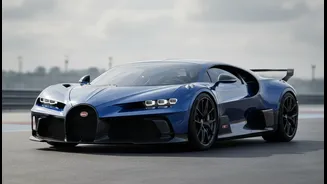
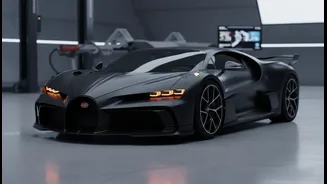
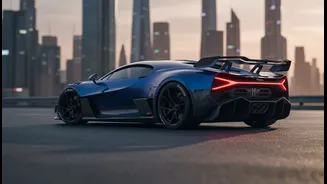
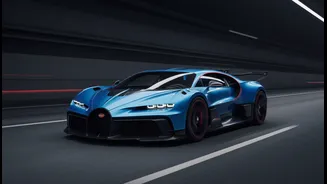
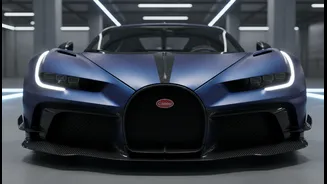
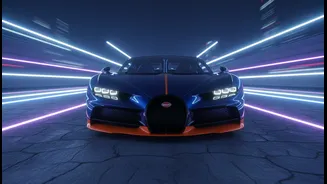
When Bugatti unveiled the Bolide, it was presented as the final, ferocious roar of its legendary 8.0-litre W16 engine. Designed exclusively for the racetrack, it was a 'what if?' concept brought to life—a stripped-down, lightweight marvel built around
its monstrous powertrain. Bugatti planned to produce only 40 of these cars, each with a price tag of around €4 million. These were not merely cars; they were automotive statements, engineered to meet FIA safety standards for racing but completely untamed by the rules of public roads. With 1,578 horsepower on tap using regular fuel, an extreme aerodynamic profile generating immense downforce, and a carbon fibre monocoque, the Bolide was destined to be a collector's prized possession—a machine to be unleashed only on private track days, a garage trophy of the highest order. Deliveries of the 40 track-only units began in early 2024 and concluded by late 2025, cementing its status as an exclusive, untamable legend.
Enter the Specialists: The Lanzante Mission
While Bugatti created the ultimate track weapon, the dream of driving such a dramatic vehicle on a public road remained just that—a dream. That is, until Lanzante Limited entered the picture. This renowned British engineering house has carved out a unique niche in the automotive world, becoming famous for taking on seemingly impossible conversions. They are the firm that famously made the Le Mans-winning McLaren F1 GTR road-legal decades ago. For a select few Bolide owners, Lanzante offered a new, audacious possibility: to transform their track-only hypercar into a road-going reality. This project wasn't a simple modification; it was a comprehensive re-engineering challenge. The goal was to tame the Bolide just enough to meet stringent road regulations without breaking its wild spirit, a task that represents perhaps their boldest undertaking yet.
The Engineering of the Impossible
Converting the Bolide for road use involved far more than simply adding a number plate. Lanzante had to address a formidable list of challenges. First came lighting; the original car had none, so Lanzante ingeniously integrated new, slim X-shaped LED headlights into the bodywork. The suspension, designed for perfectly smooth racetracks, had to be completely reworked and softened to handle the imperfections of public roads, from potholes to speed bumps. Then there were the tyres. The Bolide’s original Michelin racing slicks, which cost a fortune and last for less than 60 kilometres, were replaced with durable, road-legal rubber. A beefed-up cooling system was also installed to manage the engine's heat in stop-and-go traffic, a scenario the track car was never designed for. Each modification was a careful balancing act between compliance and performance.
The Heart of the Beast Remains
Remarkably, some of the Bolide's most extreme components were surprisingly well-suited for the conversion. The heart of the car, its colossal W16 engine, is a derivative of the one found in the road-legal Chiron. This shared DNA meant that, with some expert tuning, the engine could pass road emissions tests without a drastic reduction in its astonishing power output. Similarly, the seven-speed dual-clutch transmission was already known for being relatively user-friendly in Bugatti's other models, making it a strong candidate for road use with only minor adjustments to its mapping. This foundation of road-proven technology gave Lanzante a crucial advantage, allowing them to focus on the chassis, safety, and regulatory systems while preserving the core powertrain that makes the Bolide so extraordinary. It ensures that even with number plates, the car's soul remains ferocious.
The Ultimate Statement on Wheels
The world got its first glimpse of this road-legal monster at the 2026 Goodwood Festival of Speed, where Lanzante unveiled the converted Bolide. Visually, it retains nearly all of the raw, aggressive drama of the original track car, a testament to Lanzante's subtle and respectful engineering approach. It is still, unmistakably, a Bolide. But its newfound legality transforms its purpose. It's no longer confined to the circuit; it can now be driven, seen, and experienced in the real world. This conversion turns one of the rarest cars on the planet into something even more special: a road-legal hypercar that exists at the absolute pinnacle of automotive extremism. It stands as a powerful statement, not just for its owner, but for the ingenuity of specialized engineering that can bend the rules of what's possible.