




A Milestone in Record Time
Mahindra's state-of-the-art manufacturing facility in Chakan, near Pune, has achieved a significant production milestone by producing three million vehicles. The landmark vehicle, a Mahindra BE 6 electric SUV, rolled off the assembly line on July 16,
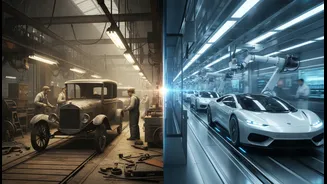
2026, highlighting the plant's strategic shift towards electric mobility. What makes this achievement particularly noteworthy is the accelerated pace of production. The plant took 107 months to produce its first million vehicles, but the most recent million were manufactured in just 27 months. This rapid scaling reflects not only increased manufacturing efficiency but also a surge in domestic and export demand for Mahindra's portfolio of passenger and commercial vehicles.
The Symbolism of the BE 6
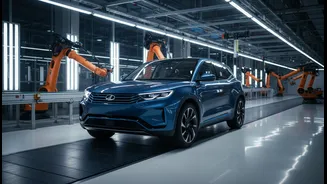
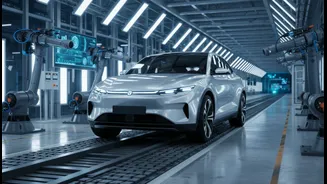
The choice of the BE 6 as the milestone vehicle was a deliberate and symbolic one. Instead of a traditional internal combustion engine (ICE) model, the company chose one of its flagship 'Born Electric' products. The BE 6 is a coupe-style electric SUV built on Mahindra's dedicated INGLO electric platform, representing the company's ambitious push into the next generation of automotive technology. The model has been a strong performer since its launch, signaling a clear direction for the Chakan plant as a hub for both conventional and electric vehicle manufacturing. The facility's EV production lines notably operate using renewable energy, reinforcing a commitment to sustainable manufacturing.
Chakan: A Hub of Advanced Manufacturing
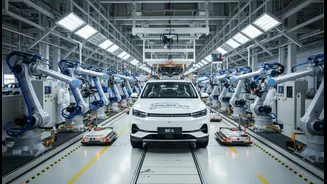
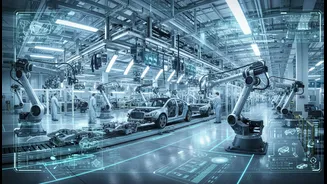
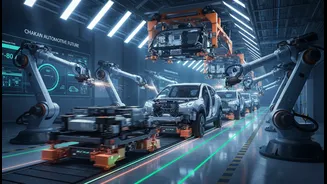
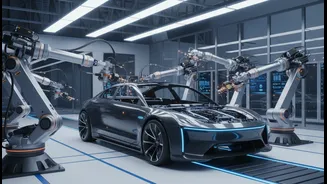
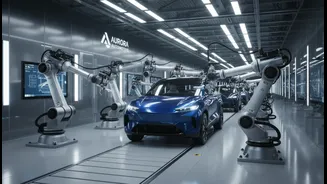
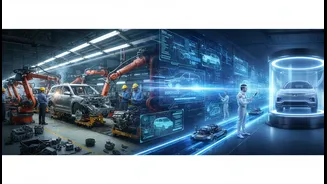
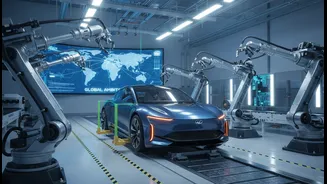
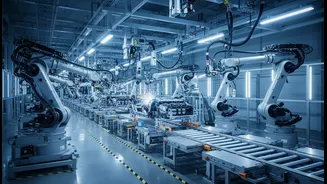
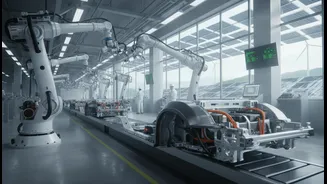
Spread across 657 acres, the Chakan plant is one of India's most advanced automotive production facilities. It is a highly flexible operation, capable of producing 19 different models and over 450 variants across seven multi-model assembly lines. The factory is a showcase of Industry 4.0 technologies, integrating artificial intelligence (AI), 5G connectivity, and the Internet of Things (IoT) to monitor and enhance operations. A significant level of automation is employed, with around 1,500 robots handling tasks in the body shop, paint application, and material movement. This blend of human skill and robotic precision has been crucial in achieving the production speed and quality standards necessary for both domestic and demanding international markets like South Africa, Australia, and New Zealand.
More Than Just Cars
The Chakan story is not just about assembling vehicles; it's about building a world-class industrial ecosystem. While the recent headlines belong to Mahindra, the Chakan industrial belt is a critical automotive hub for multiple manufacturers. Bajaj Auto, for instance, also operates a major facility here, producing its iconic Pulsar range and serving as a global manufacturing base for partners like KTM and Triumph. The Bajaj plant has its own impressive milestones, having rolled out its one-millionth KTM motorcycle in early 2023, with a significant portion destined for export. This concentration of manufacturing prowess creates a robust supply chain, fosters a skilled workforce, and drives technological innovation that benefits the entire Indian auto industry.
The Road Ahead for Indian Manufacturing
The three-million-vehicle milestone at Chakan is a powerful indicator of India's growing capabilities as a global manufacturing power. For Mahindra, it cements the plant's role as a cornerstone of its future strategy, particularly in the rapidly expanding EV market. The accelerating production pace demonstrates an ability to scale efficiently to meet market demand. As India continues to push its 'Make in India' initiative, success stories like the one at Chakan serve as a blueprint. They show how investment in advanced technology, a skilled workforce, and a strategic focus on future-forward products like EVs can create globally competitive manufacturing hubs that drive economic growth and national pride.