






The Three Pillars of Crew Safety
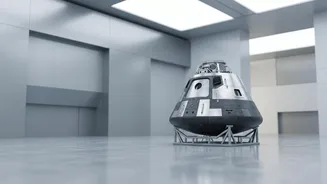
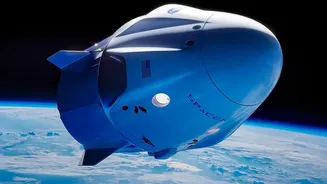
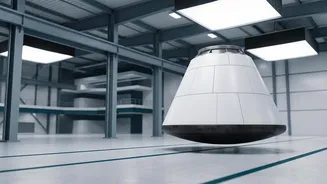
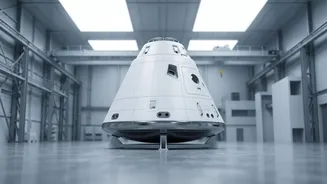
Before the Gaganyaan crew module could be cleared for flight, it had to prove it could protect its precious cargo during the most hazardous parts of its return journey. ISRO recently announced the successful completion of three major qualification tests
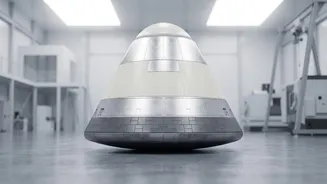
that focused on astronaut safety. The first was the Crew Module Uprighting System (CMUS) test, which validated a flotation system designed to ensure the capsule remains upright after splashing down in the sea, even in rough conditions. The second was the Umbilical Separation test, confirming that the vital power and data links between the crew and service modules would detach cleanly before atmospheric re-entry. The final test validated the module's structural strength during the explosive separation of the Apex Cover, which protects the parachutes. Passing these ground trials with flying colours gives ISRO confidence in the module's fundamental design.
What is Pre-Flight Testing?
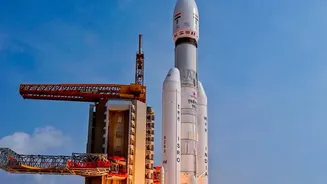
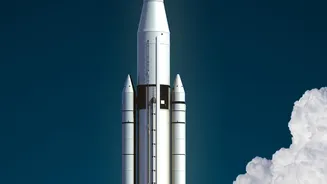
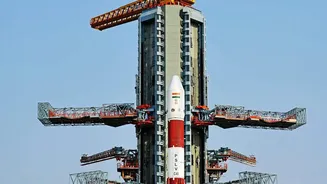
With individual components and subsystems now proven, the mission enters a more complex phase: pre-flight testing. This is where all the disparate parts of the Gaganyaan system are brought together to see how they perform as a whole. This includes integrating the actual flight-ready Crew Module and Service Module, testing them with the Human-Rated Launch Vehicle (HLVM3), and ensuring all ground control systems, communication links, and recovery operations work in perfect sync. This stage will involve a series of uncrewed test flights. The first, Gaganyaan-1 (G1), is scheduled for late 2026 and will carry the humanoid robot Vyommitra to simulate astronaut functions and monitor the cabin environment. These test flights are not mere rehearsals; they are full-scale missions designed to validate every sequence, from launch and orbital manoeuvres to re-entry and splashdown, before any human life is on the line.
The Critical Role of Abort Tests
A crucial element of the pre-flight phase is the validation of the Crew Escape System (CES). This system is designed to act like an ejection seat for the entire crew capsule, rocketing the astronauts to safety in case of an emergency on the launchpad or during ascent. ISRO has already conducted several successful demonstrations, including the Test Vehicle Demonstration Mission (TV-D1), which validated the in-flight abort capability. Further tests, like the upcoming TV-D2 mission, will continue to refine and prove the reliability of this life-saving technology under different simulated failure conditions. Each successful abort test is a non-negotiable step, building the layers of redundancy required for human spaceflight and ensuring the four designated 'Gaganyatris' have a way out if things go wrong.
Training the Gaganyatris
While the hardware undergoes rigorous testing, the human element is also being prepared. The four astronaut-designates—Prasanth Balakrishnan Nair, Ajit Krishnan, Angad Pratap, and Shubhanshu Shukla—have completed their generic astronaut training and are now undergoing mission-specific training in India. This advanced phase takes place at the newly established Astronaut Training Facility in Bengaluru and familiarises them with the specific systems of the Gaganyaan spacecraft, its flight profile, and emergency procedures. Their training runs parallel to the vehicle's development, ensuring that once the spacecraft is certified for human flight, the crew is ready to pilot it.
The Road to a Historic Launch
The successful crew module tests have solidified the mission's foundation, but the road ahead is still paved with challenges. ISRO is targeting the first uncrewed G1 mission for the fourth quarter of 2026. This will be followed by at least two more uncrewed flights in the subsequent year to gather sufficient data and demonstrate system reliability. If all these precursor missions are successful, India's first crewed spaceflight, Gaganyaan-3 (H1), is tentatively scheduled for 2027 or 2028. While timelines in space exploration are often subject to change to prioritise safety, the recent progress shows that India is methodically and confidently moving through its final checklist before making history.