

The Challenge of Finding Your Way
Navigating on the Moon is notoriously difficult. Without an atmosphere to scatter light, distances are deceptive, and the landscape of grey craters and dust can look unnervingly uniform. During the Apollo missions, astronauts sometimes struggled to identify
their exact location, relying on constant communication with mission control and painstaking map comparisons. Today, robotic missions still depend heavily on NASA’s Deep Space Network, a system of massive antennas on Earth that tracks spacecraft. This method is effective but creates a bottleneck; each mission needs a dedicated connection, making it difficult to coordinate multiple assets like landers, rovers, and astronauts at the same time. For a long-term presence under the Artemis program, this Earth-centric approach is simply not sustainable. To build, mine, and explore, we need a local solution.
A GPS for the Moon
NASA's answer is a suite of technologies that essentially create a GPS for the Moon. One key component is a new generation of highly sensitive receivers, like the NavCube3-mini. While Earth's Global Navigation Satellite System (GNSS) signals—the kind your phone uses—are directed at our planet, a significant amount of that energy radiates out into space. The NavCube3-mini is powerful enough to detect these faint signals from lunar distance, allowing a spacecraft or a rover to calculate its own position autonomously, without needing to radio Earth for directions. This capability is being sent to the Moon via NASA's Commercial Lunar Payload Services (CLPS) program, where commercial companies like Intuitive Machines are tasked with delivering these critical technologies.
Building the LunaNet Architecture
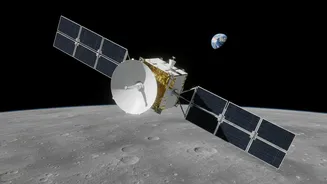
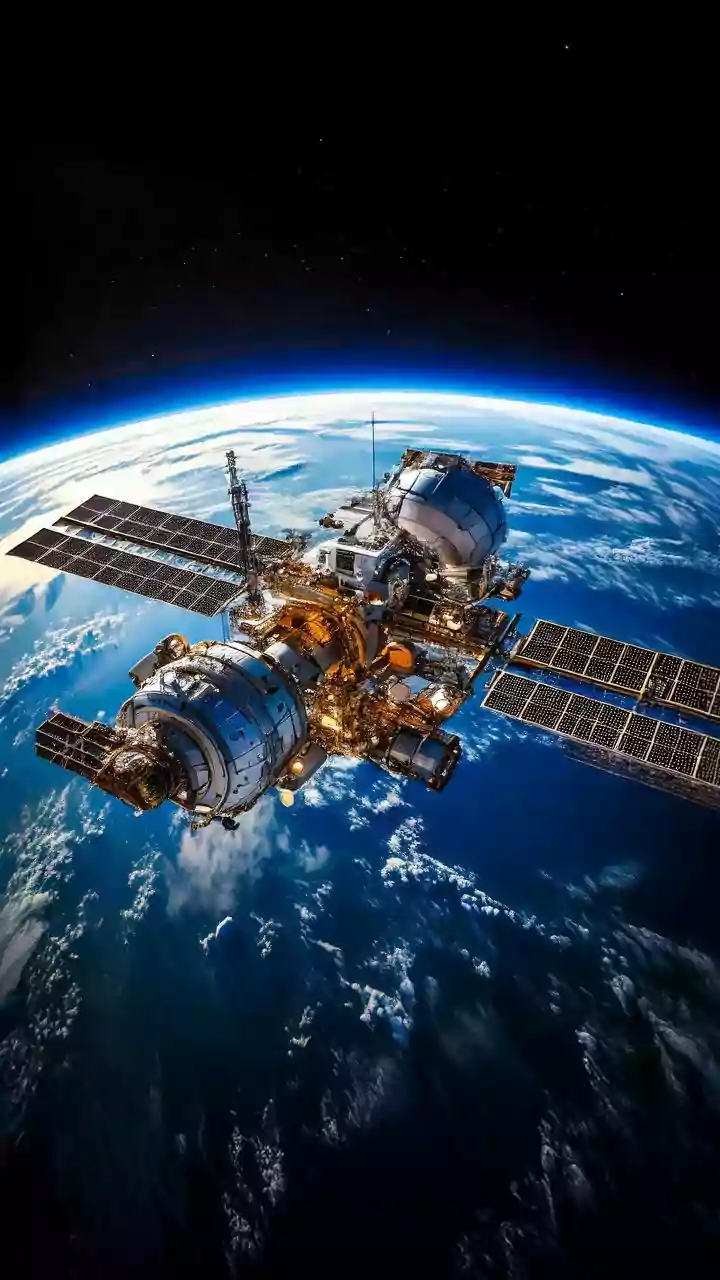
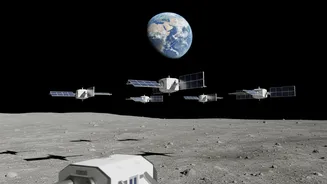
These individual payloads are the first building blocks of a much grander vision called LunaNet. Think of it as an internet for the Moon, a flexible and extensible network of surface beacons and orbiting satellites that provide seamless communication and navigation services across the lunar environment. Much like how your phone switches between Wi-Fi and cellular towers, assets on the Moon will be able to connect to the nearest network node. This architecture is designed to be a collaborative effort, open to international partners and commercial companies to add their own nodes to strengthen the network. LunaNet will provide three core functions: network services (like internet access), science services, and—most crucially—Position, Navigation, and Timing (PNT) services, the foundation of any modern exploration or logistics operation.
Unlocking a New Era of Exploration
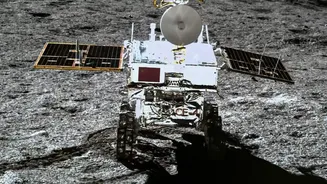
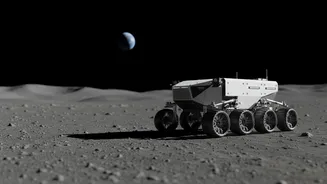
The establishment of a reliable navigation network will be transformative for lunar science and exploration. It enables a level of autonomy and complexity that was previously impossible. Roaming rovers will be able to navigate into permanently shadowed craters at the lunar poles—areas that hold the promise of water ice but are treacherous to explore—without a direct line of sight to Earth. Future Artemis astronauts will be able to pinpoint their location with an accuracy of just a few meters, essential for performing geological surveys and ensuring their safety. Furthermore, LunaNet will allow for the coordination of multiple assets working together. Imagine a scenario where an astronaut directs a team of autonomous rovers to excavate a site, with a lander serving as a local communication hub, all while a satellite overhead provides precise location data for everyone. This is the operational future that local navigation enables.
Paving the Way for a Lunar Economy
Beyond exploration, a robust navigation system is the bedrock for a future lunar economy. Any commercial activity, from mining for resources like helium-3 or water ice to constructing habitats and landing pads, requires the ability to survey sites, guide machinery, and manage logistics with high precision. Just as GPS unlocked trillions of dollars in economic value on Earth by enabling everything from precision agriculture to global supply chains, LunaNet is poised to do the same for the Moon. It provides the essential utility—the roads, signposts, and address system—that commercial companies will need to build a sustainable presence. By investing in this foundational infrastructure through programs like CLPS, NASA is not just planning its next mission; it's laying the groundwork for a bustling, multi-faceted ecosystem of science, exploration, and commerce 385,000 kilometers from home.