






The Rajasthan Experiment Stirring Debate
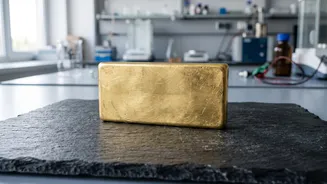
A recent investigation by the Dainik Bhaskar newspaper has sparked widespread discussion. Their team reportedly conducted an experiment in Jodhpur, Rajasthan, to test a worrying claim: that gold could be mixed with a cheaper, heavy metal called rhenium
and still pass certain purity tests. According to the reports, investigators mixed a small amount of rhenium powder with pure gold to create an ornament. The resulting piece, they claimed, was then taken to various testing centres and showrooms, where it was allegedly misidentified as 22-carat gold and even received a hallmark. This experiment has raised alarms about the reliability of some common gold testing methods and the potential for a new, sophisticated form of fraud.
What Is Rhenium and Why Is It a Concern?
Rhenium is a very rare, silvery-white metal with an extremely high melting point. Its primary use is in high-performance industrial applications like jet engine components and electrical contacts. The main reason it has entered the gold debate is its density. Rhenium's density is very close to that of gold, making it an effective adulterant to increase an ornament's weight without being easily noticed. Fraudsters could potentially mix cheaper rhenium powder with gold, selling the resulting alloy at the price of pure gold, thereby cheating the buyer. The core of the controversy lies in how this mixture reacts to testing. While traditional methods like the touchstone test are easily fooled, the Rajasthan report claims that even some modern testing machines failed to detect the rhenium.
How Gold Purity is Tested in India
There are several ways to test gold purity, but two are most relevant here. The first is the X-Ray Fluorescence (XRF) test, often done using a 'karatmeter' found in many jewellery showrooms. This method is fast and non-destructive, meaning it doesn't damage the jewellery. It works by analysing the metal's surface composition. However, its accuracy can be limited; if an adulterant like rhenium is not evenly mixed or is hidden beneath the surface, an XRF machine might miss it. The second, and most definitive, method is the 'fire-assay' or cupellation test. This is a destructive method where a small sample of the gold is melted down in a furnace to separate the pure gold from other metals. It is considered the gold standard for accuracy and is the mandatory method used by official hallmarking centres to certify purity.
Understanding the BIS Hallmark and HUID
The BIS Hallmark is a certification from the Bureau of Indian Standards, the country's national standards body, which guarantees the purity of gold jewellery. It has been mandatory for jewellers in India to sell hallmarked gold since 2021, with some exceptions. A modern hallmark has three components: the BIS logo, the purity grade (e.g., '22K916' for 22-carat gold), and a six-digit alphanumeric Hallmark Unique Identification (HUID) number. This HUID is crucial; it is a unique code for each piece of jewellery, linking it to a central database with details about the jeweller and the hallmarking centre. The key point is that for a piece to receive a legitimate BIS hallmark, it must undergo the rigorous fire-assay test at a BIS-recognised Assaying and Hallmarking Centre (AHC). An XRF test is only a preliminary check at these centres.
So, Is Your Hallmarked Gold at Risk?
The short answer is: if your gold has a genuine, verifiable BIS HUID hallmark, its purity is assured. The rhenium debate highlights a potential loophole in preliminary, non-destructive testing methods like XRF, not a failure of the hallmarking system itself. The controversy is about fraudsters potentially fooling showroom karatmeters or, as alleged in the report, a hallmarking centre not following proper procedure. The mandatory fire-assay process at the core of BIS hallmarking is designed to detect any and all foreign metals, including rhenium, by separating the pure gold. Therefore, the system's integrity relies on the Assaying and Hallmarking Centres adhering strictly to BIS protocols. For consumers, the HUID number is the most powerful tool. You can instantly verify it using the 'BIS CARE' mobile app to confirm the jeweller, hallmarking centre, and purity.