





A Number Too Big to Imagine
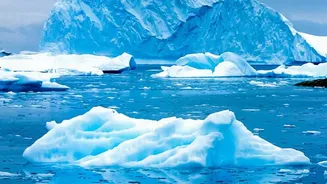
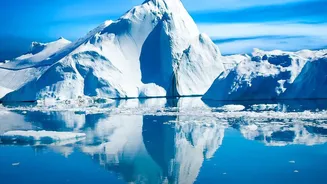
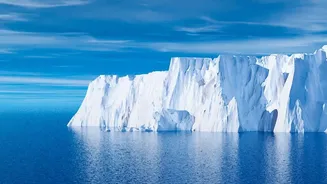
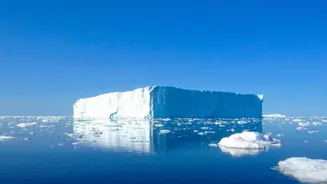
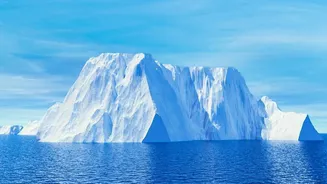
It can be difficult to comprehend the sheer scale of 11,309 billion tonnes—or 11.3 trillion tonnes—of ice. For context, one billion tonnes (a gigatonne) of ice is a block roughly one cubic kilometre in size. The total ice lost since 1979 is enough to cover
the entire continental United States in a sheet of ice about 1.5 metres deep. Another way to visualise it is to imagine the water covering all of Sweden in a layer 25 metres thick. This colossal volume of melted ice has not simply vanished; it has flowed into the world's oceans, fundamentally altering a delicate balance and setting in motion a series of global consequences.
The Science of Watching Ice Melt
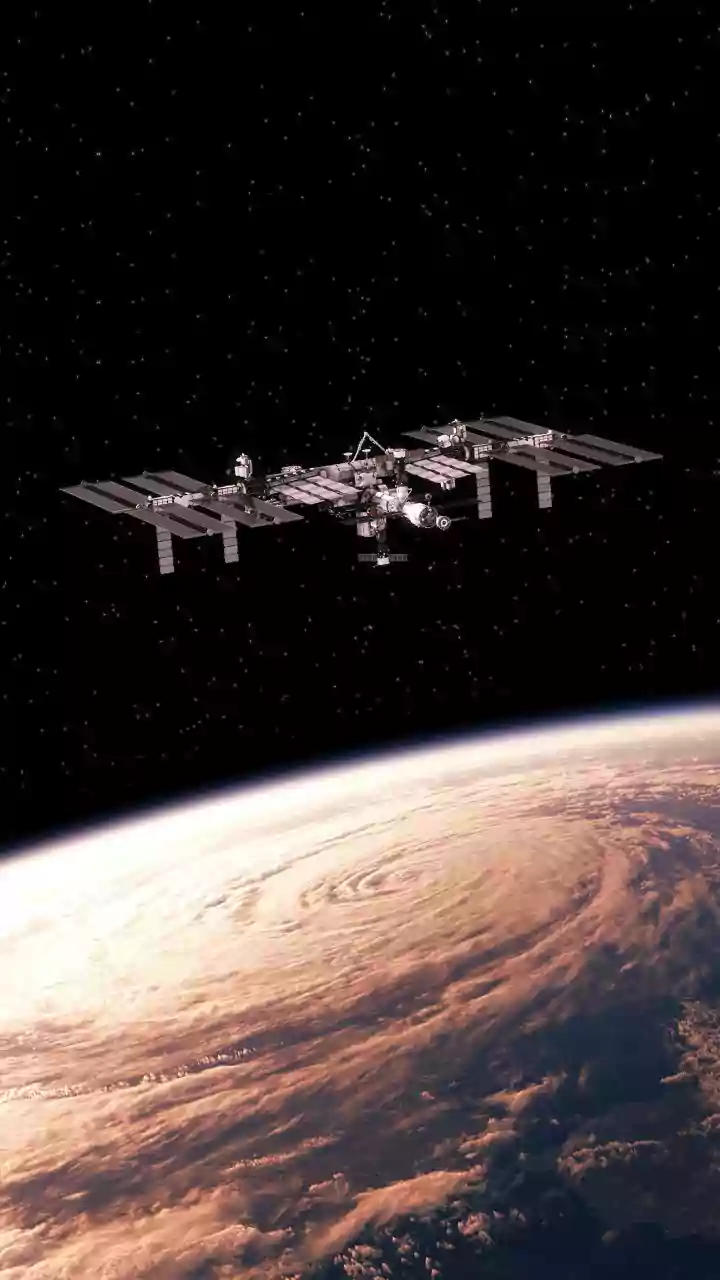
This alarming figure comes from the most comprehensive assessment of polar ice loss to date, conducted by an international team of scientists known as the Ice Sheet Mass Balance Inter-comparison Exercise (IMBIE). Researchers combined data from 27 different satellite missions, creating a continuous record of change from 1979 to 2023. These satellites use various techniques, including measuring changes in gravity, ice sheet height, and glacier flow speed, to calculate the mass being lost. The study found that while the ice sheets were near a state of balance in the 1970s and 80s, the rate of loss has accelerated dramatically, quadrupling between the 1980s and the 2010s.
The Direct Consequence: Rising Seas
The most immediate and far-reaching impact of this ice loss is the rise in global sea levels. The 11.3 trillion tonnes of meltwater have added approximately 3.1 centimetres (about 1.2 inches) to the world's oceans. While that might not sound like much, every centimetre of sea-level rise exposes an additional two to three million people to the risk of annual coastal flooding. Crucially, the IMBIE study revealed that about 84% of this ice loss is not from surface melting due to warmer air, but from the speeding up of glaciers that drain the ice sheets, a process driven by warming oceans that eat away at the ice from below. This dynamic loss is particularly concerning to scientists as it suggests the potential for faster, more unstable melting in the future.
Why It Matters for India
For India, with its extensive 7,500-kilometre coastline, the melting of distant ice sheets is a direct and pressing threat. Major coastal cities like Mumbai, Kolkata, and Chennai are already vulnerable to increased flooding. Rising sea levels, combined with land subsidence in some areas, intensify these risks, threatening millions of people and critical infrastructure. The problem extends beyond flooding. Seawater intrusion contaminates freshwater sources and agricultural land, impacting drinking water supplies and food security for coastal communities. Recent reports highlight that over a third of India's coastline is already vulnerable to erosion, a problem that will only be worsened by rising seas.
What Happens Next?
The steady acceleration of ice loss raises concerns about irreversible tipping points, where melting becomes self-sustaining regardless of future emissions cuts. If the entire Greenland ice sheet were to melt, it would raise sea levels by over 7 metres, with the Antarctic ice sheet holding enough ice to raise them by nearly 60 metres. While such a total collapse is not imminent, the current trend underscores the urgency of the situation. Scientists emphasise that the changes we are seeing today are tracking decades behind the warming that has already occurred, meaning we are locked into further ice loss and sea-level rise for years to come. This long-term perspective highlights the critical need for global action to curb emissions and for local adaptation strategies to protect vulnerable coastal populations.