




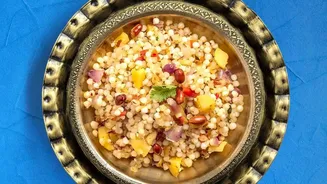
The Soaking Secret
The most critical step to prevent sticky khichdi is the soak. First, rinse the sabudana (tapioca pearls) thoroughly under cold running water. Rub the pearls gently between your fingers and repeat this process three to four times until the water runs completely
clear. This removes the excess starch, which is the primary cause of stickiness. Once washed, the water-to-sabudana ratio is key. Use just enough water to cover the pearls, typically a 1:1 or 1:¾ ratio (sabudana to water). Soaking in a wide, shallow bowl rather than a deep one helps ensure even water absorption. Let it soak for at least 4-6 hours, or even overnight, depending on the pearl quality.
The Perfect Pearl Test
How do you know when your sabudana is perfectly soaked? Perform a simple press test. Take a single pearl and press it between your thumb and forefinger. It should smash easily without any hard, white centre. If it feels hard, it needs more soaking time. You can sprinkle a little more water and let it sit for another hour or two. If the pearls feel mushy, you've used too much water. Don't throw them away; they can still be used to make sabudana vadas. Once perfectly soaked, there should be little to no water left at the bottom of the bowl. Even so, it's a great practice to drain the sabudana in a colander for 10-15 minutes to remove any final traces of moisture.
Choose Your Ingredients Wisely
Not all sabudana is created equal. For khichdi, it's generally better to choose the medium or larger-sized pearls, as they tend to hold their shape better during cooking. When it comes to other additions, roasted peanuts are your best friend. Coarsely crushed peanuts not only add a wonderful crunch but also help absorb excess moisture, keeping the pearls separate. Many recipes recommend mixing the crushed peanuts with the soaked sabudana before adding it to the pan. If you use potatoes, it is often better to use pre-boiled and cubed potatoes, as raw ones can release moisture and take longer to cook.
The Art of Cooking
Once your prep is done, the cooking process is quick but requires attention. Use a wide, non-stick pan or a heavy-bottomed kadhai to prevent sticking. Ghee is the traditional and recommended cooking fat; its high smoke point helps in even cooking and prevents the pearls from clumping. Cook on a low to medium flame. High heat can cause the sabudana to stick to the pan and become mushy. Don't over-stir. Excessive or vigorous stirring can break the delicate pearls, releasing more starch and creating lumps. Instead, gently fold the ingredients together until just combined. The khichdi is done when the sabudana pearls turn translucent, which usually only takes a few minutes. Overcooking is a common mistake that leads to a chewy, gluey texture. A final squeeze of lemon juice at the end not only adds flavour but the acidity also helps in separating the pearls.