





A Green Historical Record
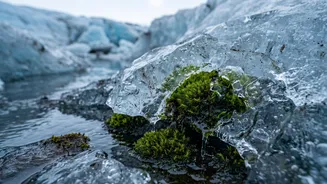
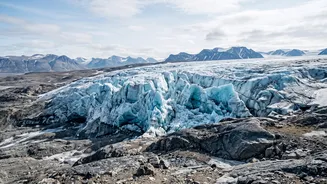
Imagine a plant, frozen in time, holding the secrets of a glacier's life story. This is precisely what scientists have found in places like Antarctica and the Canadian Arctic. As glaciers expand, they move over the landscape, entombing the sparse vegetation,
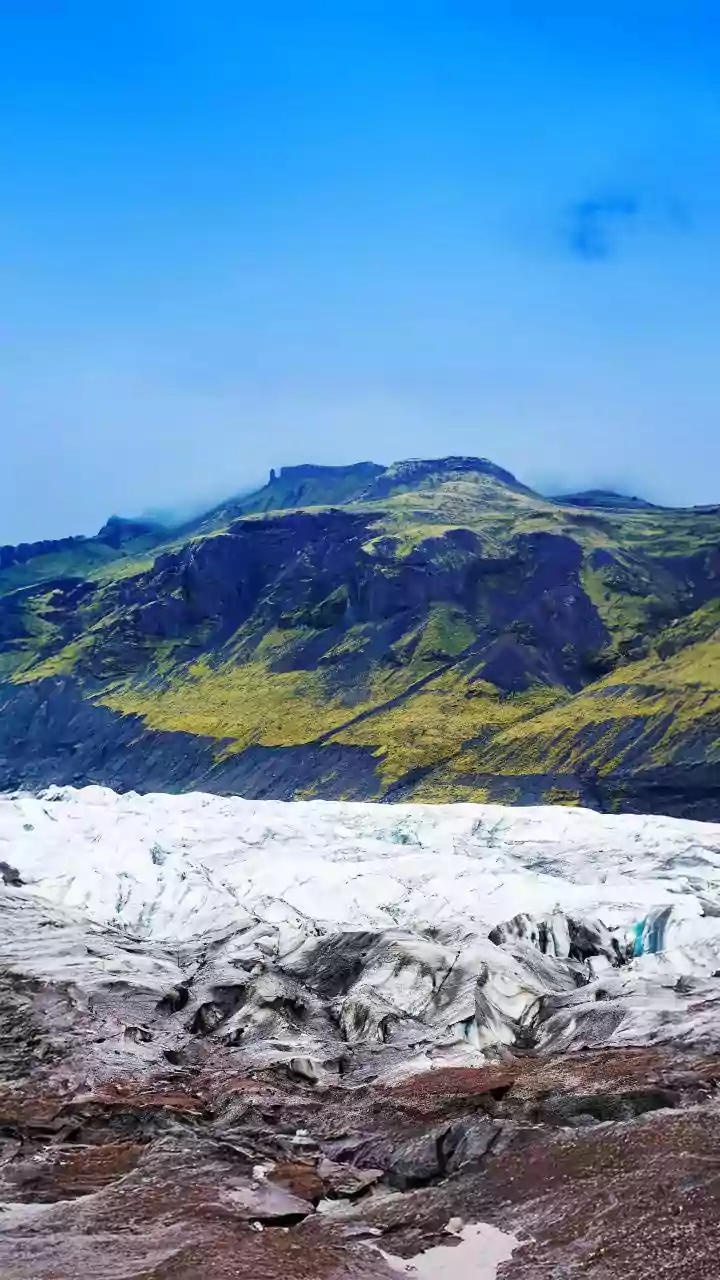
primarily moss, in ice. This process effectively kills the plant, but the extreme cold perfectly preserves it. When the climate warms and the glaciers retreat, these ancient, blackened mosses are revealed once again. For scientists, these exposed plants are not just dead vegetation; they are historical markers.
How Moss Becomes a Clock
The key to unlocking these secrets is a technique called radiocarbon dating. All living things, including moss, absorb carbon from the atmosphere. A tiny fraction of this carbon is a radioactive isotope called carbon-14. When the moss is alive, its carbon-14 level matches that of the atmosphere. But the moment a glacier covers and kills it, the clock starts ticking. The plant stops absorbing new carbon, and the carbon-14 within it begins to decay at a predictable rate. By measuring the amount of carbon-14 remaining in the preserved moss, scientists can determine its 'kill date' with remarkable accuracy. This date tells them the exact time the glacier advanced over that specific spot.
What the Moss Revealed
Studies using this method have provided a much clearer picture of past climate fluctuations. In the Antarctic Peninsula, researchers from the University of Wyoming and other institutions used moss kill dates to identify three distinct phases of glacier advance over the last 1,500 years. This revealed that the region's ice was more dynamic than previously thought, with periods of cooling and glacier growth. Similarly, in the Canadian Arctic, mosses emerging from retreating ice on Baffin Island were found to be 40,000 years old, indicating the region has not been this warm in millennia. These findings help calibrate and verify climate models, providing a real-world check on our understanding of how ice sheets respond to temperature changes.
Connecting the Past to Our Future
This research is more than just a history lesson. Understanding the pace of past ice growth and retreat helps scientists predict how today's rapidly warming climate will affect Earth's massive ice sheets. The East Antarctic Ice Sheet, for example, holds enough water to raise global sea levels by nearly 200 feet. While it has long been considered stable, other studies on coastal moss beds show that even this giant is sensitive to changes in climate, with some areas becoming colder and drier, affecting the local ecosystem. By providing precise data points from the past, the preserved moss helps create more accurate models for future sea-level rise—a critical concern for coastal communities around the world, including in India. These tiny, resilient plants offer a powerful window into our planet's complex climate system, reminding us that even the smallest elements of an ecosystem can tell a very large story.