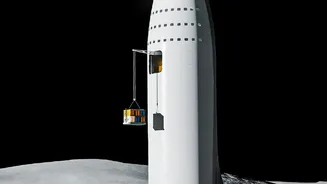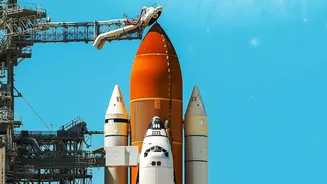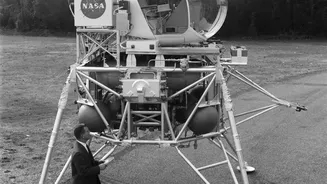

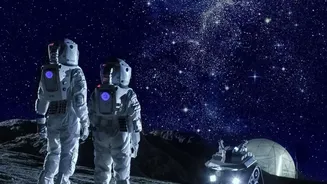
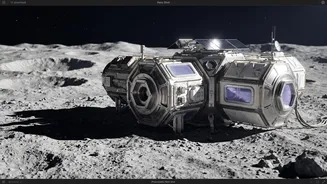

NASA's Artemis program aims to establish a permanent human foothold on the Moon, a monumental task filled with unprecedented challenges. To solve them, the agency is looking beyond its own walls, calling on the fresh perspectives of young innovators.
A New Era of Lunar Ambition
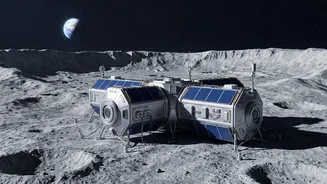
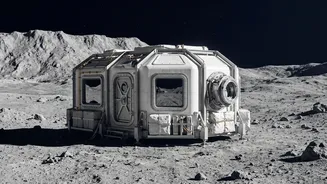
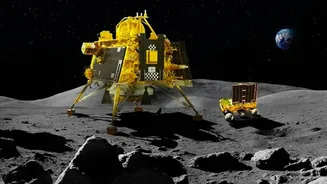
Returning to the Moon is no longer a distant dream; it's an active engineering puzzle. Under the Artemis program, NASA plans to build a long-term base at the lunar South Pole where astronauts can live, work, and conduct research. This isn't just about planting a flag. It's about creating a sustainable outpost that can serve as a stepping stone for future missions to Mars. But the challenges are immense. The lunar environment is unforgiving, with extreme temperature swings, abrasive dust, high radiation, and long periods of darkness. Building and operating a base in these conditions requires breakthroughs in everything from power generation to construction, and NASA has realized it can't do it alone.
Calling All Bright Minds
To accelerate innovation, NASA has turned to an often-untapped resource: the creativity of students. The agency now runs several high-profile challenges that invite high school and university teams to tackle some of the most critical problems facing the Artemis missions. In November 2026, for example, NASA announced the $1 million Moon Base Challenge, explicitly asking students to contribute designs. These competitions aren't just for outreach; they are a strategic effort to crowdsource solutions, inspire a future STEM workforce, and bring in bold ideas that might not emerge from traditional research and development channels. As NASA Administrator Jared Isaacman stated, the agency is looking for students ready to 'take on real problems'.
From Classroom to Cosmos
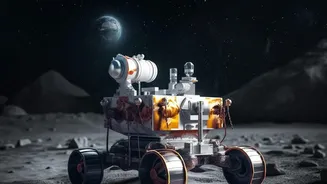
Student innovators are working on tangible, mission-critical hardware and systems. The Moon Base Challenge, for instance, asks teams to focus on one of six key areas: power generation, habitat construction, life-support, mobility, communications, and astronaut safety. Another prominent competition is NASA's Lunabotics challenge, which has been running since 2010. In this annual event, university teams design, build, and test robots capable of excavating lunar regolith (the Moon's soil) and constructing protective berms—structures vital for shielding habitats and equipment from the blast of landing spacecraft. Other challenges, like the 'Break the Ice' competition, have focused on the crucial task of mining water ice from permanently shadowed craters, a resource essential for life support and producing rocket fuel.
Tackling Lunar Hurdles
The problems students are solving are far from theoretical. For example, the fine, abrasive lunar dust, or regolith, is a notorious hazard that can damage equipment and pose health risks to astronauts. Lunabotics teams must design robots that can operate reliably in a simulated regolith environment, forcing them to develop solutions for dust mitigation. Power is another major hurdle. A lunar base needs a consistent energy source to survive the two-week-long lunar nights. Student teams in the Moon Base Challenge are tasked with designing power generation and storage systems that are self-sufficient and don't rely on constant resupply from Earth. These handson projects require students to engage with the same systems engineering principles that NASA's own engineers use, pushing them to move from a concept paper to a functional prototype.
Building the Future Workforce
Beyond the immediate technical solutions, these challenges serve a vital long term purpose: building the next generation of aerospace professionals. Participants gain invaluable handson experience in robotics, systems engineering, project management, and collaborative problem solving—skills directly applicable to careers at NASA or in the broader space industry. Many students who participate in challenges like Lunabotics or the Micro g NExT challenge, which focuses on designing tools for spacewalks, go on to internships and full time careers within the aerospace sector. In essence, NASA is not just outsourcing problems; it is cultivating the talent pool that will lead humanitys expansion into the solar system for decades to come.