



A Menu for the Stars
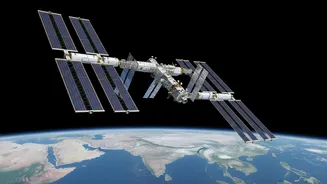
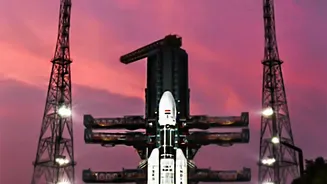
As India gears up for its landmark Gaganyaan mission, sending astronauts into a 400 km orbit, every detail is being meticulously planned. Among the most fascinating challenges is designing a menu that is not only nutritious and palatable but also safe
to consume in the hostile environment of microgravity. The task fell to the Defence Food Research Laboratory (DFRL) in Mysuru, a specialised lab under the Defence Research and Development Organisation (DRDO). DFRL, with its extensive experience in creating food for soldiers in extreme conditions, was the natural choice to curate a taste of home for India's astronauts. The goal was to provide familiar, comforting Indian meals that could withstand the rigours of space travel. The resulting menu features an impressive array of Indian favourites, ensuring our spacefarers are well-fed and in high spirits.
The Science of Space-Ready Food
Eating in space is far more complicated than simply packing a tiffin. Every food item must meet a strict set of criteria. Firstly, there's the problem of microgravity. Crumbs are a critical hazard; they don't fall to the floor but float freely, risking inhalation by astronauts or damage to sensitive electronic equipment. This is why bread is typically avoided in space missions, in favour of tortillas. Secondly, food must have a very long shelf life—often over a year—without refrigeration, as space missions cannot afford the weight or energy consumption of fridges. This is achieved through methods like thermo-stabilisation (heat treatment) or freeze-drying. Nutrition is also paramount, with meals scientifically designed to counteract the physiological stresses of spaceflight, such as muscle and bone density loss. Finally, taste is a surprisingly big factor. The fluid shift to the head in microgravity can stuff up sinuses, dulling the sense of taste and smell, making flavourful and even spicy foods more desirable.
So, What's on an Indian Astronaut's Plate?
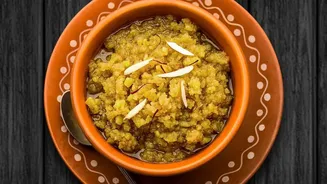
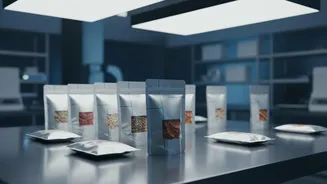
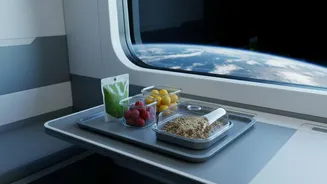
The menu developed by DRDO's DFRL reads like a dream for any Indian food lover. It includes items like Vegetable Pulav, Chicken Biryani, Dal Makhani, Aloo Paratha, and Moong Dal Halwa. These dishes are prepared in ready-to-eat formats, often dehydrated or in pouches that can be heated. Astronauts will reconstitute the dehydrated food using special water dispensers. The selection process was exhaustive, with an initial list of dozens of dishes being tested and refined. The final menu provides a variety of tastes and textures, from savoury rolls to sweet desserts, ensuring that the astronauts have variety and do not suffer from 'menu fatigue'—a common issue on long missions where repetitive food can affect morale. Special containers for liquids and even sachets of extra spices have been developed for those who prefer their food with an extra kick.
The Trouble with Khichdi
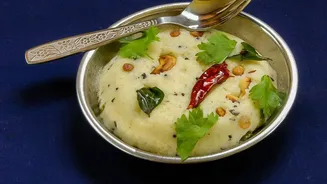
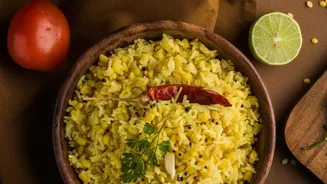
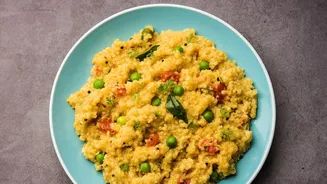
So, if dal and rice can go to space in the form of Dal Makhani and Biryani, why was our beloved Khichdi left behind? The answer lies in its consistency and the crumb problem. While Khichdi was indeed considered and even developed by research institutes, its texture makes it a high-risk item for space travel. The mixture of rice and lentils, when rehydrated, can easily separate. It is difficult to guarantee that every grain will stick together, creating the potential for loose particles to float away in zero gravity. This 'low fragmentation' rule is non-negotiable. While a dish like Biryani can be formulated to have a more cohesive texture in its ready-to-eat pouch, the semi-liquid, grainy nature of a traditional Khichdi makes it a hazard. According to astronaut Shubhanshu Shukla, who was part of a recent mission to the ISS, getting food certified for space is a long and rigorous process, and time constraints for testing can also play a role in what gets approved.