

Moong dal is a comforting staple in Indian kitchens, but are you unlocking its full potential? The secret to transforming this humble lentil into a showstopper lies in the artful use of spices. Let's explore how to do just that.
The Humble Hero of the Pantry
Known for its quick cooking
time and easy digestibility, moong dal is a beloved ingredient across India. Made from split and hulled mung beans, these small yellow lentils form the base of countless comforting dishes, from simple soups to the celebratory moong dal halwa. On its own, the flavour is mild and earthy, which makes it a perfect canvas for a symphony of spices. Properly spiced, moong dal transforms from a simple, nutritious meal into a truly memorable culinary experience.
Your Essential Spice Toolkit
You don't need an overflowing spice rack to make delicious dal. A few key players are all it takes. Turmeric is essential for its vibrant golden colour and earthy notes, often added while the dal is boiling. Cumin seeds provide a warm, nutty aroma, while mustard seeds add a slight pungency, especially popular in South Indian preparations. Asafoetida, or hing, offers a unique savoury, onion-like flavour that deepens the taste. Finally, fresh ingredients like minced ginger, garlic, and green chillies provide a layer of aromatic heat that forms the backbone of most dal recipes.
Mastering the Art of Tadka
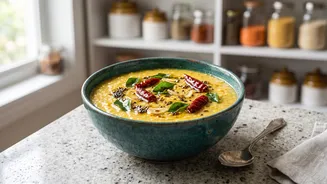
The single most important technique for flavouring dal is the tadka, also known as 'chaunk' or tempering. This involves frying whole or ground spices in hot ghee or oil to unlock their aromatic compounds before pouring the mixture over the cooked dal. The process is swift and requires your full attention. Start by heating ghee or oil in a small pan. Add whole spices like cumin or mustard seeds and wait for them to splutter and pop. Next, add aromatics like garlic, ginger, and slit green or dried red chillies, frying for a few seconds until fragrant but not browned. Lastly, powdered spices like red chilli powder are added just before you turn off the heat, as they can burn quickly. This sizzling, fragrant mixture is the final touch that elevates the entire dish.
Layering Flavours Beyond the Tadka
While the tadka is the grand finale, flavour can be built in stages. Adding turmeric and salt to the lentils as they cook ensures the dal itself is well-seasoned from the inside out. Some recipes call for a base masala, where onions and tomatoes are sautéed with spices like coriander powder before the cooked dal is added. This creates a thicker, richer gravy, more akin to a 'dal fry' than a simple 'dal tadka'. For a final flourish, a sprinkle of garam masala or kasuri methi (dried fenugreek leaves) can be stirred in at the very end to add a complex aroma. A squeeze of fresh lemon juice just before serving can also brighten all the flavours.
Two Classic Moong Dal Preparations
To see these techniques in action, consider two classic dishes. Moong Dal Tadka is the simpler of the two: the lentils are boiled until soft, and then a final tempering of cumin seeds, garlic, and chillies in ghee is poured over the top. Moong Dal Fry, on the other hand, involves creating a more substantial base. Onions, ginger, garlic, and tomatoes are cooked down with powdered spices to form a thick masala, into which the boiled dal is then simmered. While both are delicious, the fry version is richer and more complex, while the tadka version is lighter and showcases the clean flavour of the lentils.
Regional Twists and Variations
The beauty of moong dal is its versatility, with countless regional variations across India. In Bengal, a five spice blend called 'panch phoron' (a mix of cumin, fennel, mustard, nigella, and fenugreek seeds) is often used in the tempering, giving the dal a unique, slightly bitter and anise like flavour. In parts of South India, curry leaves and coconut are common additions to the tadka. Moong dal is also the star of non curry dishes like 'cheela' (savoury pancakes) and 'khichdi', a comforting one pot meal of rice and lentils. Each variation uses the same principles of spicing to achieve a completely different, yet equally delicious result.