




More Than Just Dry Trees
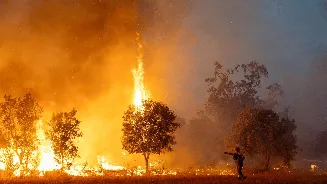
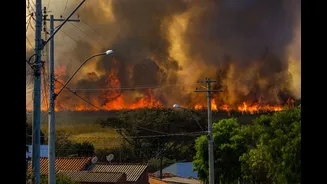
When we picture a forest fire, we imagine flames leaping between treetops—a crown fire. But recent events in countries like France, Spain, and Greece highlight a different and more complex problem. A persistent lack of rain, combined with record-breaking
heat, has desiccated not just the trees and shrubs, but the very ground they grow in. This has transformed the soil and its organic layers into a type of fuel that behaves very differently from a log or a branch. It doesn't just burn; it smoulders, often for an incredibly long time.
The Science of a Tinderbox Floor
Forest floors are typically rich in organic material—a spongy layer known as humus or, in certain wetlands, peat. This layer is a massive carbon sink, built up from centuries of decaying leaves, roots, and moss. Under normal, moist conditions, this material is highly resistant to fire and can even act as a natural firebreak. However, prolonged drought removes this protective moisture. When the water content drops, the carbon-dense soil effectively turns into a form of charcoal. It becomes a porous, flammable material capable of sustaining combustion on its own, independent of the fire raging above ground.
A Different, Deeper Kind of Fire
This is where the danger of "long-burning fuel" comes in. Unlike a fast-moving flaming fire, smouldering is a slow, low-temperature, flameless form of combustion. These ground fires can creep along at just millimetres per minute, burrowing deep into the soil and moving underground. This makes them exceptionally difficult to detect and even harder to extinguish. Firefighting crews can douse a surface with water, believing a fire is out, only for it to re-emerge days or weeks later from a smouldering hotspot deep within the peat or humus. These fires can persist for months, surviving rainfall and weather changes, all while releasing huge quantities of smoke and carbon into the atmosphere.
Europe's Vulnerable Hotspots
Across Europe, from the Iberian Peninsula to central and eastern regions, drought conditions have become critical. Recent reports from August 2026 confirm that southern and western Europe continue to face hot and dry conditions, expanding the drought's reach. Wildfires have been particularly devastating in Spain and France, forcing mass evacuations. While firefighters battle the immediate blazes, the underlying conditions for persistent ground fires are being established. These smouldering events aren't a tropical phenomenon; they occur globally in temperate and even Arctic regions where organic soils are drying out due to climate change.
The Long-Term Consequences
The impact of these deep-burning fires extends far beyond the immediate destruction. Smouldering fires can completely sterilize the soil, destroying seed banks and the microbial communities essential for forest regeneration. By burning away the organic layer, they also increase the risk of severe erosion and nutrient loss. Furthermore, these fires release vast amounts of ancient carbon that had been locked away for centuries or millennia, creating a dangerous feedback loop. More carbon in the atmosphere accelerates warming, which in turn leads to more frequent and intense droughts, making these smouldering mega-fires more likely in the future.