





A Once-in-a-Century Discovery
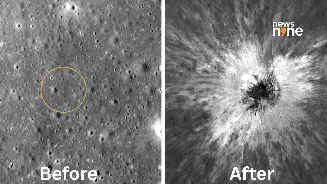
Scientists have announced the discovery of a massive new impact crater on the Moon, an event they describe as statistically a 'once-in-a-lifetime observation'. The crater, dubbed McGetchin, measures an immense 222 metres across and is up to 43 metres deep,
making it larger than the Roman Colosseum. It is the largest new impact crater to be identified not just on the Moon, but in the entire solar system in recent times. An impact of this magnitude is estimated to occur only once every 132 years, making its discovery a treasure trove of information for lunar scientists and future mission planners. The violent impact, which occurred in the spring of 2024, hurled dust and rock over 100 kilometres across the lunar surface.
Hiding in the Data Deluge
If a city-sized rock hits the Moon and no one is looking, did it really happen? In this case, yes, but finding the evidence took time. The impact itself, which likely occurred between April and May 2024, was not detected by any telescopes on Earth or in space at the time. The crucial evidence was captured by NASA's Lunar Reconnaissance Orbiter (LRO), a spacecraft that has been mapping the Moon since 2009. However, the crater wasn't spotted right away. The initial wide-angle images showing the change were buried in the enormous volume of data the LRO sends back. It wasn't until August 2025, over a year after the impact, that the new feature was identified during analysis of before-and-after images.
The Moment of Revelation
The discovery was made not by an automated system, but by the sharp eye of a NASA scientist during a routine data check. Robert Wagner, a researcher and image processing specialist, spotted a large, bright spot surrounded by a dark halo—a telltale sign of a fresh impact. The moment was one of pure scientific serendipity. "I just stopped, dropped everything, and started looking into what that spot was," Wagner said in a statement. Following the initial finding, the LRO was tasked with gathering more detailed, high-resolution pictures late last year, with full confirmation of the remarkable discovery arriving in early 2026. The crater was named for Thomas McGetchin, a former director of the Lunar and Planetary Institute.
More Than Just a Hole
The McGetchin crater is more than just an impressive hole; it is a massive natural laboratory. The impact was so powerful it physically altered the surrounding landscape. Instruments aboard the LRO detected a seven-kilometre-wide 'cold spot' around the crater. Scientists believe this thermal anomaly was caused by the impact wave decompacting the lunar topsoil, or regolith, making it 'fluffier'. This looser material is less able to retain heat during the frigid lunar night, making it appear colder than the surrounding, more settled ground. Studying how the impact threw material and altered the ground provides invaluable data for NASA's plans to build a permanent base on the moon, as it helps them understand the risks posed by ongoing meteoroid bombardment.
The Future of Lunar Discovery
While this specific crater was found through manual inspection, the event highlights the immense challenge of monitoring the lunar surface. The LRO has captured images revealing thousands of smaller changes, but sifting through the petabytes of data is a monumental task. This is where artificial intelligence is becoming crucial. NASA, in collaboration with IBM and other institutions, has launched new AI models specifically trained on LRO data to automatically detect anomalies like new craters, volcanic pits, and even potential water ice deposits. These AI tools can scan millions of images far faster than humans, reducing bias and spotting unexpected features that might otherwise be missed. This combination of human expertise and AI power is set to accelerate our understanding of the Moon's past and present.