





A New Kind of Farm in Poland
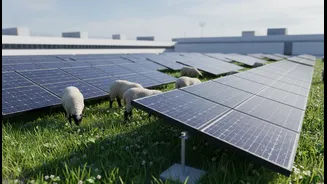
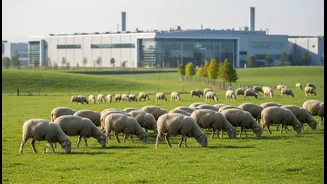
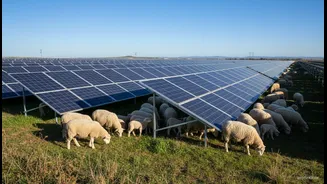
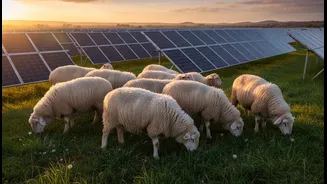
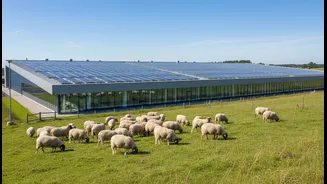
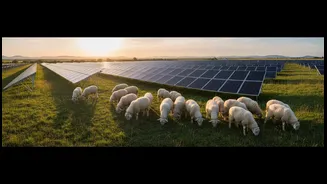
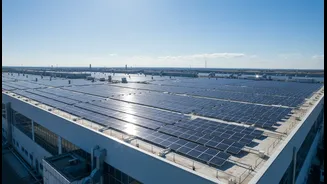
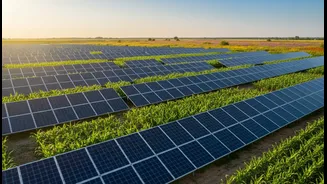
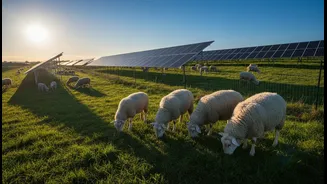
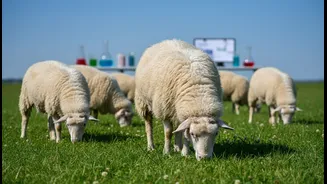
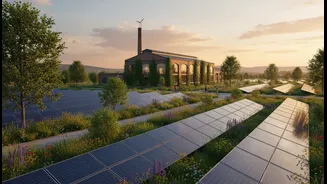
Beneath more than 31,000 solar panels that help power Volkswagen’s plant, a flock of sheep is doing more than just keeping the grass trim. They are the living heart of a major research project led by Poznań University of Life Sciences. The study is a deep
dive into agrivoltaics—the practice of using the same piece of land for both solar power generation and agriculture. Researchers are meticulously tracking how this dual-use environment affects everything from animal welfare and biodiversity to soil quality and the local microclimate. The goal is to gather hard data on whether this symbiotic relationship truly works, providing a blueprint for how modern industry and nature can coexist.
The Science of Solar Shade
One of the central questions the Poznan trial seeks to answer is whether the shade cast by solar panels offers tangible benefits to livestock. For grazing animals, intense summer heat can lead to stress, dehydration, and reduced productivity. The panels act like a vast canopy of artificial trees, offering consistent relief from direct sun. Studies elsewhere have already shown promising results. One U.S. study found that cows with access to panel shade had lower body temperatures and breathing rates in the afternoon compared to those without. Another noted that sheep actively prefer the type of shade cast by solar panels. The Polish research aims to build on this, precisely measuring whether the shade reduces heat stress in the flock, potentially leading to better health and well-being.
Welcome to Agrivoltaics
The concept being tested in Poznań is part of a rapidly growing global movement. Agrivoltaics, also called agrisolar, is seen as a powerful solution to the competing demands for land. As nations push for renewable energy, vast tracts of land are required for solar farms, which can create conflict with the need for agricultural space. By combining the two, agrivoltaics allows a single plot of land to produce both clean energy and food or fibre. Sheep are particularly well-suited for this role; they are nimble enough to graze under and around the panel structures without causing damage, eliminating the need for fossil-fuel-powered mowers and reducing maintenance costs. This isn't just a theory; in the United States alone, sheep are already grazing on over 130,000 acres across 500 solar sites.
More Than Just Animal Comfort
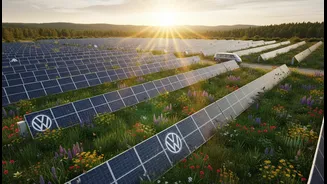
The benefits of agrivoltaics extend far beyond happy sheep. For farmers, it offers a diversified income stream by leasing their land to energy companies while continuing their agricultural operations. The shade that comforts animals can also help certain crops thrive by protecting them from scorching sun and reducing water evaporation from the soil. This can lead to more resilient crop yields, especially in regions facing drought. Furthermore, the presence of vegetation under the panels can have a cooling effect on the equipment itself, potentially improving the efficiency of energy generation. The Poznań project is monitoring all these factors, creating a comprehensive picture of the ecosystem that forms when solar panels and agriculture are integrated.
Challenges and the Path Forward
Despite its promise, agrivoltaics is not a one-size-fits-all solution. The initial setup costs can be higher, as solar arrays may need to be elevated or spaced differently to accommodate livestock or farm machinery. Not all crops are suitable for cultivation in partial shade, and farmers need to adapt their practices. However, the initial observations from the Poznan trial are positive. The flock’s owner has noted that the sheep adapted quickly and feel safe, calmly splitting into smaller groups to graze—a sign of comfort in their environment. The research is designed to identify best practices that can make this integration effective, providing valuable data for future projects in Poland and beyond. By combining commercial-scale energy production with a robust scientific program, the Volkswagen project is considered one of the most advanced of its kind in Europe.