





The Cosmic Forge Mystery
Our universe began with the lightest elements: hydrogen and helium. Stars act as cosmic furnaces, fusing these light elements into heavier ones like carbon, oxygen, and iron. But this process stops at iron. Creating even heavier elements, such as gold,
platinum, and uranium, requires an enormous burst of energy and a dense flood of neutrons in a process known as the rapid neutron-capture process, or 'r-process'. For years, astronomers theorised about where such extreme conditions could exist. The leading suspects were the explosive deaths of massive stars (supernovae) or the cataclysmic mergers of ultra-dense stellar remnants known as neutron stars.
A Suspect Emerges: The Kilonova
The prime candidate for an r-process factory is a kilonova—a colossal explosion that occurs when two neutron stars, orbiting each other in a binary system, finally spiral together and collide. Neutron stars are incredibly dense; a mere teaspoon of their matter would weigh a billion tonnes on Earth. Their merger unleashes a mind-boggling amount of energy and ejects a cloud of neutron-rich material into space. In 2017, the first direct observation of a neutron star merger, detected through gravitational waves, provided groundbreaking evidence. Astronomers observed the spectral signature of heavy elements like gold and platinum being created in the aftermath, confirming kilonovas as a major source. A single merger can produce hundreds of Earth-masses worth of these precious materials.
New Clues from a Galactic Glow
The headline-making research now focuses on a specific, mysterious source of high-energy gamma rays within our own Milky Way, known as HESS J1507−622. First detected between 2006 and 2007, this source has puzzled scientists because it emits powerful gamma rays without a corresponding source of lower-energy light, like X-rays or radio waves. A new study by Chinese and US researchers proposes a compelling explanation: this glow could be the remnant of a recent kilonova. The researchers suggest that the collision of two neutron stars happened less than 1,000 years ago, creating the gamma-ray-emitting cloud. If confirmed, this would be the first kilonova remnant identified within our home galaxy.
Why This Finding Is A Compelling Hypothesis
The kilonova theory elegantly explains the peculiar features of HESS J1507−622. The source lies away from the main plane of the Milky Way, where most stars reside. This is consistent with a binary neutron star system being 'kicked' out of its original location by the supernova explosions that created the neutron stars in the first place. The system would then travel for millions of years before finally merging. According to the research, this violent smash would have spewed out vast quantities of heavy elements like gold and platinum before the wreckage likely collapsed into a black hole. The hypothesis provides a consistent and compelling narrative for the observed data, turning a mysterious glow into a potential 'cosmic gold factory'.
Filling in the Periodic Table's Last Blanks
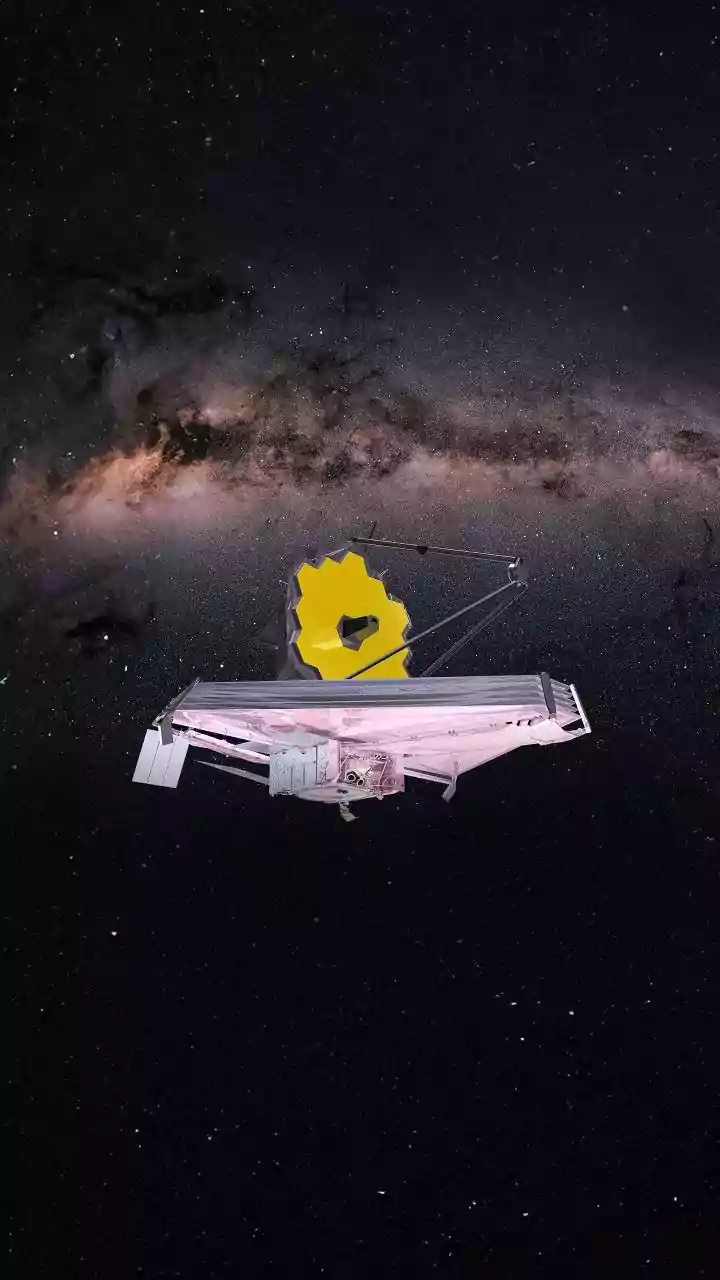
Pinpointing the sources of heavy elements is one of the final frontiers in understanding our cosmic origins. Each discovery, like the 2017 merger and this new potential remnant, helps refine our models of 'galactic chemical evolution'. Recent observations with the James Webb Space Telescope have also detected heavy elements like tellurium in the wake of distant kilonovas, further cementing their role as cosmic forges. These events don't just create precious metals; they seed the galaxy with elements like iodine, which is essential for life on Earth. By studying these extreme events, scientists are piecing together the story of how the universe built the very atoms that make up our world and ourselves.