





The Core Objective: A Full Dress Rehearsal
The first uncrewed mission, designated Gaganyaan-1 or G1, is essentially a complete simulation of the final crewed mission, but without the astronauts. Its primary goal is to test and validate every single system in a real space environment before humans
are put on board. This includes the performance of the human-rated LVM3 launch vehicle, the orbital module's functions in space, and the high-stakes re-entry and recovery sequence. The mission plan involves launching the spacecraft into a low Earth orbit of around 400 km. It will remain in orbit for a set period before returning to Earth, culminating in a splashdown in Indian waters where recovery teams will practice their procedures. Every piece of data from this flight is vital for ensuring the Gaganyaan programme meets the highest standards of safety and reliability.
Meet Vyommitra: The Humanoid Stand-In
A key passenger on this uncrewed flight will be Vyommitra, a highly advanced humanoid robot developed by ISRO. The name, derived from the Sanskrit words for "space" and "friend," perfectly describes its role. Vyommitra is a half-humanoid, meaning it has a torso, head, and arms, but no legs. This 'space friend' is not just a passive dummy; it is designed to simulate human functions within the crew module. Vyommitra can operate control panels, monitor module parameters, and interact with the life support system. Its sensors will collect crucial data on vibrations, acoustics, and the cabin environment throughout the flight, providing insights into what human astronauts will experience. By mimicking crew activity, Vyommitra will help ISRO validate the capsule's systems and human-machine interfaces under real-world conditions.
The Technology Under Scrutiny
This mission is a crucible for several critical technologies. Perhaps the most important is the Environmental Control and Life Support System (ECLSS). This indigenously developed system is responsible for maintaining a habitable, Earth-like environment inside the crew module, controlling temperature, pressure, humidity, and removing carbon dioxide. The G1 mission will demonstrate a version of this system in space. Another key element being tested is the Crew Escape System (CES), which is designed to pull the crew module and its occupants to safety in case of an emergency during launch or ascent. The mission will also validate the performance of the complete parachute system, which is essential for slowing the module down before splashdown, and the uprighting system that ensures the capsule floats in the correct orientation after landing in the sea.
The Journey: From Launch to Splashdown
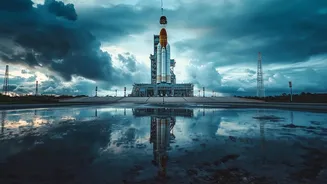
The mission will begin at the Satish Dhawan Space Centre, where the Gaganyaan orbital module will be launched atop ISRO's most powerful and reliable rocket, the human-rated LVM3 (HLVM3). This three-stage vehicle, weighing around 640 tonnes, is specifically reconfigured for human spaceflight to ensure maximum safety and reliability. After lift-off, the rocket will insert the module into a low Earth orbit. The module, which consists of the Crew Module and the Service Module, will orbit the Earth for a mission duration that could last anywhere from a few hours to a few days. Upon completion of its orbital phase, the module will fire its engines to de-orbit, beginning its fiery re-entry into the Earth's atmosphere. Protected by its thermal shield, it will deploy a series of parachutes to slow its descent before making a soft landing in the Indian Ocean.
Why This Flight is a National Milestone
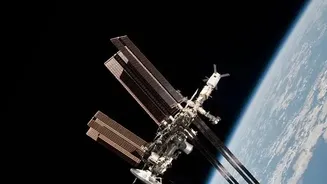
The first uncrewed Gaganyaan mission is more than just a test flight; it represents a significant leap in India's journey to become the fourth nation in the world with independent human spaceflight capability, after the United States, Russia, and China. Successfully completing this full-scale trial is the final major hurdle before ISRO proceeds with further tests and eventually the first crewed mission. The data gathered will provide invaluable confidence in the vehicle, the life support systems, and the mission management procedures. It is a testament to the country's growing indigenous scientific and technological prowess, with ISRO leading a vast ecosystem of Indian industry and academia. This mission paves the way not just for sending 'Gaganyatris' to orbit, but also for future ambitions like the Bharatiya Antariksh Station (Indian Space Station) by 2035.