







Your Body's Natural Stabilizers
Think of your feet and ankles as your body’s first responders for balance. They are packed with tiny sensors, called proprioceptors, located in muscles, ligaments, and joints. These sensors constantly send information to your brain about your body's position
in space. This system, known as proprioception, is what allows you to walk on uneven ground or catch yourself when you stumble without consciously thinking about it. Every time your weight shifts, your ankles make lightning-fast micro-adjustments to keep you upright. Strong, flexible ankles with a good range of motion are crucial for this process. When this foundation is weak, your entire sense of balance can suffer, increasing the risk of falls and injuries.
The Allure and Limits of Gadgets
Enter the world of 'fancy gadgets' like wobble boards and BOSU balls. These tools are designed to improve balance by creating an unstable surface, forcing your body to work harder to stay upright. They are common in physiotherapy for rehabilitating injuries, particularly ankle sprains, and can help improve coordination. However, they are not a magic bullet for building foundational strength. For a healthy individual, relying too heavily on these devices can sometimes be counterproductive. Some soft, unstable surfaces can encourage your brain to rely more on visual cues for balance, rather than fine-tuning the crucial connection with the muscles in your feet and ankles. Furthermore, performing strength exercises like squats on an unstable surface limits how much weight you can safely use, reducing the muscle-building benefit of the exercise itself.
Build Balance from the Ground Up
True, functional balance isn't about being able to stand on a wobbly dome in a gym; it's about navigating the real world with confidence. The most effective way to build this is by strengthening the connection between your brain and the muscles that control your feet and ankles. By focusing on simple, ground-based exercises, you train your body to rely on its own internal systems. This approach not only builds stronger, more responsive muscles in the lower legs but also enhances proprioception, making your natural balance system more robust and reliable for everyday activities. The best part is that you don't need any expensive equipment to start—just a bit of floor space.
Simple Exercises for Better Balance
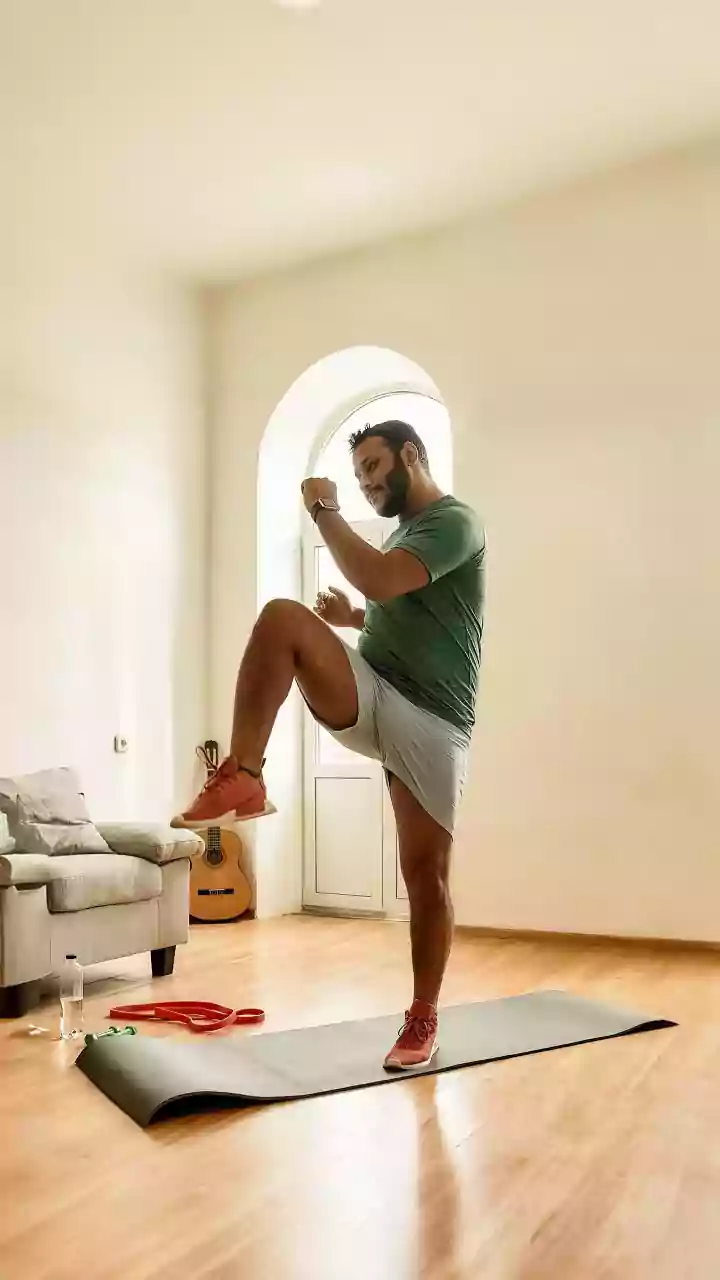
You can dramatically improve your foot and ankle control with a few consistent, simple movements. Start by incorporating these into your routine: 1. Single-Leg Stance: Stand on one foot, keeping your knee slightly bent, and try to hold it for 10 to 30 seconds without wobbling. To make it harder, try turning your head or briefly closing your eyes. This is a fundamental exercise for challenging and improving your stability. 2. Heel-to-Toe Walks: Walk in a straight line, placing the heel of one foot directly in front of the toes of the other, like you're walking on a tightrope. This challenges your balance and coordination with each step. 3. Heel and Toe Raises: Stand with your feet hip-width apart. Slowly rise up onto your tiptoes, hold for a moment, and then slowly lower back down. Then, rock back and lift your toes off the ground. This strengthens the muscles in your calves and shins that are critical for ankle stability. 4. Ankle Alphabet: While sitting, extend one leg and use your big toe to draw the letters of the alphabet in the air. This simple drill improves both mobility and control by moving the ankle through its full range of motion.