



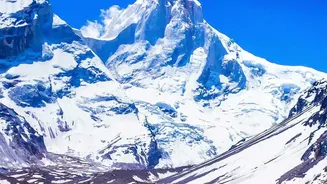
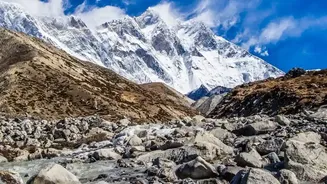
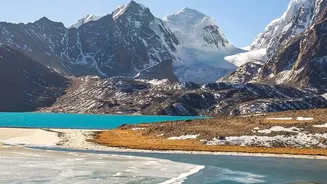
The Alarming New Data
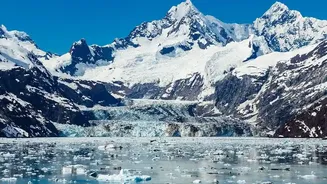
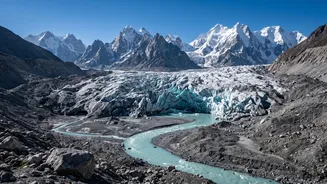
Recent scientific assessments paint a grim picture of accelerating change in the Himalayas. According to reports from the International Centre for Integrated Mountain Development (ICIMOD), glaciers in the Hindu Kush Himalaya region have been melting 65
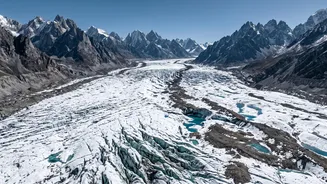
percent faster since 2010 than in the previous decade. This rapid thaw is not just a distant environmental issue; it is actively creating new dangers. The number of glacial lakes is increasing, and many are contained only by unstable natural dams of rock and debris left by retreating glaciers. A recent study identified 47 glacial lakes across Nepal, China, and India that are now considered at high risk of bursting. This includes 21 within Nepal itself, each one a ticking time bomb perched high in the mountains.
The Specter of Glacial Lake Outburst Floods
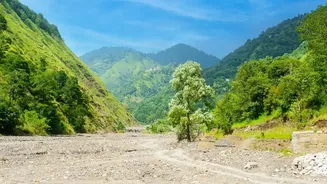
The most immediate danger from these unstable lakes is a Glacial Lake Outburst Flood, or GLOF. Imagine a massive natural dam, holding back millions of cubic meters of icy water, suddenly failing. The result is a torrent of water, mud, and boulders that can sweep down mountain valleys with unimaginable force, destroying everything in its path. Nepal has a history of these devastating events, having experienced over two dozen since the 1970s. A recent, catastrophic flood in August 2026 along the Nepal-Tibet border, which killed over a thousand people, served as a horrific reminder of this threat. That event, triggered by a massive ice and rock avalanche, saw the Trishuli River rise by nine meters in just 30 minutes, giving downstream communities almost no time to react.
A Cascade of Hazards
The threat extends beyond GLOFs. The same warming that melts glaciers is also thawing permafrost—the permanently frozen ground that acts like cement, holding steep mountain slopes together. As this permafrost weakens, the risk of massive rock and ice avalanches increases, even in areas without glacial lakes. These avalanches can themselves trigger floods by temporarily damming rivers or by transforming into fast-moving debris flows as they pick up soil and rock. Scientists now refer to this as a “cascading” series of events, where one disaster triggers another, making prediction and preparation incredibly difficult. The era of preparing for a single, predictable hazard is over; the new reality is a complex web of interconnected risks.
Life on the Frontline
For the millions of people living in the valleys downstream, this scientific data translates into a daily reality of fear and uncertainty. Entire communities, vital infrastructure like roads and bridges, and crucial hydropower projects are all in the path of potential disaster. The August 2026 flood alone knocked out an estimated 10% of Nepal's power capacity. Beyond the physical risk, there is a profound psychological toll on people who live with the knowledge that their homes and lives could be washed away with little warning. The warnings from scientists are stark: as the Himalayas continue to warm at a rate twice the global average, these events will become more frequent and potentially more severe.
A Regional Race Against Time
Addressing this growing crisis is a monumental challenge. Experts are calling for a dramatic expansion of monitoring systems to track glacier movement, permafrost thaw, and the state of glacial lakes. However, the vast and difficult terrain makes this a difficult and expensive task. More importantly, since many of the highest-risk areas and river systems cross international borders between Nepal, India, and China, effective early warning systems will require unprecedented levels of cross-border data sharing and cooperation. While efforts are underway to create hazard maps and community preparedness plans, the recent disasters have shown that existing systems are often not equipped to detect the rapid, cascading events that are becoming the new norm. The latest details on glacier instability are not just a scientific update; they are an urgent call to action for the entire region.