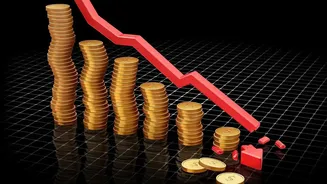








The Psychology of Panic
The urge to sell during a market dip is a powerful and natural human response. It is driven by a psychological bias known as 'loss aversion,' a concept that shows the pain of losing money feels far more intense than the pleasure of an equivalent gain.
This fear is often amplified by dramatic news headlines and the feeling of 'herd behaviour'—seeing others sell creates pressure to do the same. When markets get volatile, our brains can shift into a threat-response mode, prioritising immediate safety over long-term logic. This leads to reactive, emotional decisions, rather than sticking to a well-thought-out investment plan. The result is often selling at the worst possible moment: when prices are at their lowest.
The Real Cost: Missing the Rebound
While avoiding further losses feels like a win, panic selling has a hidden, devastating cost: missing the market's recovery. History shows that the best days in the stock market often happen very close to the worst days. For example, research from JP Morgan has shown that missing just the 10 best days in the market over a 20-year period could cut an investor's total returns by more than half. Someone who stayed invested with an initial $10,000 could have ended up with over $60,000, while the person who missed the 10 best days would have less than $30,000. Recoveries can be surprisingly swift and happen when the news still looks bleak. Investors who wait for a clear sign that the worst is over frequently miss these sharp upswings, which are essential for recouping losses and generating long-term growth.
Index Funds Are Built for Patience
Panic selling is particularly counterproductive for index fund investors. By their very nature, index funds are passive, diversified instruments designed for long-term growth, not for active trading. They hold a broad basket of stocks, which already mitigates the risk of any single company failing. The core principle of index fund investing, especially through a Systematic Investment Plan (SIP), is to invest consistently through market ups and downs. When you continue your SIP during a market dip, your fixed investment amount buys more units of the fund at a lower price—a concept known as rupee cost averaging. This automatically lowers your average cost per unit over time, positioning your portfolio for a stronger rebound when the market recovers. Selling disrupts this entire mechanism.
History's Unwavering Lesson
Looking back at every major market crash—from the dot-com bubble and the 2008 financial crisis to the 2020 COVID-19 downturn—the story is remarkably consistent: markets eventually recover and go on to reach new highs. While the timeline for recovery varies, staying invested has historically been the strategy that rewards patient investors. For instance, the market plunged nearly 38% in early 2020, but not only recovered within months, it ended the year with significant gains for those who stayed the course. Selling during a dip means you lock in those temporary losses and convert them into real ones, taking yourself out of the game just before the inevitable recovery begins.
A Smarter Strategy: Discipline and Perspective
Instead of reacting to fear, the most successful investors rely on discipline. The best course of action during a market dip is often to do nothing at all, or even better, to continue investing as planned. If you have a regular SIP, let it run. This ensures you are buying assets when they are on sale. It is also wise to avoid compulsively checking your portfolio, which can fuel anxiety and lead to poor decisions. Remember that you are investing for goals that are years or even decades away. Short-term volatility is just noise on the path to long-term wealth creation. As many have said, successful investing is not about timing the market, but about your time in the market.