



It sounds like the plot of a movie: a single technical tweak in a quiet corner of America brings the nation’s entire air travel system to a halt. But this scenario became a reality, sparking chaos and raising urgent questions about infrastructure.
Thousands of Flights Grounded
On Friday,
November 13, the U.S. Federal Aviation Administration (FAA) took the rare step of ordering a nationwide ground stop, halting departing flights across the country for nearly five hours. The sudden decision led to the cancellation or delay of over 12,000 flights, stranding hundreds of thousands of passengers and causing cascading disruptions that lasted for days. The FAA stated the order was issued out of an abundance of caution after its telecommunications network, which supports critical radar and communication systems for air traffic controllers, became unstable. While the 3,500 planes already in the air were able to land safely, the event paralyzed one of the world's busiest aviation networks.
The Arkansas Connection
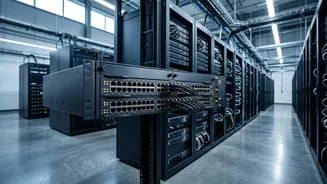
In the immediate aftermath, a surprising culprit emerged as the focus of the investigation: a routine network upgrade at an FAA communications facility in El Dorado, Arkansas. A contractor, L3Harris, was in the process of modernizing the FAA's infrastructure by replacing old copper wires with new fiber-optic cables. This work included installing a new router. U.S. Transportation Secretary Sean Duffy confirmed that investigators were zeroing in on this maintenance work as the potential trigger for the nationwide failure. The upgrade was part of a massive, multi-year, multi-billion dollar effort to modernize the FAA's aging systems, much of which dates back decades.
A Data Flood Overwhelms the System
The leading theory is that the new router installed in Arkansas, and possibly another in Amarillo, Texas, began flooding the FAA's network with an overwhelming amount of data. According to the FAA, its legacy equipment was hit with approximately 1,000 connection attempts every four to five seconds, causing the network to become unstable. This 'data flood' disrupted communications and radar feeds at 17 of the FAA's 22 major air traffic control centers. Technicians stabilized the network by blocking the two locations identified as the source of the data flood and disabling a specific function on more than 60 other new routers as a precaution. While officials have ruled out a cyberattack, the investigation continues to determine whether the fault lay with the new equipment, an installation error, or a fundamental incompatibility between new and old systems.
Exposing a Fragile Infrastructure
The incident has cast a harsh spotlight on the fragility of critical U.S. infrastructure. The fact that a single piece of equipment at a remote facility could trigger a continental failure has alarmed lawmakers and security experts. This event is not without precedent; a similar router failure caused a major disruption in 2009, and a corrupted database file in the FAA's NOTAM system grounded flights in January 2023. These repeated failures highlight a system with single points of failure and a significant reliance on aging technology. Transportation Secretary Duffy used the incident to renew calls for more congressional funding to accelerate the overhaul of what he termed a '40-year-old architecture', arguing that simply replacing parts isn't enough without a complete redesign.
The Path Forward
In response to the crisis, the White House announced the formation of an elite 'Tiger Team' of interagency officials to ensure the system's reliability through the busy holiday travel season. The FAA has also said it will re-evaluate its procedures for when maintenance and upgrades are performed, as this work was done during daytime hours rather than a low-traffic overnight period. L3Harris, the contractor involved, is working with the FAA in the investigation, with the suspect routers being analyzed at a laboratory in Florida. While normal flight operations have resumed, the incident serves as a stark warning about the hidden vulnerabilities within the complex, interconnected systems that underpin modern life. The push to build a more resilient and redundant air traffic control network has now gained urgent momentum.